
Claims against testing
Consumer humanoid robots in 2026: do they live up to the marketing?
None of these is sold to consumers yet. Four makers describe what their humanoids do; this page sets each claim beside what the maker's own pages and any outside test show about price, delivery and human help.
This page checks
- Can you order onePrice, deposit and delivery wording
- What it does by itselfThe maker's own autonomy claim
- Where a person steps inRemote operators and developer control
- Testing in homesHome trials, and who ran them
- Run timeHours on one charge
1X Technologies
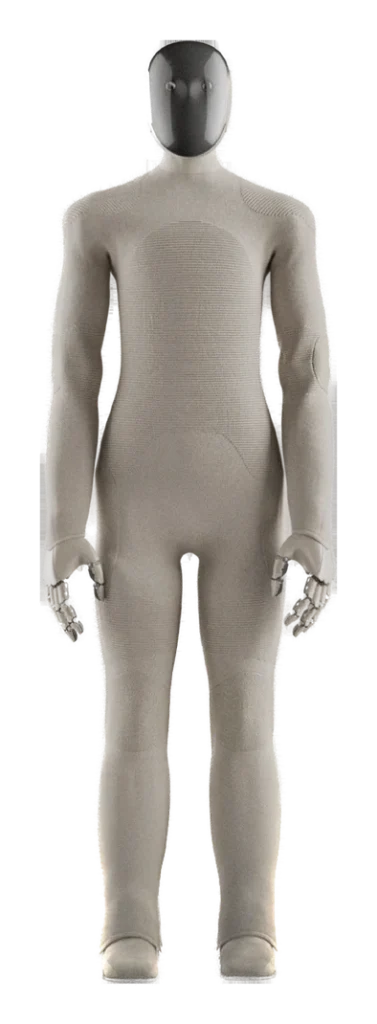
Pre-order only; US deliveries listed as starting 2026
1X begins full-scale production of NEO humanoid at Hayward factory

Tesla
No order page found; first builds are for Tesla's own use
Tesla Optimus V3 production falls far short of 20,000-per-week goal
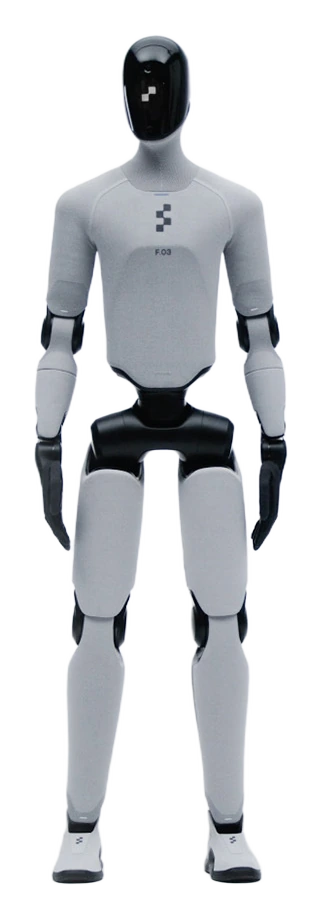
Figure AI
Where to buy
No price or order page found on figure.ai

Unitree
Where to buy
Sold by quote through Unitree sales; research robot
Full specifications14 figures on record · 12 differ
Some links earn Robovations a commission. Nothing on this page is ranked by it.
 NEO
NEO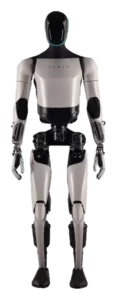 Optimus Gen 3
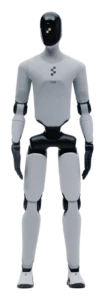 Figure 03
 H1
H1Claim and record
What each humanoid is said to do, and what is shown
Figure says its robot does household chores "all autonomously". Its own 30-home test completed 56% of tasks. 1X lists NEO at $20,000 with basic autonomy and scheduled remote help. Tesla has no order page, and Unitree sells the H1 by quote at $90,000.
$20,000or $499 a month
List price. $200 fully refundable deposit. The order page says US deliveries start 2026, with no delivery date.
1X order pageNo price found
No order page foundTesla's own page returned an error. Its Q2 2026 update says the first builds go to its Optimus Academy for training data.
Tesla Q2 2026 update
No price found
No order page foundThe maker's site says it is "now moving into the home". No price, order or wait list on the pages read.
Figure product page
$90,000listed
Shop title reads "Contact us for the real price". Buyers email Unitree sales. Customs duties are extra.
Unitree shopBasicautonomy at delivery
"Basic autonomy for early owners", growing over time through its Redwood AI model.
1X product pageNo task claim found
Q2 2026 update: first builds are for training data collection and functionality development.
Tesla Q2 2026 updateChoresclaimed as autonomous
Site: laundry, cleaning and dishes, "all autonomously". Voice requests are understood and acted on.
Figure product pageNo claim found
Spec page lists a 3D LiDAR, a depth camera and an i5 or i7 computer. It makes no task claim.
Unitree H1 spec pageFor unfamiliar tasks, an Expert from 1X "can remotely supervise its actions at scheduled times".
1X product pageNot found
No remote-operation statement in the Q2 2026 update or April 2026 coverage.
Tesla Q2 2026 updateNot found
No remote-operator statement on the pages read. Its home test report is Figure's own.
Figure product pageUnitree's open code runs H1 arm teleoperation from a headset. Needs an Ubuntu PC and a Vision Pro, PICO or Quest.
Unitree code repositoryNo test found
May 2026 coverage: units still in internal testing before customer deliveries.
News report, May 2026No test found
April 2026 coverage: Gen 3 reveal pushed to "probably middle of this year".
News report, Apr 202656%full tasks, 30 homes
Figure's own run, 237 of 420 trials in rented homes. Bed making 67%, towels 62%, toys 40%. Not independent.
Company-run test, Sep 2026No test found
Searched for hands-on autonomy tests. Only developer code and docs turned up.
Search of hands-on reviews4hours
Printed on the NEO page beside 66 lb weight and 55 lb carry.
1X product pageNot found
No battery or run time on the pages opened.
Tesla Q2 2026 update5hours
Printed as "5HR" on the product page.
Figure product pageNot found
Spec page lists a 15Ah (0.864 kWh) battery and no run time.
Unitree H1 spec pageSame on all four: no independent test of unsupervised household work was found.
Your home
How each one fits a home like yours
Set the conditions that describe your home. Each robot answers from its own Fit Check; nothing is scored until you choose.
Fit check
Describe your home
Pick what applies. Each robot answers from its own record.
Everything else
Where they land among 70 humanoid robots
Only the measures on which these four differ. The bar is the whole category; the block is the typical middle half; the tick is the median.
Sources
Where every figure comes from
- NEO · 1X order page and NEO page, read 2 Oct 2026; The Next Web (May 2026)
- Optimus Gen 3 · Tesla Q2 2026 update letter (SEC filing, Jul 2026); Electrek (22 Apr 2026)
- Figure 03 · Figure product page, news index and Introducing Figure 03 (Oct 2025); Humanoids Daily report on the Helix 2.5 test (17 Sep 2026)
- H1 · Unitree shop and H1 spec page; Unitree xr_teleoperate repository on GitHub
Prices, claims and specs come from each maker's pages read on 2 Oct 2026. Test results are credited to whoever ran them, and a maker-run test is labelled as one.
Questions
What readers ask
Can a household buy any of these today?
1X takes orders at $20,000 or $499 a month with a $200 refundable deposit, and says US deliveries start 2026. Unitree lists the H1 at $90,000 by quote. No order page was found for Tesla or Figure 03.
Does NEO work without a person?
1X says NEO arrives with basic autonomy. For unfamiliar tasks an Expert from 1X can remotely supervise its actions at scheduled times. May 2026 coverage said no units had been delivered yet.
Is Figure's 56% result independent?
No. Figure ran it: 237 of 420 trials across 30 rented homes. Success was 67% for bed making, 62% for towel folding and 40% for tidying toys.
Common questions