Skip to content
Saved
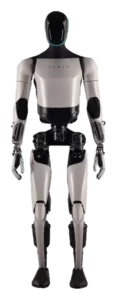
Tesla Optimus Gen 3
Robot Tracker

Tesla Optimus Gen 3

Tesla · Humanoid Robots
Level IIPromising Progress
  1. 2026
  2. Robovations confirms Tesla Optimus Gen 3 classification at Level II following 2025 evidence review

    Full 2025 evidence review resulted in no classification change.

    Full assessment
    AutonomyL2 confirmed, no change
    ReadinessWait confirmed, no change
    ScoreScores held pending data

    Level II (Assisted Autonomy) and Wait readiness status held. Teleoperator disclosure gap, absent third-party reliability data, and no consumer pathway prevent upward revision despite confirmed factory deployment at scale.

    Impact on autonomy

    • Level II classification confirmed: scripted task execution with human-directed task switching
    • Teleoperator pattern in demo footage closes inferential path to Level III
    • Large-scale factory deployment validates Level II reliability in controlled environments
    • No demonstrated capability outside factory workstation design domain

    Impact on readiness

    • Wait status confirmed: no consumer SKU, pricing, or order mechanism exists
    • Factory deployment at scale is a necessary but insufficient condition for consumer readiness
    • Proprietary reliability and maintenance data prevent independent readiness assessment
    • No service, support, or warranty model applicable to non-Tesla buyers announced

    Claim check5 claims reviewed

    Autonomy Level
    Level II confirmed. Scripted factory tasks with engineer supervision documented across multiple quarters. Teleoperator involvement in demos confirmed by third-party analysis.
    Readiness for consumers
    Wait maintained. No consumer product exists. $25,000 price is aspirational. No order mechanism, warranty, or support model disclosed.
    Reliability at scale
    Data proprietary. Fleet size unverified. No independent uptime, failure rate, or maintenance cost data available.
    Commercialization timeline
    Tesla leadership statements project 2025-2026 consumer availability; no binding commitment, pre-order mechanism, or specification sheet published.
    Safety certification
    Workstation geofencing and OSHA-compliant emergency stop documented for factory use. No consumer-context safety certification disclosed or sought.

    Bottom lineThe 2025 record adds operational data confirming Level II; it does not add the autonomous task generalization or consumer pathway that would support a classification upgrade.

    Technical notes4 sections
    Review Scope

    Evidence review covered: Tesla Q1-Q4 2025 earnings materials, shareholder presentation videos, publicly available factory footage, third-party reporting from IEEE Spectrum, The Verge, Bloomberg, Reuters, and Financial Times, and Tesla Investor Relations filings including the 2025 Annual Report and Q4 2025 Update Deck.

    Autonomy Evidence Summary

    Documented capabilities align with Level II: reactive obstacle avoidance, scripted pick-and-place, parts handling and placement, bipedal locomotion within workstation perimeter. No documented evidence of autonomous task selection, cross-workstation navigation, or unsupervised operation in novel environments.

    Readiness Evidence Summary

    No consumer-facing product elements identified: no retail pricing commitment, no pre-order, no warranty model, no third-party sales channel, no support infrastructure. Internal factory deployment is confirmed but does not constitute consumer readiness.

    Classification Rationale

    Teleop-assisted demos disqualify Level III consideration per Robovations methodology. Proprietary reliability data prevents reliability score update. PRA scores held at prior values pending independent verification of deployment claims. Next review trigger: confirmed consumer pre-order, independent reliability audit, or documented Level III autonomous task completion.

  3. Tesla Optimus Gen 3 factory pilot demonstrates assembly task automation

    Tesla showcased Optimus Gen 3 operating in Gigafactory assembly lines handling parts and components, demonstrating integration in controlled factory environments.

    Full assessment
    AutonomyL2 capabilities demonstrated in confined context
    ReadinessWait unchanged
    ScoreScores unchanged

    Impact on autonomy

    • Factory task execution in structured, pre-mapped environments with teleoperation backbone
    • Limited autonomous environmental adaptation within controlled assembly workflows
    • Motion planning remains script-based rather than real-time reactive

    Impact on readiness

    • Commercial deployment in private factory setting signals engineering maturity
    • Teleperation requirement indicates consumer readiness remains limited
    • Factory-only use case does not advance consumer market timeline

    Claim check3 claims reviewed

    Optimus Gen 3 autonomously performing factory assembly
    Units operate primarily under teleoperation with scripted motion sequences, limited autonomous decision-making per video documentation
    Representing major autonomous production advancement
    Demonstrates integration in controlled factory environment with pre-mapped layouts and structured task boundaries
    Ready for scaled manufacturing deployment
    Currently limited to pilot program in Tesla facility; scaling dependent on reducing teleoperation overhead

    Bottom lineFactory pilot validates engineering readiness in controlled environments but underscores continued reliance on teleoperation for practical deployment.

    Technical notes3 sections
    Factory Deployment Context

    Optimus Gen 3 units integrated into Gigafactory assembly line performing material handling and component insertion tasks. Operating in pre-mapped factory zones with defined task sequences.

    Autonomy Architecture

    Primary control via teleoperation with motion recording and playback. Obstacle avoidance and real-time adaptation within immediate workspace. End-effector control includes gripper state management and force feedback monitoring.

    Task Scope

    Repetitive assembly operations: parts pickup from conveyor, placement on vehicle body, connection of pre-staged components. Tasks executed in sequence with operator supervision and intervention capability.

  4. 2025
  5. Tesla Optimus Gen 3 demo footage shows confirmed teleoperator assistance not disclosed

    Reporting and technical analysis of Tesla's publicly shared Optimus Gen 3 demo footage identified signals of teleoperator involvement not disclosed by Tesla in accompanying press materials, raising questions about the autonomy claims in those demonstrations.

    Full assessment
    AutonomyL2 confirmed; L3 claim unsupported
    ReadinessWait unchanged
    ScoreScores unchanged

    Impact on autonomy

    • Teleoperator-assisted demos cannot serve as evidence of Level III or higher autonomous capability
    • Level II classification validated by disclosure gap; scripted autonomy ceiling confirmed
    • Future Tesla demos require independent verification before capability claims can be accepted
    • Pattern reinforces existing Robovations classification at Assisted Autonomy (Level II)

    Impact on readiness

    • Undisclosed teleoperator use reduces confidence in manufacturer autonomy roadmap timeline claims
    • Consumer readiness assessment unchanged; product unavailable regardless of demo methodology
    • Third-party scrutiny raises evidentiary bar for future Gen 3 capability documentation
    • No safety or availability impact: internal deployment, no consumer access

    Claim check4 claims reviewed

    Fully autonomous demonstration of factory tasks
    Third-party analysis identified latency patterns and control artifacts consistent with teleoperator involvement; Tesla did not disclose remote operator use
    Optimus operates without human control
    On-site engineer supervision confirmed in prior disclosures; remote teleoperation during demos adds a second layer of human involvement not previously acknowledged
    Real-world autonomous performance
    Demo conditions involve controlled factory workstations with geofencing; footage selected by Tesla communications team without independent observer access
    Gen 3 is ready for deployment at scale
    Internal deployment ongoing; consumer or third-party deployment not available; scale figures unverified

    Bottom lineTeleoperator involvement in demos is a classification-relevant fact: it confirms the Level II ceiling and invalidates any Level III inference drawn from the footage.

    Technical notes4 sections
    Disclosure Gap

    Tesla published video footage of Optimus Gen 3 performing household and factory tasks with text implying autonomous operation. Subsequent reporting by technology and robotics journalists identified motion latency signatures and behavioral patterns consistent with remote teleoperation. Tesla did not add a teleoperator disclosure to original materials after reporting surfaced.

    Autonomy Classification Impact

    Per Robovations methodology: a robot whose demonstrations rely on teleoperator assistance cannot be classified above Level II. This event confirms existing Level II classification is correct and closes any inferential path to Level III based on Tesla-produced footage alone.

    PRA Impact

    The Demonstrated vs. Claimed sub-score in the PRA framework reflects the disclosure gap. Tesla’s demonstrated record includes this undisclosed teleoperator pattern, which the existing pra_demonstrated_vs_claimed score of 30 already partially reflects.

    Reporting Context

    The identification was made through technical analysis of publicly available footage, not internal Tesla documentation. Tesla has not confirmed or denied teleoperator use in specific demos publicly.

  6. Tesla Optimus Gen 3 begins supervised factory deployment at Fremont plant

    Tesla confirmed active Gen 2 Optimus deployment inside Fremont manufacturing operations in early 2025, marking a continued expansion of internal factory floor use.

    Full assessment
    AutonomyL2 confirmed in field
    ReadinessWait unchanged
    ScoreScores unchanged

    Gen 3 Optimus mass production began January 21, 2026, with factory deployment beginning in Q2 2026. Deployment scope and task coverage for the early 2025 Fremont operations remained undisclosed.

    Impact on autonomy

    • Factory deployment validates Level II scripted-task performance in live production environment
    • Task execution confirmed for parts handling and assembly sequencing under engineer supervision
    • No cross-workstation autonomous navigation demonstrated in deployment reporting
    • Human operators retain task-switching authority in all reported use cases

    Impact on readiness

    • Confirmed factory use shifts status from prototype to limited internal deployment
    • No consumer access pathway opened; internal-only use continues
    • Deployment at scale remains unconfirmed with no unit count disclosed
    • Tesla has not announced service or support model applicable beyond internal operations

    Claim check4 claims reviewed

    Optimus working in our factories now
    Gen 2 deployment at Fremont confirmed in early 2025; task scope and unit count not disclosed; engineer oversight required for task transitions; Gen 3 factory deployment began Q2 2026
    Performing real work alongside humans
    Parts handling and assembly tasks confirmed; no evidence of generalized task adaptation or unsupervised operation
    Thousands of units by end of 2025
    Statement from Tesla leadership; no external verification of production or deployment numbers at this point in timeline
    Optimus will be the biggest product in Tesla history
    Leadership projection; deployment at this stage is internal pilot, not commercial product

    Bottom lineFremont deployment is a genuine milestone for factory integration; the gap between supervised internal pilot and commercial product remains substantial.

    Technical notes4 sections
    Deployment Configuration

    Gen 2 units were confirmed operating at Tesla Fremont factory in early 2025, performing repetitive assembly tasks including parts sorting, holding, and placement within pre-defined workstations. Environmental hardening per collaborative robot standards: geofencing, proximity sensing, and emergency stop integration confirmed by Tesla safety documentation references. Gen 3 mass production began January 21, 2026; Gen 3 factory deployment began Q2 2026.

    Supervision Model

    On-site Tesla engineers direct task switching and intervene during error states. No autonomous task selection reported. Robot operates within pre-programmed sequence until human operator commands next task or addresses stall condition.

    Sensor Stack in Deployment

    The early 2025 Fremont deployment used the Gen 2 sensor configuration. Real-time obstacle detection was active within the workstation perimeter. Camera occlusion from factory dust was cited as an ongoing maintenance consideration in Tesla engineering discussions.

    Scale

    Unit count not publicly confirmed. Tesla leadership referenced scaling ambitions; actual deployed fleet size at Fremont not independently verified as of this entry.

  7. 2024
  8. Tesla Optimus Gen 3 unveiled at company event with improved actuators

    At the October 10, 2024 "We, Robot" event, Tesla showcased the Optimus Gen 2 body paired with an updated hand assembly featuring 22 degrees of freedom and 50 actuators.

    Full assessment
    AutonomyL2 unchanged
    ReadinessWait unchanged
    ScoreScores unchanged

    No full body redesign constituting a "Gen 3 variant" was announced; overall body weight reduction and broad limb actuator upgrades were not disclosed. No consumer timeline or pricing was confirmed at the event.

    Impact on autonomy

    • Actuator torque-to-weight improvements allow faster limb movement within workstation scripted sequences
    • Updated vision stack adds processing for real-time gripper orientation correction
    • Bipedal balance refined for smoother transitions during pick-and-place sequences
    • No new autonomous task domains demonstrated beyond factory assembly context

    Impact on readiness

    • Announcement confirms continued internal-only deployment with no consumer SKU
    • No pricing, ordering, or availability mechanism announced alongside reveal
    • Technical refinements extend forward roadmap but provide no near-term purchase path
    • Manufacturer framing remains capability demonstration rather than product launch

    Claim check5 claims reviewed

    Gen 3 represents a generational leap in robot capability
    The event featured Gen 2 body hardware with updated hands (22 DOF, 50 actuators); a full generational body redesign was not announced; task domains remain limited to pre-scripted factory assembly sequences
    Smoother, more natural movement
    Video footage shows improved joint articulation; operation remains supervised and scripted, not adaptive
    Will cost less than a car
    $25,000 figure cited by Tesla leadership is aspirational pricing with no confirmed delivery timeline or order mechanism
    Autonomous factory worker
    Deployment requires on-site Tesla engineers for task switching and error recovery per available reporting
    Rapidly scaling production
    No production volume or delivery schedule confirmed at announcement event

    Bottom lineThe Gen 3 label marks real hardware iteration; the autonomy and commercialization gaps visible in Gen 2 remain fully present.

    Technical notes4 sections
    Hardware Changes

    The October 2024 event featured the Optimus Gen 2 body with an upgraded hand assembly: 22 degrees of freedom and 50 actuators in the hands, enabling more dexterous manipulation. Overall body weight reduction and broad limb actuator redesign were not part of the announced changes. Gripper force feedback integration was demonstrated but specific sensor specifications were not disclosed.

    Vision and Sensing

    Updated neural processing cited for faster obstacle classification and gripper orientation correction during pick-and-place tasks. LiDAR and stereo vision stack retained from Gen 2 with firmware-level processing updates. No new sensor modalities confirmed.

    Power System

    Battery capacity remains in the 2,400-2,500 Wh range per manufacturer documentation. Charge time and runtime figures not updated at announcement. Thermal management improvements implied by actuator redesign but not specified.

    Deployment Context

    Announced as internal Tesla manufacturing tool. Workstation geofencing, proximity monitoring, and emergency stop integration described as standard. No third-party safety certification disclosed.