How does a robot vacuum’s self-emptying dock work?
A robot vacuum with a self-emptying base promises you never have to touch the dust again. The dock pulls debris out of the robot and seals it away for weeks at a time. Behind that convenience sit a second vacuum motor, a bag the owner keeps buying, a loud burst each run, and one job the dock still cannot finish by itself.
On this page3 sections
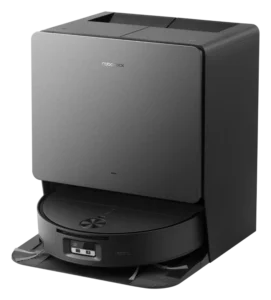
A robot vacuum that cleans quietly saves its loudest moment for when it is done. It rolls onto its base, settles, and a motor in the station spins up with a roar that carries through the house. For a few seconds the dock is doing the job its name promises. It is emptying the robot.
iRobot sells the base as a way to skip the dusty mess of emptying a bin by hand. An independent review called it a vacuum within a vacuum. That second vacuum lets the robot run for weeks without anyone opening its bin. It also brings three new things into the house: a bag, a noise, and a clog.
Figure
What the dock does, and what the owner still does
- Sealed dust bagPacks it into the bag; you: buys the next bag
- Charging contactsRecharges the robot
- Onboard binPulls dust from the robot bin
How the base empties the robot
The base is not a new idea. iRobot shipped the first mainstream version years ago, and a self-emptying dock is now standard on nearly every flagship robot vacuum, folded into the all-in-one stations that also wash and refill the mop.
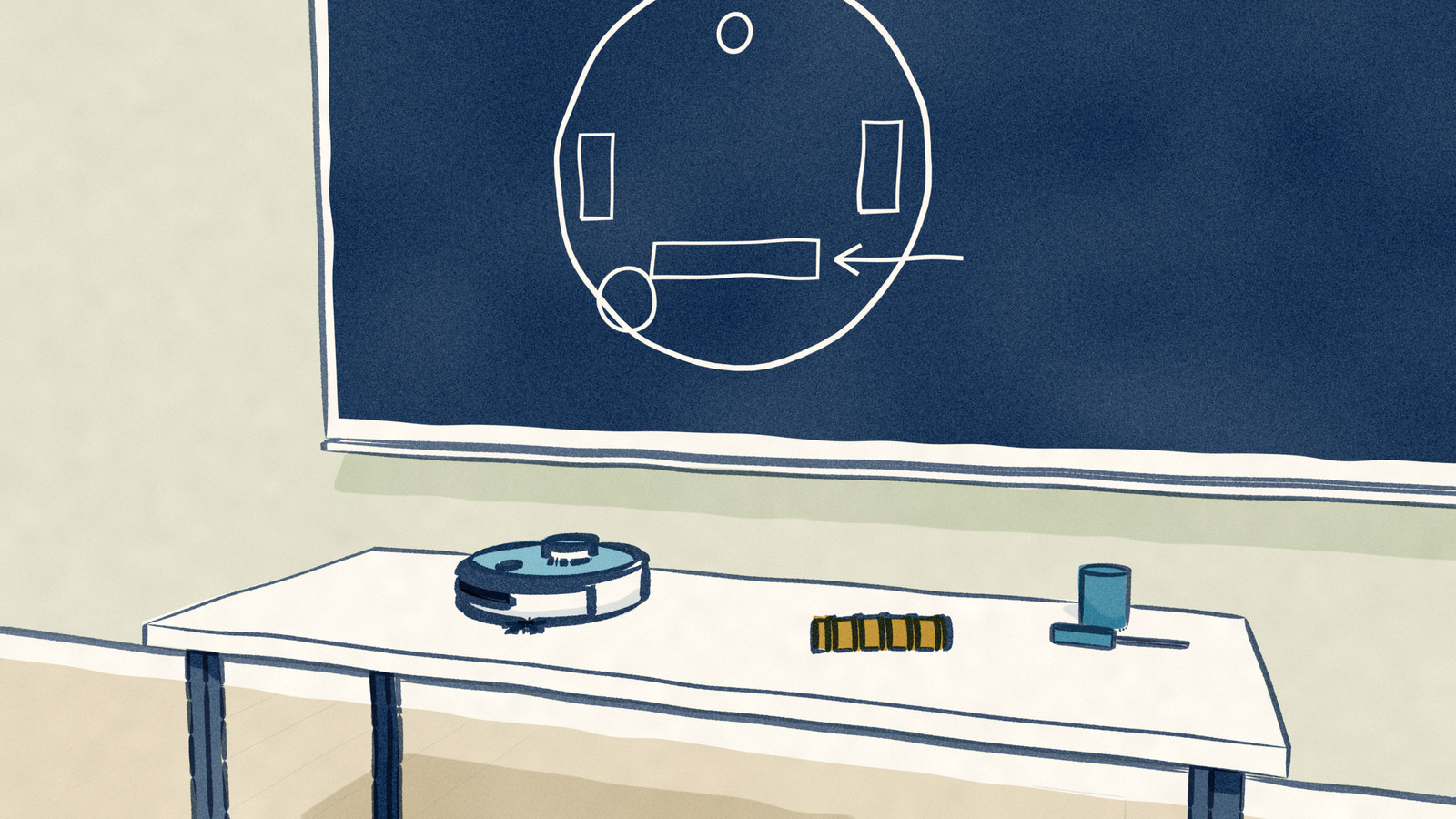
Start with the bin inside the robot. It holds well under half a liter, because anything larger would stop the machine fitting under a couch. The bag in the dock is several times that size. The mismatch is the point: the robot carries a small bin and offloads it often, rather than hauling a big one around.
When the robot docks, the station’s motor pulls the bin’s contents up through a flap on the robot’s underside and packs them into the bag. iRobot says one bag holds up to 60 days of debris. The transfer takes only a few seconds, and it is the loudest few seconds the machine makes.
The same review flagged the volume. The robot cleans at a hum you can talk over. The dock, for a few seconds each run, sounds like a full-size upright vacuum turned all the way up.
The emptying of the Dirt Disposal unit is ear-splittingly loud by contrast and audible even clear across the house.
Noise measurements back up the complaint. A guide to robot vacuum noise levels puts most auto-empty cycles at 70 to 81 decibels for the 5 to 15 seconds they run, well above the 50 to 62 decibels the same robots run at while cleaning.
One tested pairing shows the split directly. A noise comparison measured one budget model at 55 decibels while vacuuming, then 78 decibels, at a higher pitch, the moment its dock emptied it. The quiet machine and the loud base are often the same unit.
The bag is a running cost
So how long does a bag really last? The 60-day figure is a ceiling, not a timetable. The same reviewer, sweeping a tidy home every few days, got three months from one bag. A house with shedding pets and wall-to-wall carpet can fill one in a couple of weeks. Where your home sits on that range decides what the base costs to feed.
Makers quote the long end of the range, from a home that never tests it hard. Fine dust and pet hair fill a bag by volume well before the calendar does, which is why the printed number and a real household rarely agree.
The bags are a consumable, like printer ink. A guide comparing bagged and bagless bases puts the bagged running cost at roughly $200 to $350 over five years, at six to eight bags a year. The alternative is a bagless base, which you tip out and rinse, and which costs nothing to refill.
The bag is also just one line in a base’s upkeep. The water tanks and filters on an all-in-one dock are a separate chore, and one owners tend to underestimate.
Bagless saves the money and the reordering, but it gives some of it back when you empty it. Tipping the bin out puffs a small cloud of fine dust. A sealed bag keeps more of it in: iRobot’s bags are rated to trap 99 percent of pollen, mold and dust mites. For a home where someone has dust allergies, that sealed bag is the difference the guide flags.
Pulling a sealed bag out and binning it exposes you to almost nothing.
Where the base stops helping
One job the base cannot finish by itself is dealing with long hair. A dense wad of it can bridge the bin’s outlet, so the station pulls air around the clog instead of through it. The dock runs at full volume and moves almost nothing.
Hair also mats at the flap on the robot’s underside and holds it shut. When that happens, the troubleshooting guide notes, the dock spends its cycle sucking against a closed door. The robot leaves on its next run with a bin that was never emptied.
So the base does the emptying, most days. The owner still buys the next bag, still lives with the roar, and still kneels to pull the matted hair off the flap on the morning the station runs loud and nothing moves.