Does the MOVA T1 Station’s base station replace the safety cable?
MOVA pitches the T1 Station's base station as a break from the rope that keeps window robots on the glass, automating the cable instead of removing it. An independent review measured the station's anchor and found it held tall panes without tangling. So what actually changed, and what stayed the same?
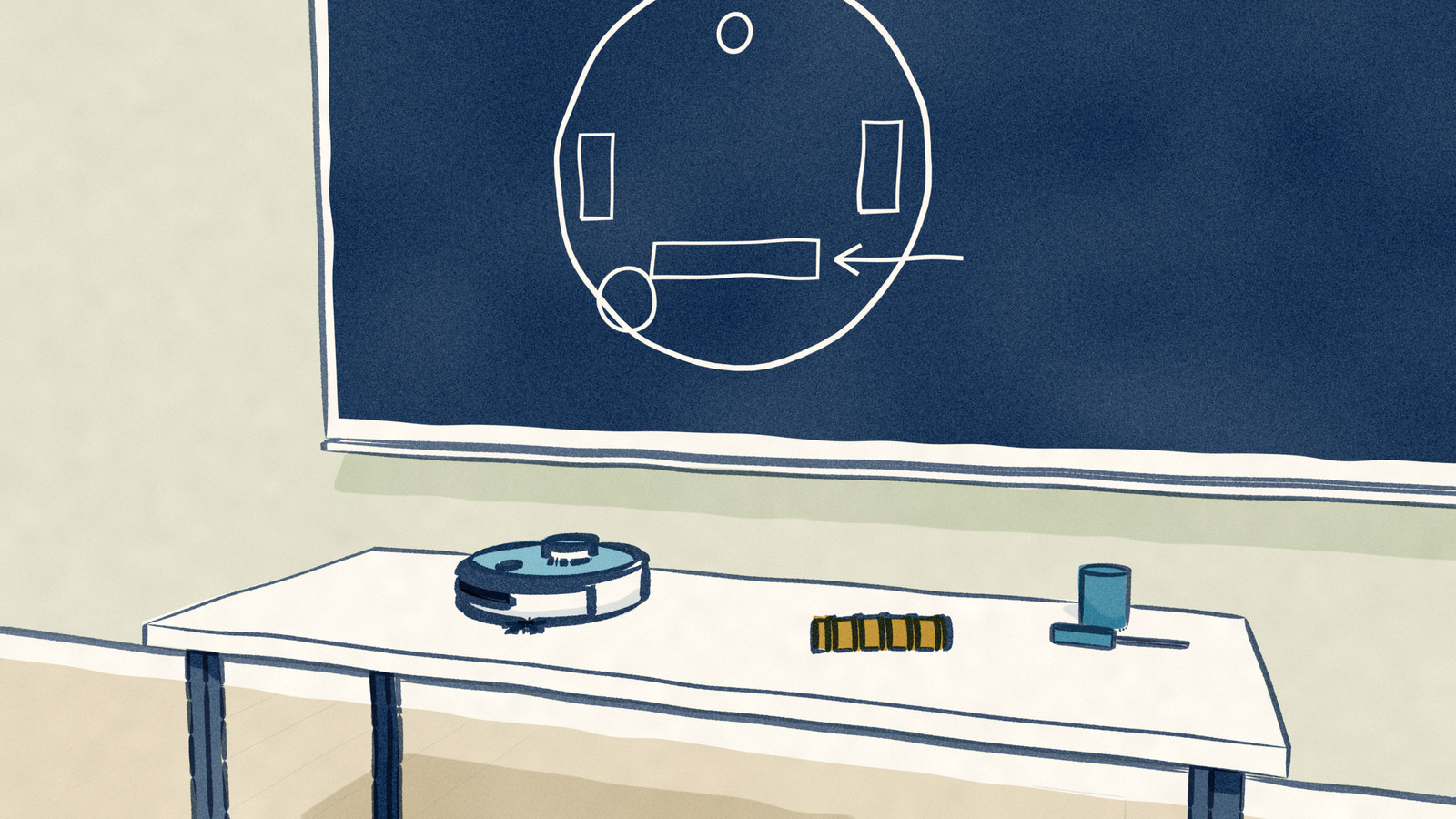
A window-cleaning robot clings to the glass by suction, and the part that stops it falling when that suction slips is a rope tied to something solid inside the house. MOVA built its T1 Station around a promise to change that arrangement.
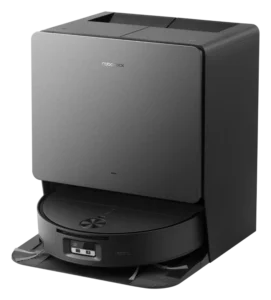
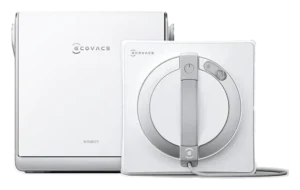
The change is a base station: an 18.1 lb case about the size of a small toolbox that charges the robot, reels in its cord, and sits on the sill as a counterweight. An independent review centered on that station, measuring an 800 newton suction cup beneath it that grips the glass to keep the case from tipping.
So here is the question a buyer is left with. Does the station remove the safety cable that other window robots depend on, or does it keep that cable and simply wind it up for you? The answer matters, because fall protection is the entire safety story on a machine crawling above a patio door.
Figure
What holds a window robot on the glass
- SuctionHolds the machine on the glass. It is the only layer doing any work while the clean is going normally.
- The dropThree storeys of nothing underneath, and the reason a line exists at all.
- The lineOut through an opening, and only in play once suction and the backup cell have both stopped.
- The anchorFixed indoors by the owner, to whatever was to hand. It is the one part of the chain the manufacturer never sees, and the line is worth exactly what it is fixed to.
Where the cable still is
The robot itself is the familiar kind: a pad-bearing square that grips the glass with about 10,000 pascals of suction, reads the edges with a ring of sensors, and crosses the pane in overlapping passes. MOVA rates it for glass from a small windowpane up to a wall two and a half meters tall.
Start with the cord. The T1 Station runs one 5.5 meter cable from the case to the robot, and that line does two jobs.
It supplies power from the station’s 4,500 mAh battery, and it is also the safety rope that catches the robot if suction lets go. The cable is not gone: a hands-on review describes a rear panel on the case that hides the power cord and the safety tether.
Because the robot draws its power down that same line, the cable is not optional to begin with. A cordless robot could in principle drop the safety rope and lean on suction alone. One fed through a cord cannot: the cord has to be there for the machine to run at all, so letting it bear the fall too costs nothing.
A window robot’s safety is built in layers, and the T1 Station keeps all of them. Suction holds the machine to the glass first. A backup battery, good for about 30 minutes, keeps that suction alive through a power cut. The rope is the final catch, for the moment suction and battery both give way at once.
What the station removes is the fuss of handling that cable by hand. On older robots the owner pays the rope out by hand, finds an anchor, and untangles the line when the robot turns. The same review reported no tangling from the T1 Station across tall panes, including glass the height of a patio door.
The genuine mechanical change is automation. A motor in the base station pays the cable out and winds it back at one button, a motion one reviewer likened to a garden hose retracting into its reel. The same station charges the robot in under three hours and stores it, a spare pad and the cleaning fluid in one carry case.
So how you live with the machine changes, but what catches a fall does not. The cable that retracts on a motor is the same cable that would arrest one, with the same rating, doing the same work as the hand-managed rope on a cheaper robot.
There is one more thing the station changes, and it is the part worth looking at closely. The station does not only manage the cable. It also moves the point the cable is tied to, from somewhere inside the room to the station itself.
What moved is the anchor point
On a traditional window robot the rope ends at a fixed object: a radiator pipe, a door handle, a hook screwed to the frame. A buying guide for these machines describes the tether as a backup restraint rather than the primary hold, a line to a solid indoor anchor that prevents a fall only once suction and battery have both failed.
The T1 Station ties the rope to the base station instead, and the station holds its own place with an 800 newton suction cup gripping the glass beneath it, backed by its weight as a counterweight. When that anchor holds, the setup is tidy. One reviewer flagged it anyway, noting the tether attaches to the grounded base case rather than to the robot, and questioning what that arrangement protects.
On my vinyl floor, the suction cup has consistently and reliably prevented the station from tipping over, even when the robot was working high up on the patio door.
Whether the relocation matters in practice is unproven either way. A suction cup on a clean interior sill is a strong anchor. A cup on a dusty frame, or on a frameless sheet of glass with nothing solid nearby, is a different test, and no source on record has published that one.
So the fall-protection chain is longer than it looks. On an older robot it runs from robot to rope to a fixed point in the house. On the T1 Station it runs from robot to cable to base station to suction cup to glass. Every link is still a cable or an anchor, and one of the anchors is now a second suction cup.
That is the shape of what MOVA built. The safety cable is still there, still rated to catch a fall many times the robot’s weight. The base station motorizes that cable and moves its anchor onto itself. What changed is who pays the rope out, and what the far end is tied to.