What does the Dyson R1 robot vacuum give up by not mopping?
Dyson's cheapest 2026 robot drops the mop, while its $699 sibling adds wet hardware on the same chassis and the same 21,000 Pa suction.
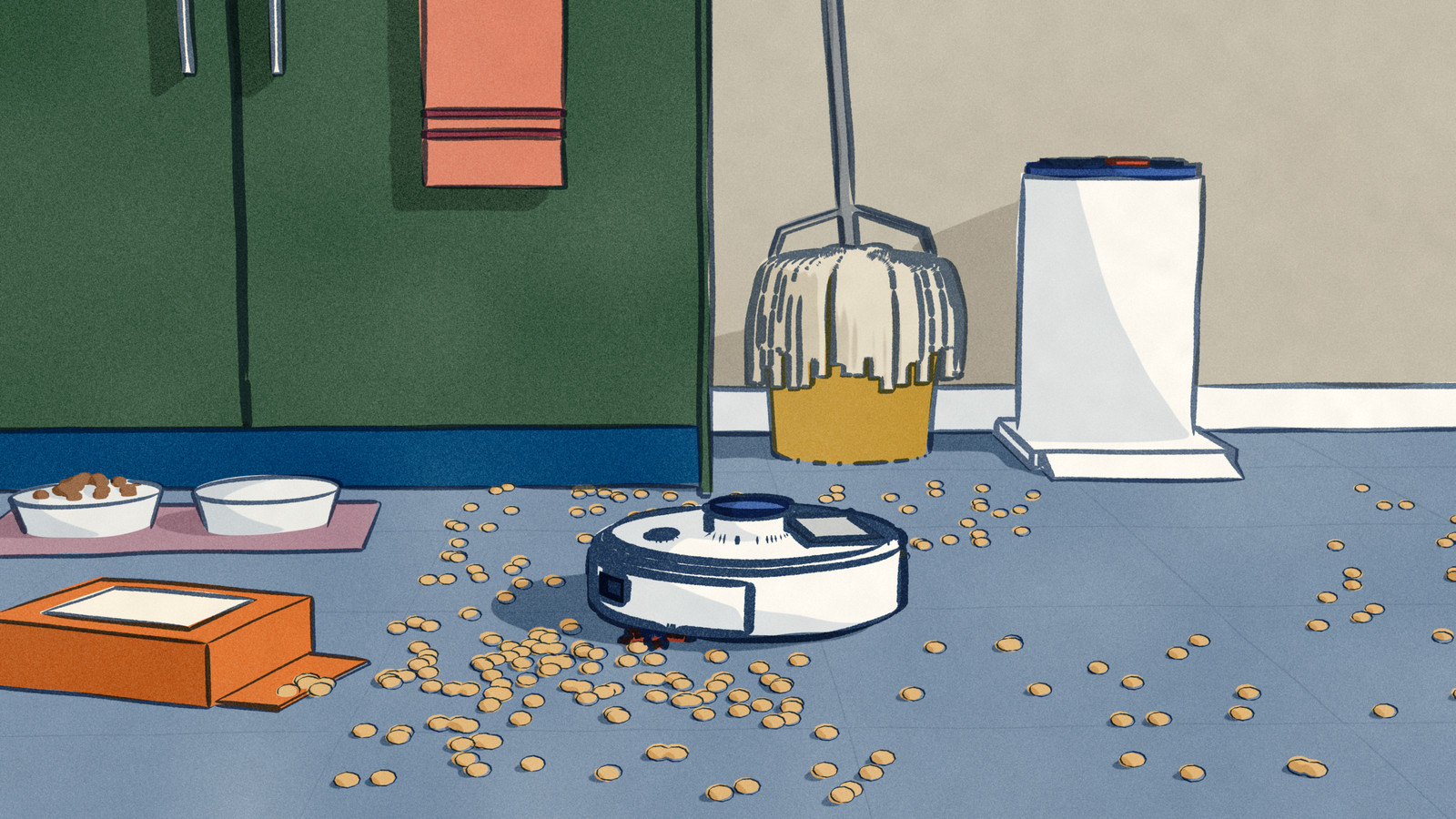
Dyson’s three new robot vacuums look almost like one machine in three boxes. They share a round chassis, a laser turret for mapping and a bagless dock, and list at $549, $699 and $1,199. What sets them apart is what each does with water. The cheapest, the R1 Nurovi Dry, does nothing with it at all.
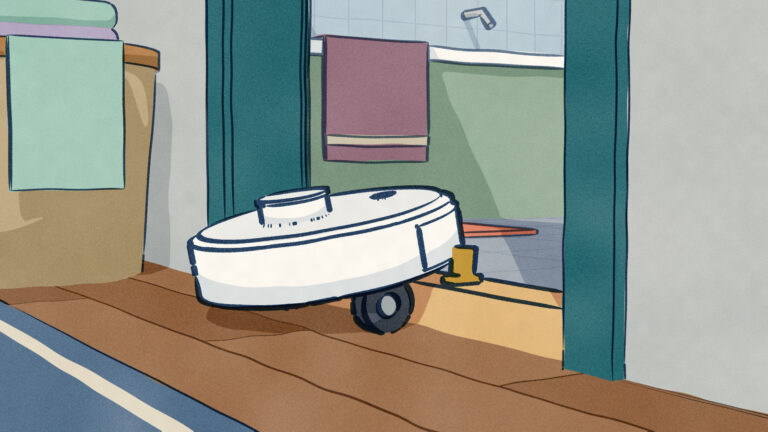
The name carries the whole difference. The R1 is vacuum-only: no mop pad, no clean or dirty water tanks, no dock that rinses anything between runs. Its $699 sibling, the R2 Wash+Dry, adds triangular pads that spin against the floor and a dock that washes them in hot water.
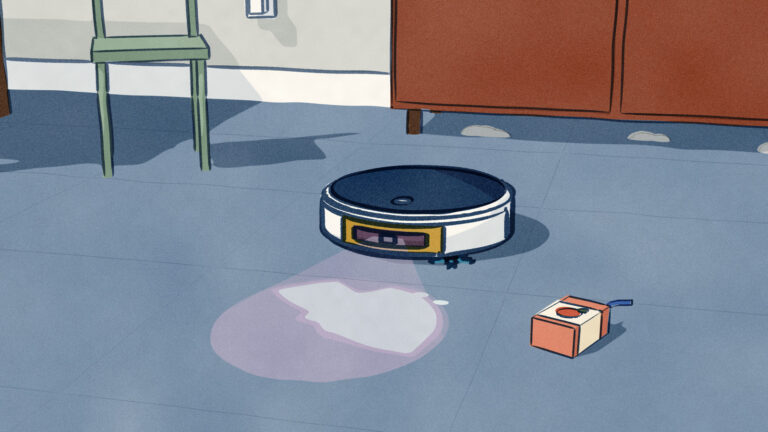
The $1,199 R3 Spot+Scrub goes further, with a self-cleaning roller mop and a UV light and camera that look for dried stains, cleaning a spot over and over until they read it as gone.
Most robot vacuums at this price now pair vacuuming with a mop and a washing dock. A vacuum-only machine from a major maker is the exception, aimed at homes that want dry pickup and handle their own wet cleaning.
So if you are weighing the bottom of Dyson’s line, the question is narrow: what does the $549 robot give up against the $699 one directly above it? It is the one step in the range where the cheaper model loses a whole job rather than better hardware for the same job.
What the lower price keeps
The R1 and R2 ride the same chassis and find their way around a home the same way. Both map with LiDAR, the spinning laser that replaced the HD camera on Dyson’s earlier robot vacuum, and both advertise 21,000 Pa of suction.
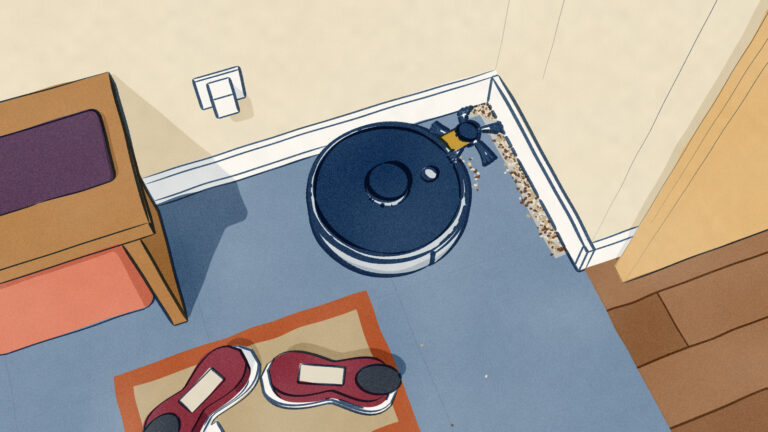
Inside, both carry the Twin-capture setup: a brush bar for larger debris working with the airflow that lifts fine dust, plus an extending side sweeper that reaches into edges and corners.
Figure
What the laser sees
- The scannerIt measures the first surface in every direction, at turret height, and nothing past it.
- Seen this sweepSurfaces a pulse reached and returned from. The blue plane is everything the rays crossed on the way.
- Not seenHidden behind something nearer, and unknown until the robot moves. This is why a mapped room still produces collisions.
Two smaller sensors shape each run. An ultrasonic sensor tells hard floor from carpet, and a piezo sensor counts and sizes the dust going in, so the robot can push harder over a dirtier stretch. No independent reviews or owner reports have appeared yet, so every one of these figures rests on Dyson’s launch materials rather than a test in a real home.
What the owner no longer does
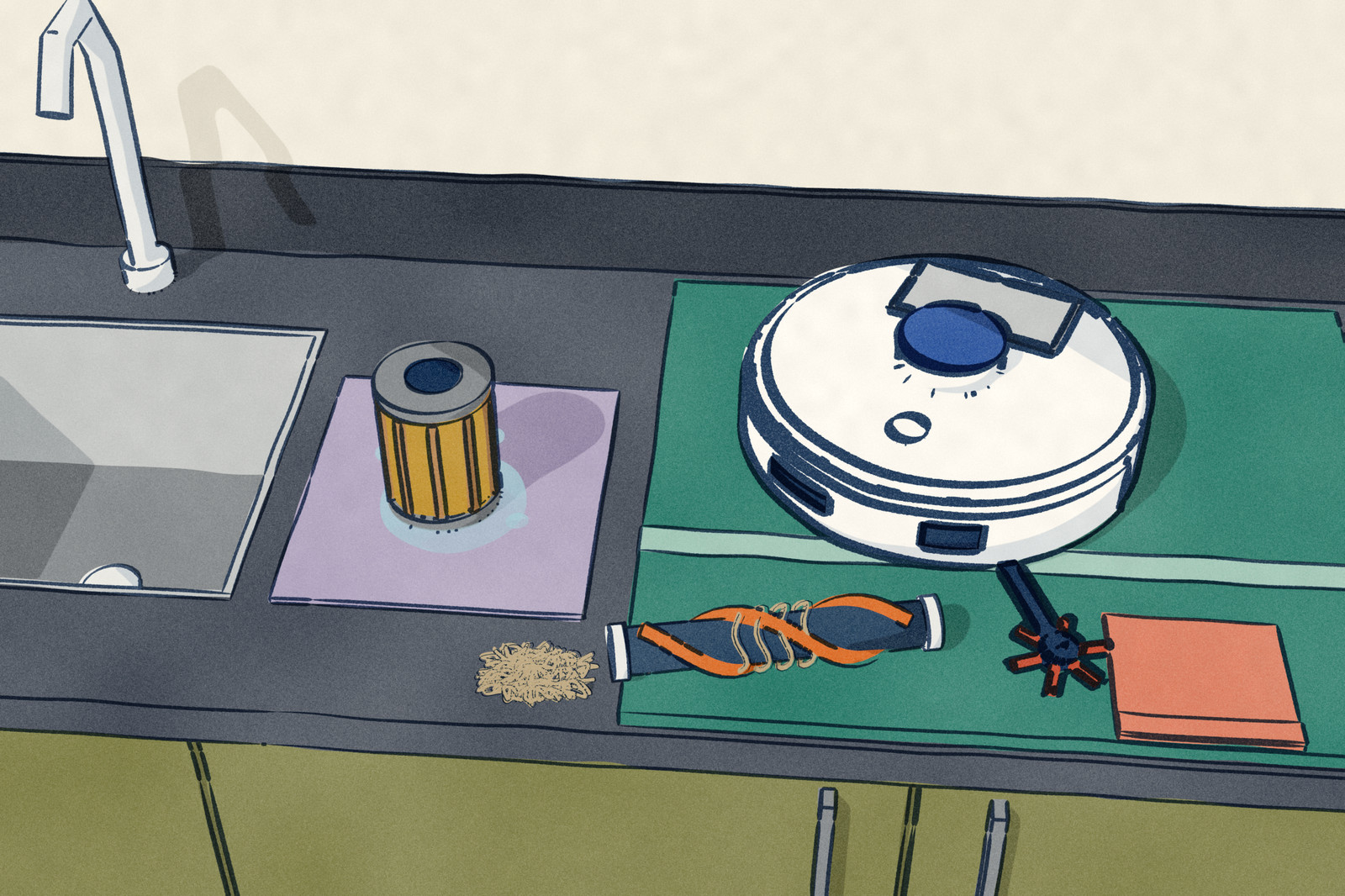
Dropping the mop drops its chores with it. There is no pad to rinse, no reservoir to refill, no dock tank to keep topped up. The dock is bagless, using cyclones to empty the robot after each run into a bin Dyson rates at around 90 days.
What is left for you is dry-side work: clearing hair from the brush bar, wiping the side sweeper, and washing the filter when suction drops.
Choose the R1 over the R2 and you are choosing against a mop, not against navigation. The map it draws and the suction it pulls are the ones Dyson built into the machine that costs $150 more. That $150 buys wet cleaning, and every chore that comes with it.