Skip to content
Saved

Analysis

Are consumer robots safe? What recalls reveal about design flaws

There is no clear answer, because no standardized household-robot safety test exists in North America and manufacturers set their own protocols. Safety is a discovered attribute, not a guaranteed one. Recalls, though rare, keep exposing design blind spots like thermal runaway and pinch or tether-entanglement failures rather than simple part defects.

By Robovations··10 min read·Updated

Household robotics marketing lists safety features with the same confidence it claims autonomy. Cliff sensors, obstacle detection, emergency stops, thermal limits on grippers. Consumers assume these have been tested, certified, or at least observed to work across a sample. Consumer robot safety verification sits in a gray zone where manufacturer claims, third-party reviews, and regulator oversight barely overlap.

The gap becomes visible when recalls happen. A review of Robovations database entries and published recall announcements since 2022 shows a consistent pattern: robots fail on attributes their marketing did not emphasize, or did not mention at all.

Thermal runaway in dock hardware. Unexpected interaction patterns between sensors in certain edge cases. Mechanical binding in folding arms. Fire risk from dustbag compression. Almost none of these problems appear in the safety section of a product datasheet.

Safety claims vs. verificationThe gap is between the claim and the standard

A robot manufacturer’s safety statement typically covers obstacles it will not hit, gripping forces it will not exceed, and emergency stops it will implement. These are manufacturer specifications, not independent test results. Unlike automotive safety ratings or toy safety certifications, there is no standardized household-robot safety test protocol, no third-party certification requirement, and no pre-market federal approval gate in North America.

Some companies pursue UL certification, CSA standards, or CE marking under low-voltage and electromagnetic directives. These certifications cover electrical safety and emissions, not functional safety: whether the robot actually stops at a cliff, whether its gripper actually measures force, whether its obstacle avoidance actually works in a home setting. The gap between electrical safety and functional safety is where surprises accumulate.

Underwriters’ Laboratories (UL) offers UL 1640 for robotic floor cleaners, UL 1834 for smart-home connected products, and UL 4600 for mobile service robots. These standards exist, with uneven manufacturer uptake, and the standards address fault modes (does the motor stop if a wire shorts) more readily than design blind spots (will the robot navigate into a pet’s food bowl and scatter kibble into a carpet, creating a tripping hazard). Functional safety in homes is harder to systematize than electrical safety in a lab.

Consumer robot safety standards

0of

UL 1640 (robotic floor cleaners) covers electrical safety and basic performance. No standard yet addresses multi-modal sensor failure, edge-case navigation, or predictable human-robot collision scenarios in a home environment.

This means manufacturers define their own test protocols, choose which third parties to hire for validation, and set their own bar for what counts as safe. A mopping robot from one manufacturer may be safety-verified differently than a nominally equivalent model from another. Neither is required to publish test protocols or pass thresholds. Both may be legal to sell in every major market.

The practical consequence is that the safety envelope of a household robot is known primarily to the manufacturer, inferred by third-party reviewers who rarely share methods, and discovered over time by owners. This is not a description of negligence; it is a description of a category that has outpaced its regulatory framework.

Where the boundary falls

The standards stop at the case

What the standards coverDoes the tether tangleDoes it see thisDoes it stop at the edgeOUTSIDE THE CASE
  • Inside the casebattery, motor, wiring, radio — what UL 1640, UL 1834 and UL 4600 govern
  • Outside itwhether the machine behaves in a room — tested by whoever the maker chooses, to a bar it sets
The standards that exist govern electrical safety and fault modes: whether the motor stops when a wire shorts. Every hazard behind the recalls in this piece sits outside that boundary, in the room the machine is working in, where no third-party test protocol is required and each manufacturer defines its own. That is the gap the recalls keep finding.

What recalls exposeThe deferred education

When robots are recalled, the reason points backward to what was not caught earlier. The Shark ION Robot RV1001 recall in 2023 cited a fire risk from the battery overheating under certain charging conditions.

Overcharging protection and thermal monitoring exist as stated features on many robots; the implementation failed. The recall was real; pre-market testing did not catch it, or did not test it under the specific combination of conditions that caused the fire.

Girafffe wall-climbing robot recalls have cited unexpected interactions between the vacuum motor and adhesion control under high dust load. The adhesion mechanism and dust handling were separately verified; their interaction in the field was not.

The Jibo social robot recall in 2019 involved a potential for the articulated head to pinch fingers if small hands inserted them during motion. The head’s motion range was controlled; the risk of insertion into the gap was not modeled as a plausible human behavior at design time.

In each case, a safety attribute (suction control, adhesion stability, articulation range) was implemented and likely tested under normal use. Real homes and real hands exposed a blind spot that normal use did not capture. Recalls correct the problem; they also reveal that the safety margin assumed at design time was either too narrow or built on assumptions that field reality violated.

Pool robot recalls have a different texture. Entanglement risk from tethers and hoses has prompted recalls when tether logic was reviewed post-market.

In these cases, the hazard was not a component failure; it was an interaction between the robot’s motion pattern and an object (the tether itself) that the motion planner treated as background. The machine did what it was designed to do. The design did not account for a realistic physical consequence.

The Robovations database includes floor vacuums, robotic mowers, pool cleaners, window cleaners, and humanoid arms. Across these categories, documented recalls are rare and mostly concentrated in the battery and thermal domain. Cliff sensors and collision avoidance in floor robots show few recalls. Gripper-pinch hazards in stationary arms have been addressed across the industry after early incidents.

The pattern suggests that stationary or narrow-task robots are easier to verify for safety than mobile multi-sensor robots in open homes. A floor vacuum must coexist with stair edges, furniture, pets, children, and cables in configurations the manufacturer never tested. This is not a failure of intent; it is a failure of verification scope.

Why evidence stays thinThe transparency gap

Manufacturers publish safety claims, not safety test reports. A robot’s datasheet will state “Advanced obstacle detection” or “Integrated cliff sensors” without publishing the test protocol, the pass threshold, the edge cases tested, or the failure rate. Third-party reviewers test robots on their own criteria, which vary by outlet and are rarely exhaustive enough to catch low-probability failure modes.

Consumer reports and owner forums aggregate real-world experience, and anecdotal evidence is poor at categorizing risk. A robot that fails unpredictably for one household of three people might work reliably for ninety-nine others. Without a structured safety data collection system (like automotive crash-test databases or medical-device adverse-event reporting), the robotics industry has no central repository of failure patterns. Some failures stay private; others surface only on Reddit or YouTube.

Insurance and liability frameworks remain underdeveloped. A homeowner injured by a robot vacuum has recourse to product liability; a manufacturer can be sued. There is no safety standard by which to judge whether the robot was too unsafe to sell or safe enough but this incident was an unforeseeable edge case.

The lawsuit becomes a negotiation, not a judgment against a known standard. This leaves the industry without external pressure to adopt uniform safety verification.

Term

Functional safetyThe robot’s ability to avoid harm during normal and foreseeable misuse, separate from electrical safety (the charger will not shock you) or information security (the app will not leak your location). Functional safety requires testing how the robot behaves when its sensors disagree, when its operators behave unexpectedly, or when the home environment is messier than the design baseline.

Some manufacturers pursue certification and transparency by choice. Roborock publishes safety test results in some markets. iRobot has provided safety documentation and test videos in product disclosures. Others do not. This is permitted because there is no requirement.

A manufacturer selling a robot globally can achieve legal compliance in every market while publishing minimal safety evidence, because the threshold for safe enough is set by the market’s burden of proof in a lawsuit, not by a pre-market certification body.

The asymmetry matters for buyers more than it might appear. When a manufacturer voluntarily shares test protocols and edge-case results, buyers gain a partial picture of what the robot was designed to handle. When documentation is absent, buyers have only marketing copy. These are not the same starting points, and no label on the box distinguishes them.

Where a failure goes

Two records, and an empty cabinet

VEHICLESCrash-test databasesMEDICAL DEVICESAdverse-event reportingHOUSEHOLD ROBOTSReddit, YouTube, one review
  • Kept and indexeda failure enters a record that the next buyer, regulator and manufacturer can all read
  • Loosethe evidence exists, and finding it depends on who happened to post
The comparison is the article's own. Vehicles and medical devices each have somewhere a failure goes, and a way to look it up. Household robots have the same shaped absence in every drawer: no central repository of failure patterns, so what is known sits wherever an owner chose to put it. That is not a gap in the evidence. It is a gap in where the evidence is kept, and it is why recalls end up doing the work.
[rv_ans_score_pillars robot=”roborock-s8-pro-ultra”]

What verification would requireThe missing standard

A comprehensive safety standard for household robots would specify test protocols for the categories of failure that recalls have exposed: battery thermal management under edge-case charging conditions; sensor failure modes and fallback behavior; collision dynamics with common household objects and people at different heights; interaction of multiple subsystems (suction plus navigation, adhesion plus thermal monitoring) under combined stress. It would require third-party testing, published results, and a clear pass threshold.

Such a standard exists in fragments. UL 1640 covers some electrical safety. IEEE and ISO committees have drafted standards for mobile robots and human-robot collaboration. The Consumer Product Safety Commission (CPSC) has authority to regulate household robots as products and has issued recalls. A unified, mandatory, pre-market safety standard that a household robot must pass before sale in North America does not exist.

Europe’s approach is stricter: CE marking under the Low Voltage Directive and Electromagnetic Compatibility Directive is required, and compliance with ISO standards for mobile robots and human-robot safety is increasingly expected. This raises the bar for European manufacturers and importers, without preventing a non-compliant product from entering the market via alternative channels, and does not standardize functional safety verification across the continent.

The absence of a unified standard is not necessarily a mistake. Household robots span wildly different designs: a floor vacuum needs different safety verification than a humanoid arm, which needs different testing than a pool cleaner. A one-size-fits-all standard might be too restrictive for innovation or too broad to catch category-specific hazards.

The current arrangement, certification by choice, verification scope set by each manufacturer, third-party review by market demand, recalls as the primary feedback loop, is reactive and leaves safety as a discovered attribute rather than a guaranteed one.

Four classes

The hazard each one creates is a property of its geometry

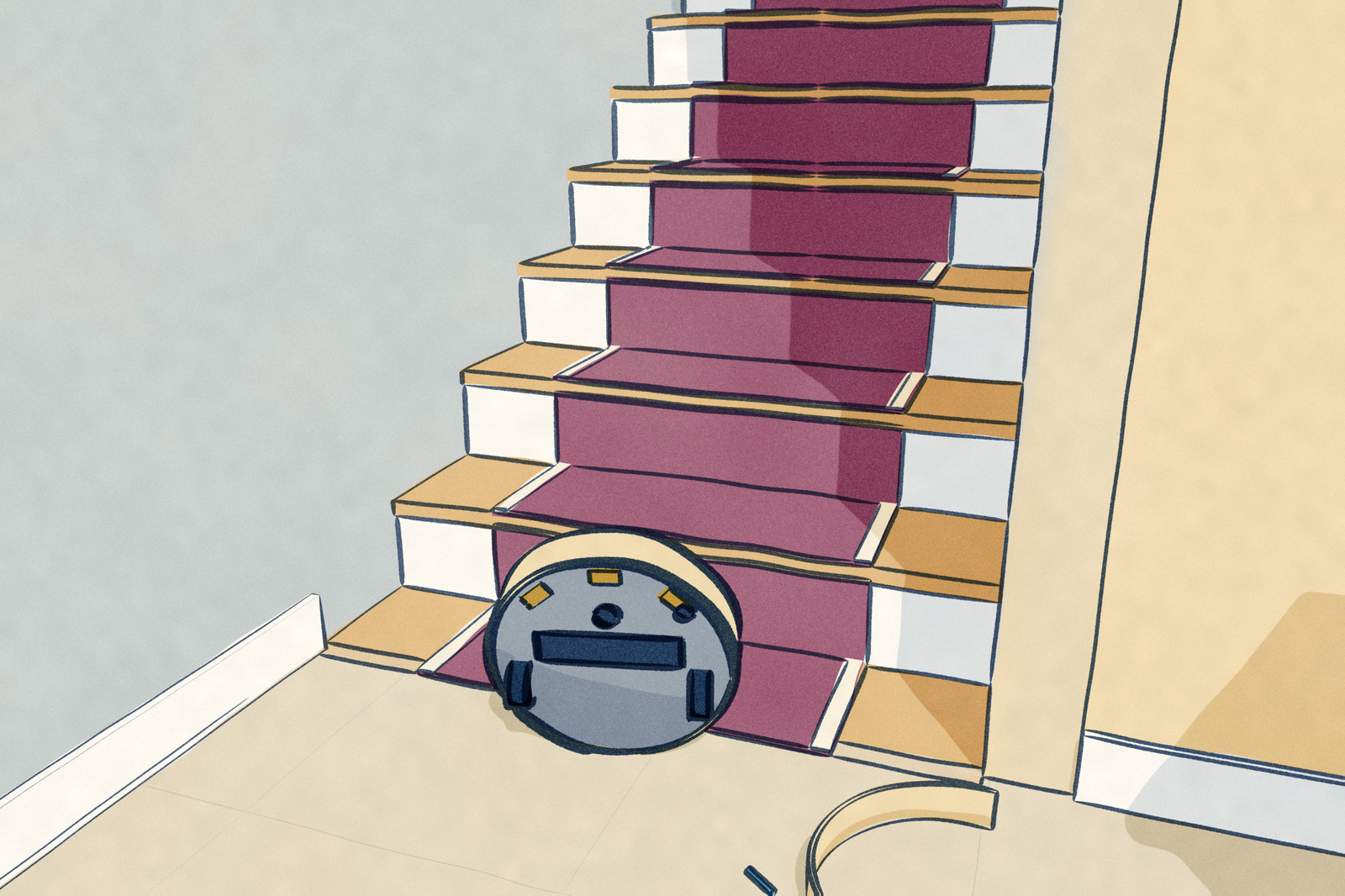
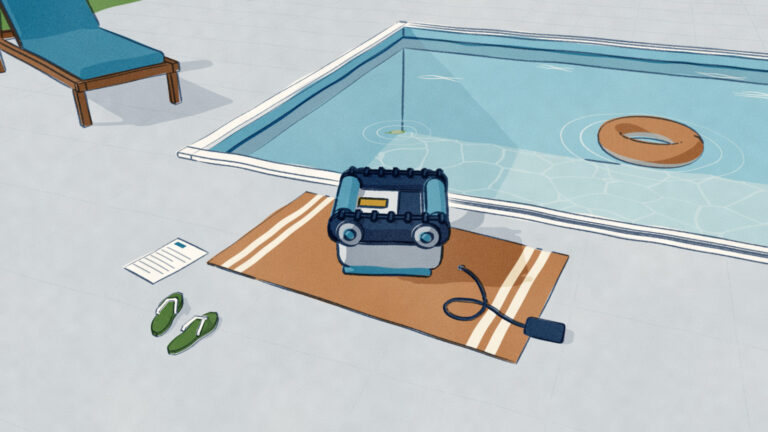
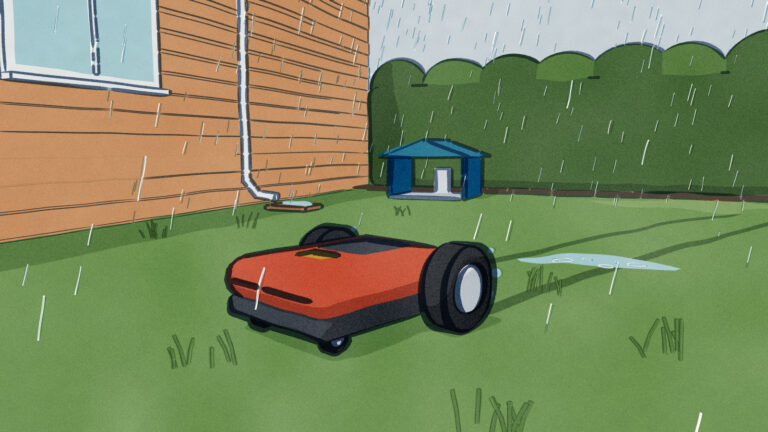
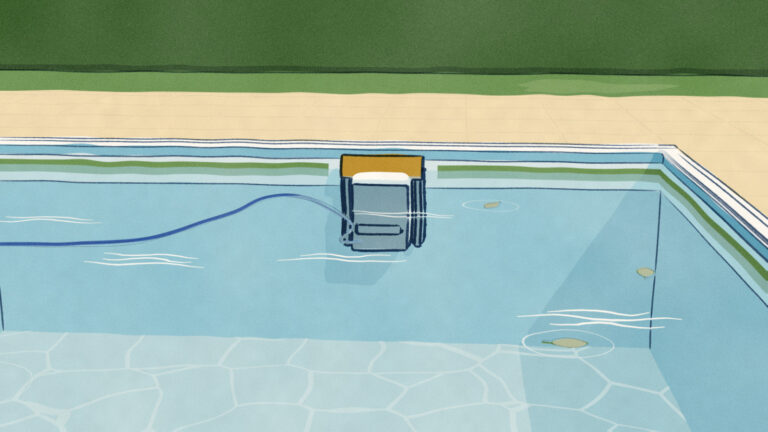
ROBOT VACUUMan unguarded drop, at floor levelROBOT MOWERa spinning blade under the deckPOOL CLEANERa powered device inside the waterWINDOW CLEANERa working height with nothing under it
The four consumer classes do not share a hazard, because they do not share a geometry. A vacuum works beside unguarded drops at floor level; a mower carries a turning blade under its deck at ankle height; a pool cleaner is a powered device inside the water people swim in; a window cleaner works above a fall with nothing under it. A single safety expectation written for "consumer robots" has to cover all four, and each recall in this piece traces back to one of them.

Category-specific verification gapsVacuums carry the longest recall history

Floor vacuums and mops have the longest recall history of any household robot category, driven by battery fires and dock overheating. This reflects their volume as much as their risk: more units in more homes for more years means more exposure to edge conditions.

Cliff-sensor failures exist in owner reports but have rarely risen to the level of recall, suggesting either that the failure mode is uncommon enough to clear the recall threshold or that cliff-sensor incidents (a robot falling down stairs and breaking, not injuring a person) do not generate the injury reports that trigger CPSC action.

Robotic mowers carry a different risk profile. Blade contact with people and pets is the primary documented hazard. The industry has addressed this through lift and tilt sensors that stop blades when the mower is raised or tilted; CPSC recall records document cases where this system failed or engaged too slowly.

Owner reports describe near-miss events that did not result in recalls because no injury was filed. Perimeter wire systems limit where the mower can go; they do not limit what the mower can do to a person who enters the perimeter.

  • Floor vacuums: primary recall driver is battery and dock thermal failure; cliff and collision recalls are rare.
  • Robotic mowers: primary documented hazard is blade exposure; lift-and-tilt sensor failures are the common recall mechanism.
  • Pool robots: tether entanglement and electrical-isolation failures in older models; modern cordless designs have a different risk profile.
  • Window cleaners: adhesion failure resulting in the unit falling is the primary physical risk; documented recalls in this category are limited.

These distinctions matter because a single safety label (“passed UL certification”) does not convey which version of UL was tested or which category’s risk profile was evaluated. A floor vacuum with UL 1640 certification has been evaluated against criteria that do not map to a robotic mower’s blade-contact risk. Category-specific verification is the level at which recall patterns become predictive, not electrical-safety certification in general.

[rv_ans_timeline robot=”roborock-s8-pro-ultra”]

Verification as market signalBuyers have only indirect signals

In the absence of a transparent, universal safety standard, buyers have only indirect signals. A manufacturer’s willingness to publish safety test results, disclose the edge cases tested, and share recall history is a stronger signal than a safety statement alone.

A robot with a published UL certification has met an external standard; one without has not. A brand with a history of recalls is not necessarily less safe (recalls can indicate responsive manufacturers catching problems and fixing them), and a brand with no documented recalls and no published verification is harder to assess.

Owner reports on forums and review sites aggregate real-world experience over months and years. A robot that surfaces a cliff-sensor failure in one household and then again in another after several months suggests a systematic problem.

A robot with reported fires, pinch hazards, or unexpected behaviors in enough households to cross a threshold of notice is flagging a functional safety issue. This emergent feedback is slower and noisier than pre-market testing; when enough people report a problem, it is likely real.

Robovations classifications currently track autonomy levels, readiness status, and price. Safety verification and recall history do not yet have a formal place in the schema. This is a gap. A household robot’s ability to coexist safely with a home is foundational to whether it is actually usable, and usability at the functional level depends on safety performance that is often invisible until it fails.

Consumer robots lack the pre-market safety certification that governs cars, medical devices, and toys. What verification exists is fragmented, often private, and revealed most clearly by recalls. Until there are agreed standards per category, safety remains a discovered attribute rather than a guaranteed one.

[rv_ans_distribution robot=”roborock-s8-pro-ultra” metric=”price,suction,runtime,cost5″]

Published June 11, 2026 · Updated September 5, 2026 · 2,392 wordsHave evidence that could change a classification?