Why do Weave’s Isaac 1 and Nori’s A3 roll instead of walk?
The home humanoid everyone has been shown walks on two legs and costs $20,000. Two companies now shipping to buyers went a different way.
On this page3 sections
A San Francisco startup shipped its first home robots in July. The Nori A3 rolls through a house on a wheeled base, reaches from the floor to a kitchen counter with two arms, folds laundry and runs six to eight hours on a charge. It lists at $1,688.
Weeks before, Weave Robotics opened orders for a home robot of its own, the Isaac 1, at $7,999 or $449 a month. It also rolls on wheels, and in place of fingers it carries two orange claws.
Neither looks like the home robot most people have been shown. That one walks. The 1X Neo is a bipedal humanoid that lists at $20,000, and it has drawn most of the attention paid to robots meant to live in houses.
As of this year the Neo had not reached a single paying household. The two robots that are reaching households gave up the legs. So what did giving up the legs buy, and who can afford the result?
The two machines that rolled are the two with firm delivery dates. Neither price nor company age predicts which robot ships.
What dropping the legs changed
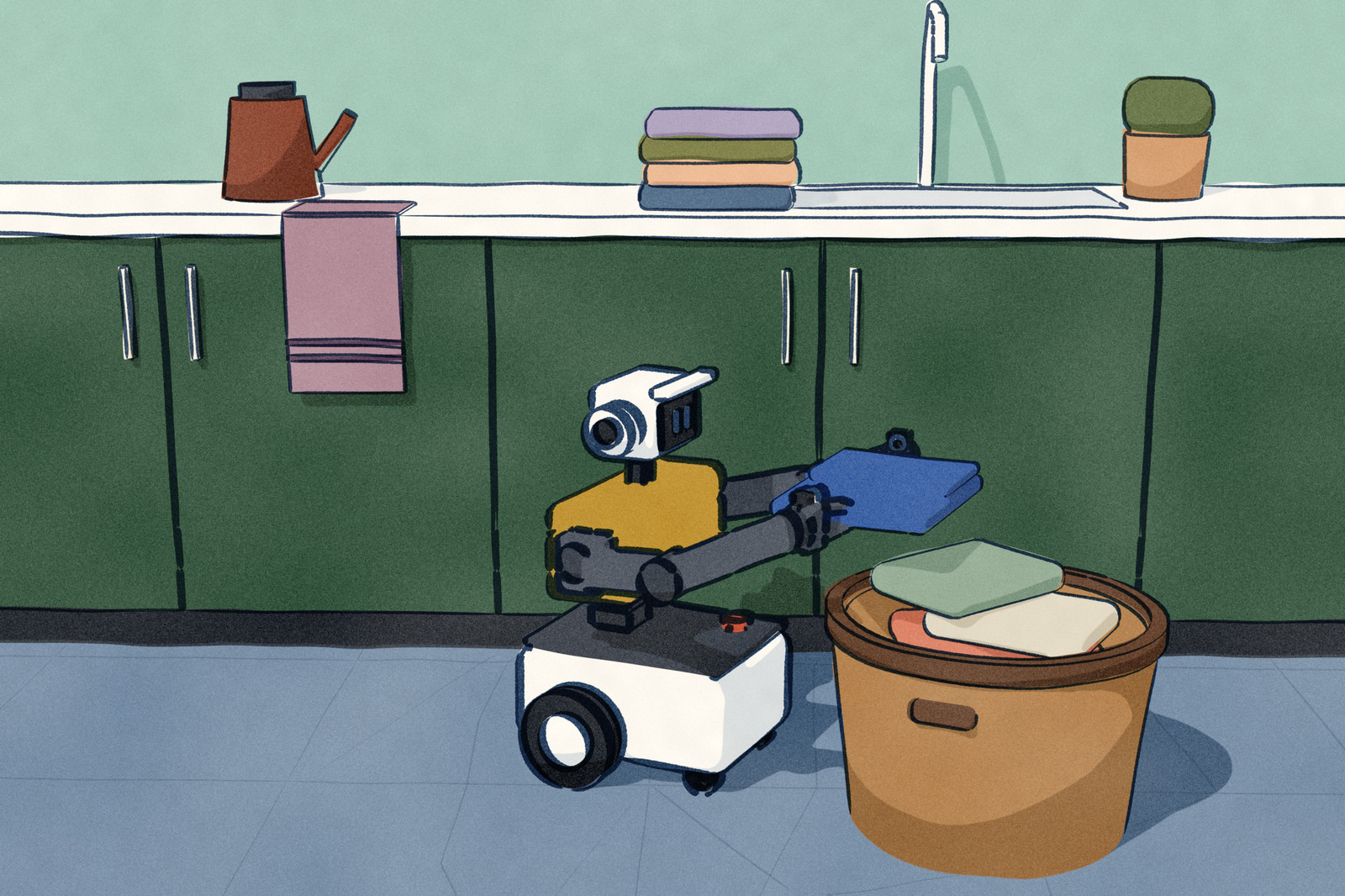
Legs are the costly, failure-prone part of a walking robot. Balancing a human-shaped body burns actuators and computing power before it has done any useful work, which is part of why bipedal machines have stayed in labs and demonstration reels.
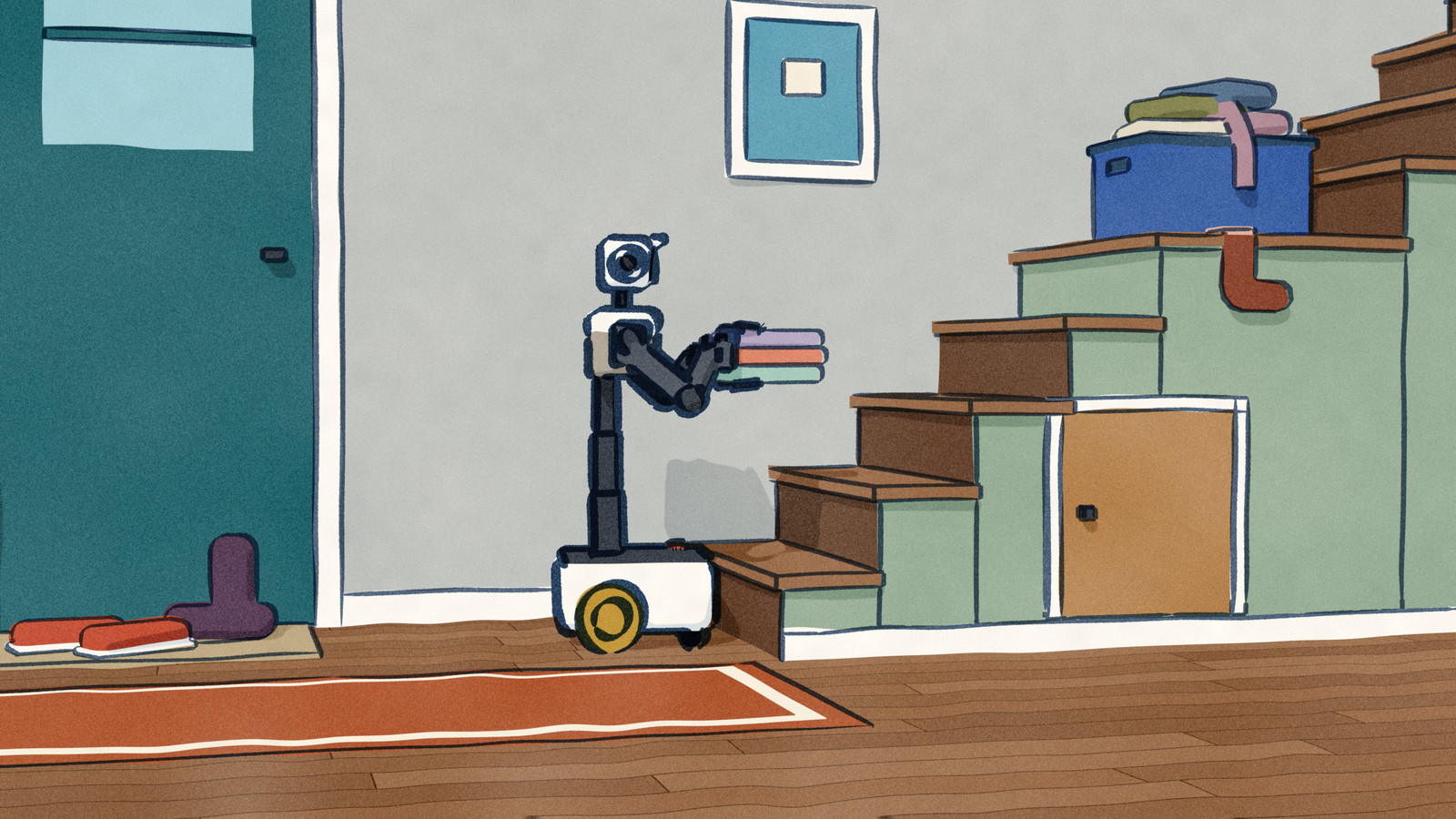
A wheeled base sets that problem aside. The Nori A3 packs 19 points of articulation into a torso that raises and lowers, so its two arms can work down at floor height or up at a counter.
The payload tells you what that buys and what it does not. The A3 lifts about 120 pounds straight up, but only a few pounds with its arms stretched out. It finds its way with a lidar and four small cameras set on its head, neck and grippers.
The Isaac 1 carries the shape further. It stands 5 feet 9 inches when it rises out of a crouch, moves on wheels, and ends each arm in a claw rather than a hand. Weave says it finds dirty clothes, folds clean ones, makes beds and tidies toys, though it does not run the washing machine itself.
The trade runs the other way too. A machine on wheels cannot climb a flight of stairs, so a two-story house is two problems rather than one, and a sock dropped on a landing is out of reach. Legs were buying the ability to go everywhere a person goes, which is the part no home robot has yet delivered on a schedule.
Who is actually running it
Giving up legs does not mean the robot does the work on its own. The 1X Neo leans on people. When it meets a task it cannot yet handle, a remote 1X operator steers it through virtual-reality controls while the robot’s software watches and, after enough sessions, is meant to take the task over.
Weave is in the same position. The company grants that a human operator can take over remotely for the parts of a job the Isaac 1 cannot finish on its own.
Figure
Where the decision is made
- The linkEvery decision travels out of the machine and back over this. Latency, a dropped connection and an operator looking elsewhere are all failures of the task, and none of them are faults in the machine. A machine run this way is Level I.
- The operatorThe person at the console generates the action sequence. The machine is the actuator.
- Closed on boardThe same loop, entirely inside the machine. Nothing off-board has to be working for it to keep going, which is what makes it eligible for Level III.
Nori reaches the same gap by a different road. Instead of a company operator, the owner teaches the A3 each task from a laptop app, and Nori runs what it calls an app store for the robot, a marketplace where those trained skills can be shared and installed.
A Neo owner relies on 1X’s remote operators for what the machine cannot do, while an A3 owner does the teaching, and the skills live in the owner’s own account.
What you can buy, and when
Nori says its first run sold out and a limited second batch ships this fall. Weave’s first deliveries are set for September, California only, with the rest of the United States in 2027. The Neo, for now, is a reservation rather than a delivery.
These two sit at the ambitious end of what is actually entering homes. The same run of 2026 also brought a new self-cleaning litter box, the $899 Litter-Robot 5 Pro from Whisker, along with a new robot vacuum and a new robot mower: single-task machines from established names, each built to do one chore and sold on an ordinary retail schedule.
The split in this batch is really a split in business model. A company with a proven one-job appliance can refine it and ship on a calendar. A company promising a robot that does many jobs can trim the body until the machine ships, which is what Weave and Nori did, or keep the human form and keep taking reservations, which is where the Neo sits.
The general-purpose home robot you can have delivered in 2026 is the one that gave up walking. It still keeps a person on call for the parts it cannot manage, and in the A3’s case it learns the house from whoever owns it. The one that walks is still a $20,000 place in a line.