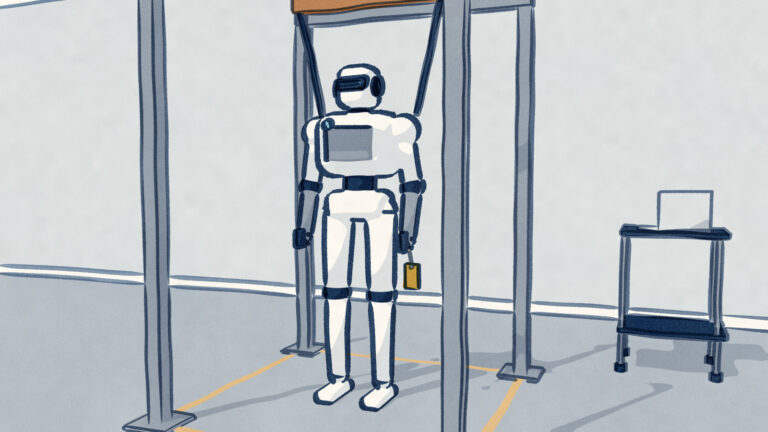
What does paying more for a home robot buy?
List prices for the robots people can order run from under $15 to a quarter of a million dollars. The gap is not all capability.
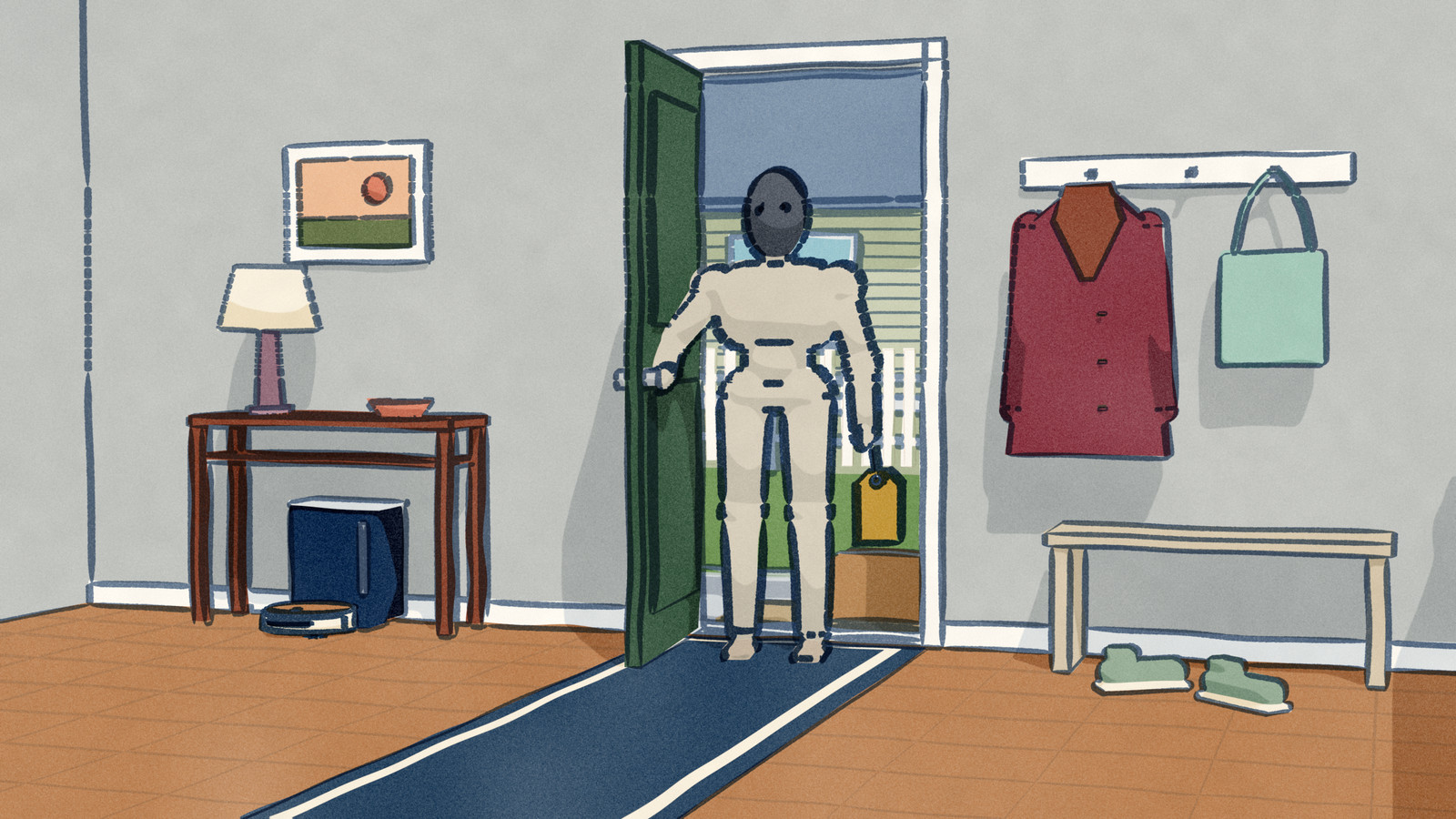
A $200 deposit, then $20,000 outright or $499 a month. That is what it takes to reserve NEO, the humanoid 1X built to work inside the home, with the first units due to ship in 2026, as launch coverage reported. Preorders opened in late October 2025.
What the deposit buys is not a machine that does the chores on its own. By itself, NEO can open doors, fetch small items and switch lights on or off. For anything harder, the owner books a 1X operator through an app, and a remote person guides the robot while it learns, the home visible to them through its camera.
That is one price in one class, at the strange top of a very wide market. The robots an ordinary buyer can order today carry recorded list prices from $13.59 to $250,000. As you move up a price tier, what are you paying for? These figures are MSRP as recorded, the price makers set rather than the street price.
The spread is not uniform. Window-cleaning robots are the cheapest class on record; humanoids are the dearest by a wide margin.
List prices on record, by class
| Robot class | Recorded MSRP range | Midpoint |
|---|---|---|
| Robot vacuums | $13.59 to $1,999.99 | $749 |
| Robot lawn mowers | $451 to $5,999 | $1,699 |
| Robot pool cleaners | $299 to $4,250 | $1,189 |
| Robot window cleaners | $150 to $850 | $349 |
| Specialty robots | $29.99 to $100,000 | $599 |
| Humanoid robots | $1,385 to $250,000 | $25,000 |
The midpoints tell the plainer story. The $25,000 humanoid figure tops the dearest mower, pool cleaner and window cleaner put together, and no other class comes close to it.
Even inside one class the span is wide, and the label can hide very different machines. A robot pool cleaner lists at $299 on a cord to the wall or several thousand dollars running free on a battery, and most of that gap is how it moves around the water. The specialty class runs from a $29.99 novelty to a $100,000 industrial arm under a single heading.
Where the extra money goes inside a class
Robot vacuums show the pattern most clearly, because the class is the largest and the most tested. An independent lab review of 2026 models found the gap in core cleaning has narrowed: a budget machine can hold its own on bare floors and pet hair.
The same review rated one budget vacuum “only middling at cleaning dust and debris from carpets,” while a higher-priced model “performs well in every cleaning test” and was “better than many other robot vacuums at navigating spaces and avoiding obstacles.”
So the premium mostly leaves the floor behind. It pays for the parts you handle between runs: a base that empties the bin, brushes that resist tangling, and mapping that steers around a sock instead of swallowing it. The suction figure on the box is often similar up and down the range.
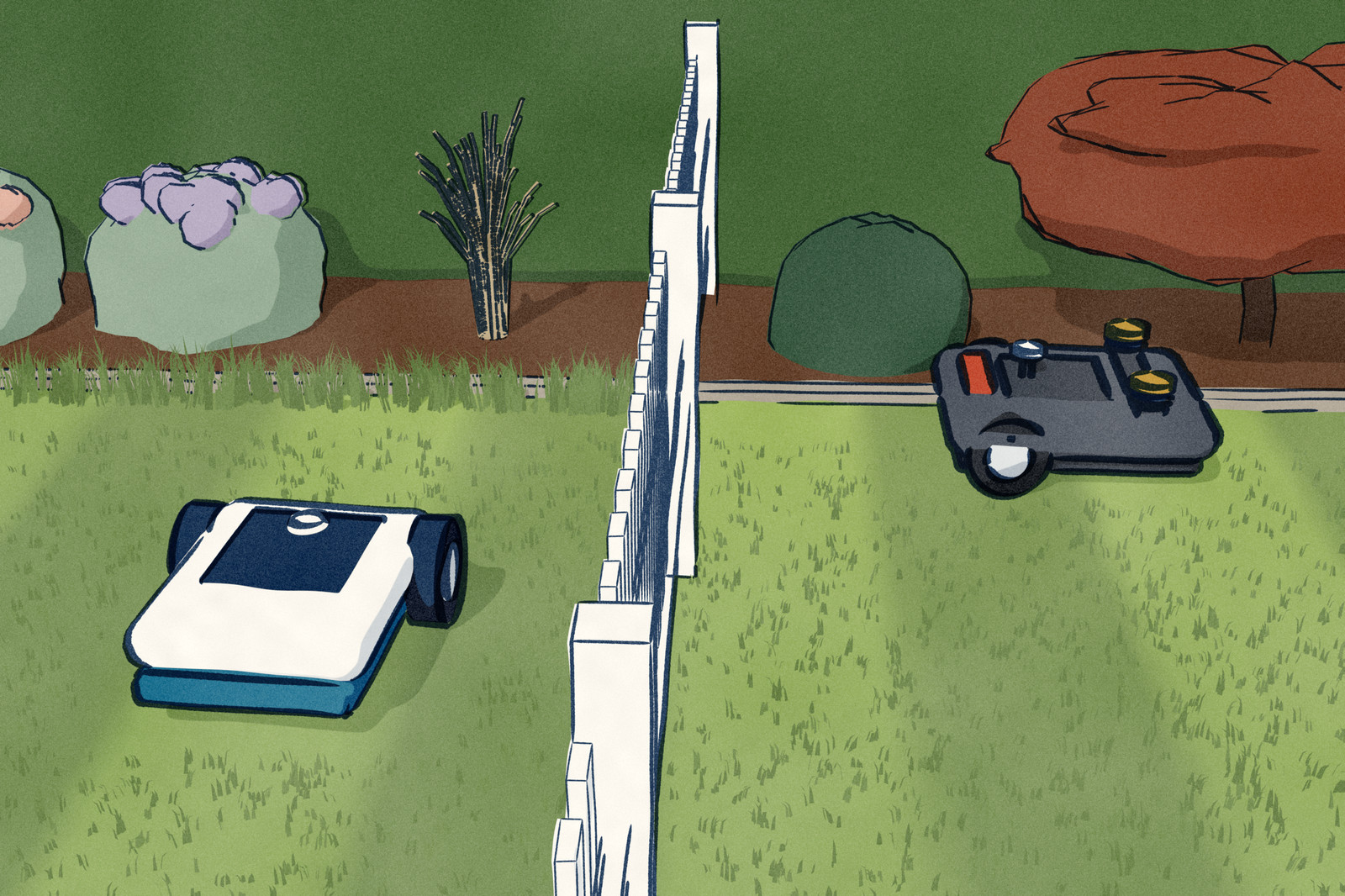
Robot mowers show the same shape with a different part doing the work. The old boundary was a wire buried around the lawn. The current generation skips it, fixing the mower’s own position with a satellite correction called RTK GNSS.
Term
RTK GNSSA satellite positioning method that corrects an ordinary GPS fix against a fixed base station, placing the mower to within a few centimeters. It is what lets a mower hold to a lawn with no buried boundary wire.A 2026 review of wire-free models lists them from $789 for an RTK mower to $1,599 for one that also maps with dual LiDAR and trims its own edges. The extra money buys the sensing that draws the fence; the cut itself is much the same.
The top of the market is paying for a person
Return to NEO and its $20,000. In its own class that sits near the midpoint; for a vacuum or a mower it would be far past the top of the line.
Yet the capability is capped by design. For any task NEO has not learned, a person drives it from elsewhere. That is teleoperation: the robot finishes the job because a human is in the loop, while its own autonomy is still being built.
Figure
Where the loop closes
- The linkEvery decision travels out of the machine and back over this. Latency, a dropped connection and an operator looking elsewhere are all failures of the task, and none of them are faults in the machine. A machine run this way is Level I.
- The operatorThe person at the console generates the action sequence. The machine is the actuator.
- Closed on boardThe same loop, entirely inside the machine. Nothing off-board has to be working for it to keep going, which is what makes it eligible for Level III.
1X built NEO this way on purpose. The robot improves by sending the company a stream of real homes to learn from, and the owner’s consent to the camera is the price of entry. Bernt Børnich, 1X’s founder and chief executive, put it in a single line.
If we don’t have your data, we can’t make the product better.
Up and down the price bands, that is the recurring shape. In a vacuum the extra money moves from the floor to the dock. In a mower it moves from the blade to the sensing that replaces a buried wire. At the top of the market it buys a robot that runs on a remote person and a feed of the home until it has learned enough to run alone.
The $200 deposit holds a place in that learning, not a finished machine. What ships in 2026 will still be learning on the job, with a person on call for the parts it cannot yet do.