
Autonomy Library·Reference
Staged Humanoid Demos
Usually part real and part staged. The robots are genuine hardware, but a launch video can overstate autonomy in several ways at once: the hard tasks may be teleoperated by a person in a headset, the clip may be one clean take out of many, and the footage may be cut or sped up. Through 2026 the most complex household tasks shown by home humanoids are typically piloted, so Robovations classifies each robot from documented autonomous behavior rather than from the reel.
Counts are live·reviewed July 20, 2026
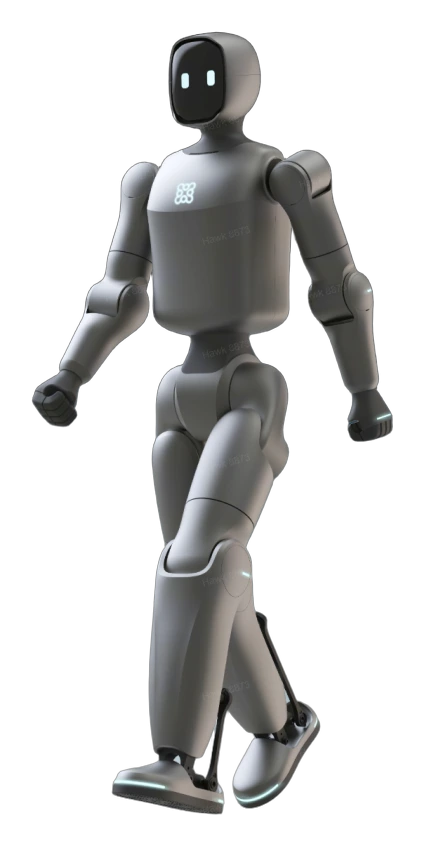
What the reel adds to the robot
- 1
The pilotA person on a headset, just outside the frame. Where they are driving, the motion in the reel is theirs rather than the machine’s.
- 2
What was cutRecorded and never published: the slower attempts, the retries and the failures. The machine did all of it, and none of it is in the video.
- 3
The cutsEvery join is a point where time was removed. A run that looks continuous is continuous only after the edit.
-
Motion is realThe hardware is real and the motion in every kept take happened.
Real robot, staged autonomy
The useful question is almost never whether the robot is fake. The hardware is real and the companies are real. The question is how much of what you are watching the robot did by itself, and how much came from the people and the editing around it. A polished launch video is a marketing artifact built to show the ceiling of what is possible under ideal conditions, not the floor of what the robot does on an ordinary day in a real home.
That gap is why demo footage alone tells a buyer very little. A piloted task and an autonomous one look identical on screen. The signal is not the motion; it is what the company is willing to state about the conditions.
Five ways a demo can mislead
One video can use several of these at once. None makes the robot fake, but each moves the result away from what the machine does on its own.
| Teleoperation | A trained operator in a VR headset drives the hard parts in real time. This is the most common gap between a demo and daily reality. See whether humanoids are teleoperated. |
|---|---|
| Choreography | The task is scripted and the scene is arranged: fixed object positions, removed clutter, a rehearsed sequence. It runs because the world was set up so it would. |
| Editing and speed | Cuts hide the failed attempts, and footage is sometimes sped up so hesitant, slow motion reads as fluent. Better demos now label real-time speed and mark which segments are autonomous. |
| Cherry-picked takes | One clean run is shown out of many attempts. The success rate across attempts, not the single best take, is the real measure of reliability. |
| Staged conditions | Even lighting, a controlled room, and a safety operator off camera. A real home is none of these, and performance drops the moment the robot leaves the set. |
What a demo worth trusting discloses
A demonstration you can rely on states its conditions plainly: which segments are autonomous and which are piloted, whether the footage runs at real-time speed, how many attempts the shown run represents, and whether the environment was arranged for the task. When a company marks the autonomous segments and leaves the piloted ones labeled, it is giving you the one thing the video cannot show on its own.
When those conditions are not stated, the safe assumption is human assistance. This is not cynicism; it is the same standard the Autonomy Ladder™ applies to every robot. Capability counts toward a classification only when it is documented without a person in the loop.
Questions
Are Tesla Optimus demos staged or real?
Both, depending on the task. Tesla has confirmed that some Optimus demonstrations, including bartending and crowd interaction at the October 2024 event, used human teleoperation, while stating that other tasks such as laundry folding and certain factory work are autonomous. Because the mix varies per demo and is not always disclosed in full, Robovations classifies Optimus from documented autonomous behavior rather than from any single reel.
Was the 1X Neo demo real?
The hardware is real, but most of the complex chores shown at the Neo reveal were run in the company’s Expert Mode, meaning a remote operator in a VR headset drove them. 1X has stated that segments its planner labels as AI are autonomous and frames teleoperation as a data-collection strategy. At launch, its most demanding household tasks are piloted, which places it low on the Autonomy Ladder.
Are humanoid robot videos sped up?
Some have been, historically, which is why speed became a credibility issue. In response, several makers now state the playback speed on screen and mark which portions are real-time and autonomous. When a video does not state its speed, treat fluent, fast motion through a hard task as a question rather than a given.
Is the robot in the demo just CGI?
For the major humanoid programs, no. These are real machines with real hardware, and the footage is of physical robots. The misleading part, when there is one, is rarely the rendering; it is a remote pilot, an edit, or a staged room standing in for genuine autonomy.
How can I tell if a robot demo is trustworthy?
Look for stated conditions, not smooth motion. A demonstration worth trusting says which segments are autonomous, whether it runs at real-time speed, how many attempts the shown run represents, and whether the scene was arranged. When those details are missing, assume human assistance and weight the claim accordingly.
Humanoid Teleoperation·Humanoid Robot Readiness·Humanoid Robot Privacy·Buying a Humanoid Robot·Robot Autonomy·Full library
Browse classified humanoid robots →·Autonomy Ladder methodology →·Are humanoid robots teleoperated? →
Cite this page
Robovations. “Are Humanoid Robot Demos Real or Staged?” Robovations Autonomy Library. Last reviewed July 20, 2026. https://robovations.com/humanoid-robot-demos-real/