Robot vacuum obstacle avoidance claims have outpaced the evidence base; sensor architecture, training-set size, and real-home clutter behavior are rarely tested against the same standard.
Classification, not a ranking. Every mark below is documented evidence, not a purchase recommendation.
We may earn commission from qualifying purchases. This does not influence the comparison.
Claims under test
5 marketing claims, measured against documented evidence
Each claim below pairs the marketing language with what owner reports, demos, and engineering documentation actually show. The meter summarizes how far each claim sits from the evidence.
AI object recognition avoids floor clutter reliably
~Partial
Dyson independently tested 20/24; other three lack published benchmark data
What marketing promises
AI-powered obstacle recognition keeps the robot from contacting cords, socks, toys, and pet waste during unsupervised runs
Composite from Roborock Saros 20 Sonic, Dyson Spot+Scrub AI DR30, and Roborock Qrevo Edge product pages and launch materials, 2025-2026
What the evidence shows
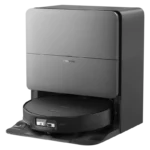
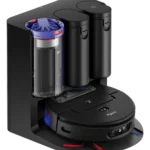
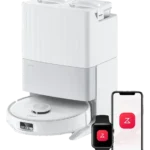
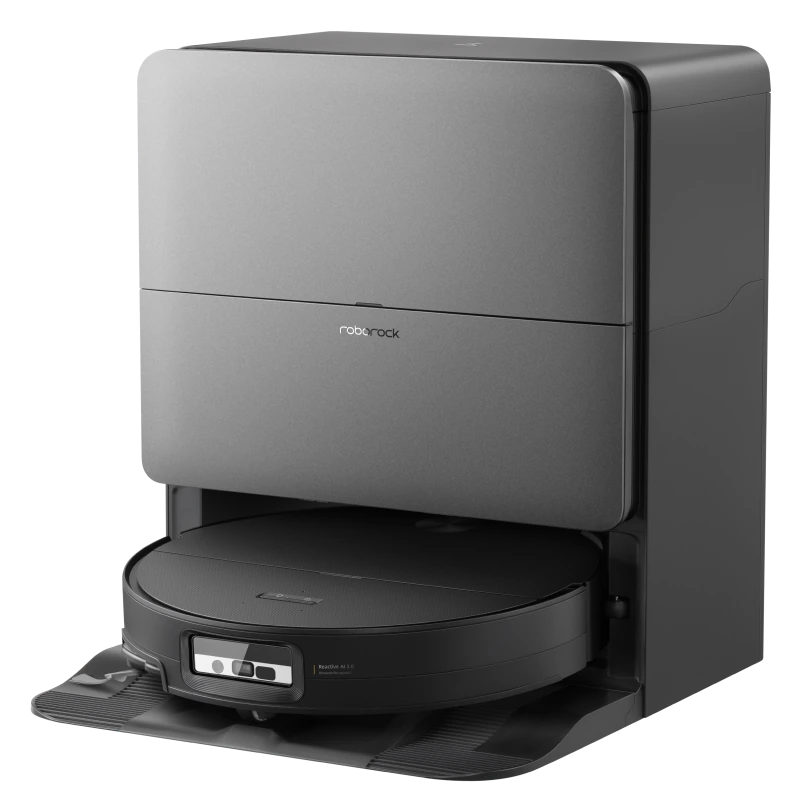
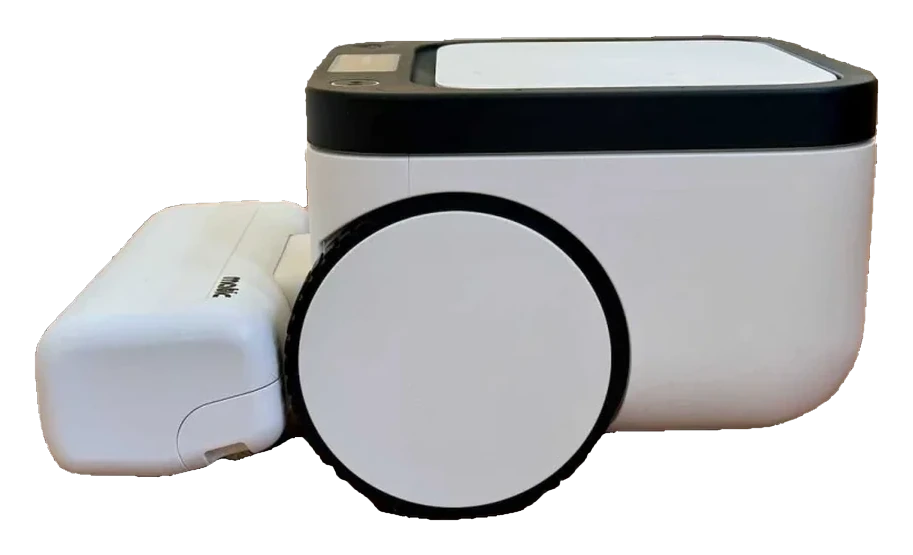
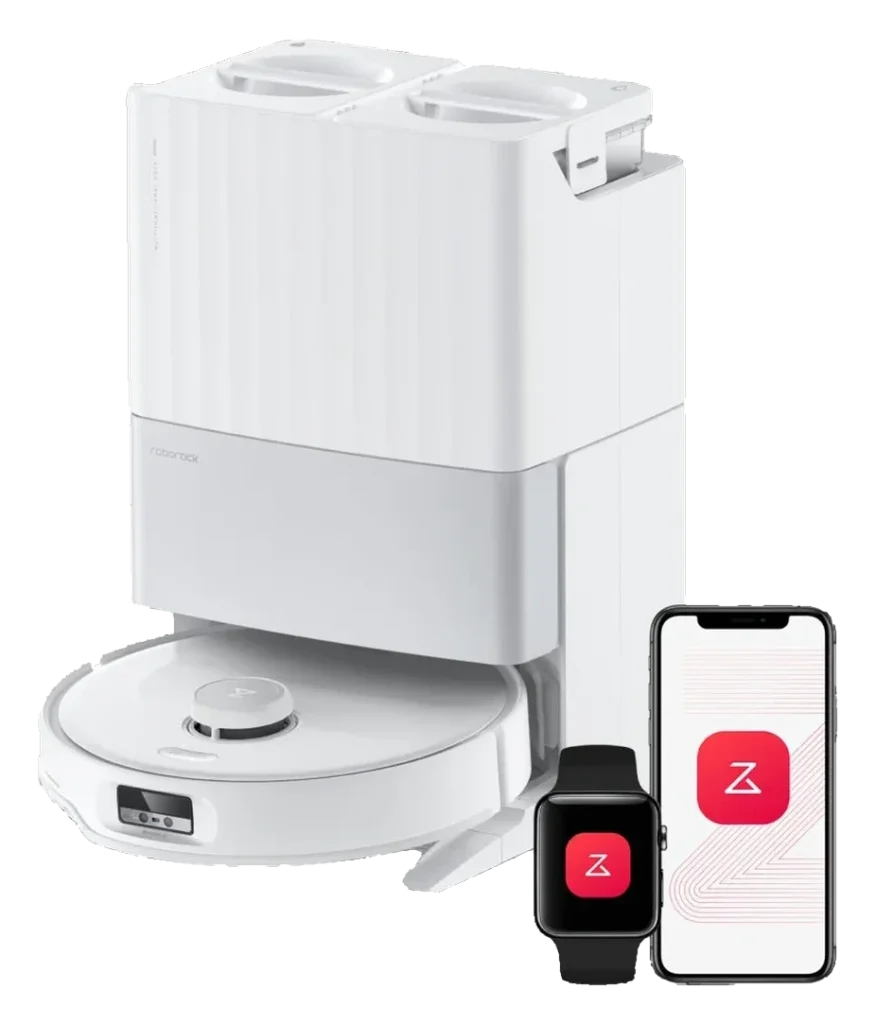
Independent press testing of the Dyson Spot+Scrub AI documented 20 of 24 staged obstacles avoided (TechRadar, Tom's Guide, Wired, March 2026). Dyson also reports 200-object recognition as a training-set figure. The Saros 20 Sonic and Qrevo Edge use LiDAR-plus-camera stacks; owner reports confirm routine cord and sock avoidance, but no equivalent staged test is in the public record. The Matic relies on camera-only on-device processing; no published obstacle count exists.
Dual-sensor or multi-sensor fusion removes the false positives and near-misses common in single-camera platforms
Roborock Saros 20 Sonic and Qrevo Edge product pages and press materials, 2025-2026; Dyson Spot+Scrub AI DR30 launch press release, March 2026
What the evidence shows
The Dyson Spot+Scrub AI stacks dual-line DToF LiDAR with an AI HD camera and a green-spectrum LED. The Saros 20 Sonic and Qrevo Edge combine LiDAR with camera-based AI. The Matic uses camera processing only, with no LiDAR layer. Independent testing of the Dyson recorded a 31% roller hair-wrap rate versus a 26% category average, indicating contact with material the sensor array did not pre-classify as an obstacle.
Dyson sensor stack
Dual-line DToF LiDAR + AI HD camera
Saros 20 Sonic sensor stack
LiDAR + camera + AI
Qrevo Edge sensor stack
PreciSense LiDAR + camera
Matic sensor stack
Camera only (on-device)
Dyson roller hair-wrap (independent)
31% vs 26% category average
Claim 03 / 05
Unsupervised sessions safe in lived-in rooms
~Partial
Routine layouts supported across three; Matic clutter data absent, Dyson sessions extend unpredictably
What marketing promises
Set the robot to clean and leave; it handles a cluttered, occupied home without supervision or pre-session floor prep
Roborock Saros 20 Sonic, Qrevo Edge, and Dyson Spot+Scrub AI marketing copy and app feature descriptions, 2025-2026
What the evidence shows
Owner reports for the Saros 20 Sonic and Qrevo Edge describe autonomous sessions in lived-in rooms without manual floor prep. The Dyson's stain-targeting loop (up to 15 repeat passes on a detected stain) extends session time in rooms with multiple soiled areas, a side effect owners need to account for. The Matic's owner forum coverage confirms adequate operation in consistent single-floor layouts; performance in heavily cluttered or changing environments is not documented.
Saros 20 Sonic unsupervised reports
Confirmed (owner reports)
Qrevo Edge session continuity
Multi-floor mapped (LiDAR)
Dyson multi-stain session length
Extended (up to 15 passes per stain)
Matic layout dependency
Routine layouts only (owner reports)
Matic heavy-clutter data
Not documented
Claim 04 / 05
Avoidance works without pre-mapping or setup
~Partial
No wires required for any platform; Matic lacks app zone control entirely
What marketing promises
Obstacle avoidance operates from first run without perimeter wires, boundary markers, or app-based pre-configuration
Roborock Saros 20 Sonic and Qrevo Edge product pages; Dyson Spot+Scrub AI product page dyson.com, 2026; Matic product page, 2024
What the evidence shows
None of the four robots require physical perimeter wires. The Dyson Spot+Scrub AI maps autonomously on first run and uses app-based virtual no-go zones. The Saros 20 Sonic and Qrevo Edge do the same via Roborock's LiDAR mapping. The Matic performs autonomous visual mapping on first run but supports no app-based zone control due to its on-device-only architecture; physical barriers are its only boundary option.
Dyson boundary hardware
None required; app-based zones
Saros 20 Sonic first-run mapping
Autonomous LiDAR
Qrevo Edge first-run mapping
Autonomous LiDAR
Matic app zone support
None (on-device processing only)
Matic boundary option
Physical barriers only
Claim 05 / 05
Performance consistent across lighting conditions
~Partial
LiDAR platforms reduce lighting dependency; Matic and object classification data not published for low light
What marketing promises
Object detection holds across different ambient lighting conditions in a typical home without supplemental lighting
Dyson Spot+Scrub AI green-spectrum LED lighting claim, dyson.com launch, March 2026; Roborock Saros 20 Sonic and Qrevo Edge AI camera navigation descriptions, 2025-2026
What the evidence shows
Dyson equips the Spot+Scrub AI with a green-spectrum LED specifically to support detection in low-ambient-light conditions, a design feature that implicitly acknowledges that camera performance degrades in low light. The Saros 20 Sonic and Qrevo Edge use LiDAR as the primary ranging layer, which is lighting-independent; camera-based object classification is the layer that degrades in low light. The Matic relies entirely on visual processing and no documentation of its low-light performance exists in owner or press sources.
Dyson low-light design choice
Green-spectrum LED (manufacturer)
Saros 20 Sonic LiDAR layer
Lighting-independent ranging
Qrevo Edge LiDAR layer
Lighting-independent ranging
Matic low-light performance
Not documented
Cross-platform comparative data
Not published
Per-product rollup
How each platform’s claims hold up
Every claim, resolved per product against documented evidence.
Unsupervised sessions safe in lived-in rooms~Owner-confirmed~Routine layouts~Extended sessions~Owner-confirmed
Avoidance works without pre-mapping or setup✓No wires~No zone control✓App zones✓No wires
Performance consistent across lighting conditions~LiDAR layer✕No light data~LED-assisted~LiDAR layer
Common questions
What readers ask about this comparison.
Q.
Which of these robots has published third-party obstacle avoidance test results?
The Dyson Spot+Scrub AI only. Independent testing at launch documented 20 of 24 staged obstacles avoided (TechRadar, Tom’s Guide, Wired, March 2026). The Saros 20 Sonic, Qrevo Edge, and Matic lack equivalent third-party benchmark data in the public record as of June 2026.
Q.
Does the Matic Robot Vacuum use LiDAR for obstacle detection?
No. Matic uses camera-based visual navigation processed entirely on-device, with no LiDAR layer. The trade-off is strong privacy (no map data leaves the home) against a sensor architecture with no lighting-independent ranging fallback.
Q.
Does the Dyson Spot+Scrub AI's 200-object recognition figure reflect real-home performance?
The 200-object figure is a manufacturer training-set claim. Independent testing documented 20 of 24 staged obstacles avoided; that is the only published real-world count. Staged obstacle courses use spaced, consistent objects; actual home clutter is clustered and varied, and no published data bridges the two.
Q.
Do any of these robots require setup or boundary markers before their first run?
None require physical perimeter wires. The Dyson, Saros 20 Sonic, and Qrevo Edge use app-based virtual no-go zones set after initial mapping. The Matic maps autonomously on first run but supports no app-based zone control; physical barriers are its only boundary option.
Q.
Does the Roborock Saros 20 Sonic's robotic arm contribute to obstacle avoidance?
No. The arm is a pickup mechanism. Obstacle avoidance runs through the LiDAR and camera stack, architecturally identical to the standard Saros 20. The arm adds removal capability for objects the robot has already identified.
Next up
Window-robot upkeep: what each one costs you in pads, solution, and attention
We use privacy-friendly first-party analytics to see which pages get read, plus one optional Google Analytics cookie. No ads, no cross-site tracking. Privacy policy