
Goal-based
Do Robot Vacuums Cover 2,500 Sq Ft Without Recharging?
None of these four robots' manufacturer specification records lists a square-footage coverage rating, even though their runtime and charge-time figures are fully documented.
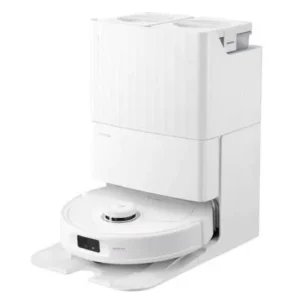
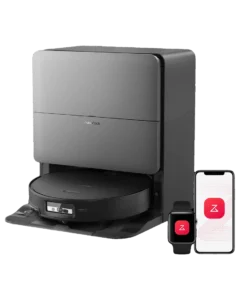
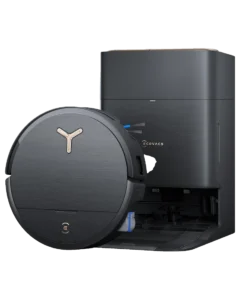
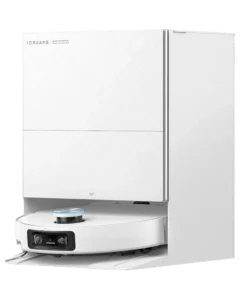
We may earn commission from qualifying purchases. This does not influence the comparison.
The investigation
5 questions this comparison examines
How long does each robot's battery run before recharging?
Rated runtime and disclosed battery capacity vary by model and by how completely each manufacturer documents the pack.
Roborock Qrevo MaxVSaros 20 SonicEcovacs Deebot X9 Pro OmniDreame X60 UltraRoborock's own product pages list 75 Wh for the Qrevo MaxV and a 6,400 mAh figure, with no watt-hour conversion, for the Saros 20 Sonic.
Ecovacs documents the Deebot X9 Pro Omni's battery only as a 'Li-ion Power battery,' the sole record here with no capacity figure in either mAh or Wh.
Do these robots publish a square-footage coverage rating?
Manufacturer spec sheets sometimes include a rated square-footage figure per charge; this section checks whether that number exists for these four robots.
Roborock Qrevo MaxVSaros 20 SonicEcovacs Deebot X9 Pro OmniDreame X60 UltraNone of the Roborock, Ecovacs, or Dreame specification pages on file for these four models states a square-footage coverage figure; each publishes runtime in minutes instead.
Each manufacturer's autonomy documentation for these models describes persistent or multi-floor map memory, but none pairs that claim with a specific rated coverage number.
What determines how fast a robot returns to work?
Recharge time and resume behavior determine how much of a stalled cycle you get back without touching the robot; both vary by how completely each manufacturer documents them.
Roborock Qrevo MaxVSaros 20 SonicEcovacs Deebot X9 Pro OmniDreame X60 UltraCharge time is 150 minutes for the Saros 20 Sonic against a 180-minute rated runtime, the only one of the four where recharging finishes faster than a full cycle runs.
Manufacturer records for all four robots list a charge-time figure, but none of the four specification pages reviewed here states whether the robot resumes a paused cycle automatically.
Does higher suction power cost these robots runtime?
Higher suction ratings are commonly assumed to shorten battery life; the disclosed suction and runtime figures for these four robots test that assumption directly.
Roborock Qrevo MaxVSaros 20 SonicEcovacs Deebot X9 Pro OmniDreame X60 UltraThe Qrevo MaxV launched in April 2024 at 7,000 Pa; the Saros 20 Sonic, Deebot X9 Pro Omni, and X60 Ultra all launched in 2025 or 2026 rated between 16,600 and 36,000 Pa.
Despite the suction gap, the Qrevo MaxV's rated 180-minute runtime matches the Saros 20 Sonic and X60 Ultra; the Deebot X9 Pro Omni runs longest at 196 minutes.
Does a higher price buy more runtime per charge?
MSRP for these four robots spans roughly $500; this section checks whether that price spread lines up with the runtime and charging figures already on record.
Roborock Qrevo MaxVSaros 20 SonicEcovacs Deebot X9 Pro OmniDreame X60 UltraMSRP ranges from $1,199.99 for the Qrevo MaxV to $1,699.99 for the Saros 20 Sonic and X60 Ultra, per each manufacturer's listed price.
The $1,599 Deebot X9 Pro Omni rates the longest runtime of the four at 196 minutes, ahead of two robots priced $100 higher.
In closing
What the evidence shows
Patterns that emerged across the questions above.
Runtime clusters near three hours
Three of the four robots rate at 180 minutes regardless of suction power or price; only the Deebot X9 Pro Omni rates longer, at 196 minutes.
Coverage ratings are not published here
None of the four manufacturer records in this comparison states a square-footage coverage figure; runtime and charge time are documented, a specific area rating is not.
Charge time does not track price
The Saros 20 Sonic recharges faster than it runs, while the similarly priced X60 Ultra takes 240 minutes, the same span as the least expensive robot in the set.
Common questions