
Head to head
Quadruped robots: what does the 20x price gap actually buy?
Three four-legged robots sit at very different prices. This page sets payload, runtime, onboard autonomy, developer access and who may buy side by side, so the price difference can be read against what each one does.

This page checks
- List priceWhat each maker or launch notice prints
- PayloadWhat the robot can carry
- RuntimeBattery life on a charge
- Onboard autonomyWhat it does without user code
- Who can buyIndividuals, businesses, US availability
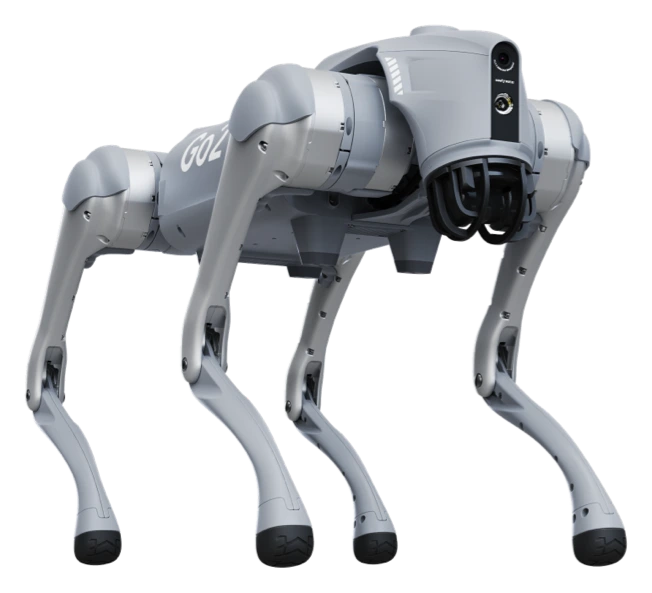
Unitree
Where to buy
Security researchers disclose Go2 firmware remote access vulnerabilities
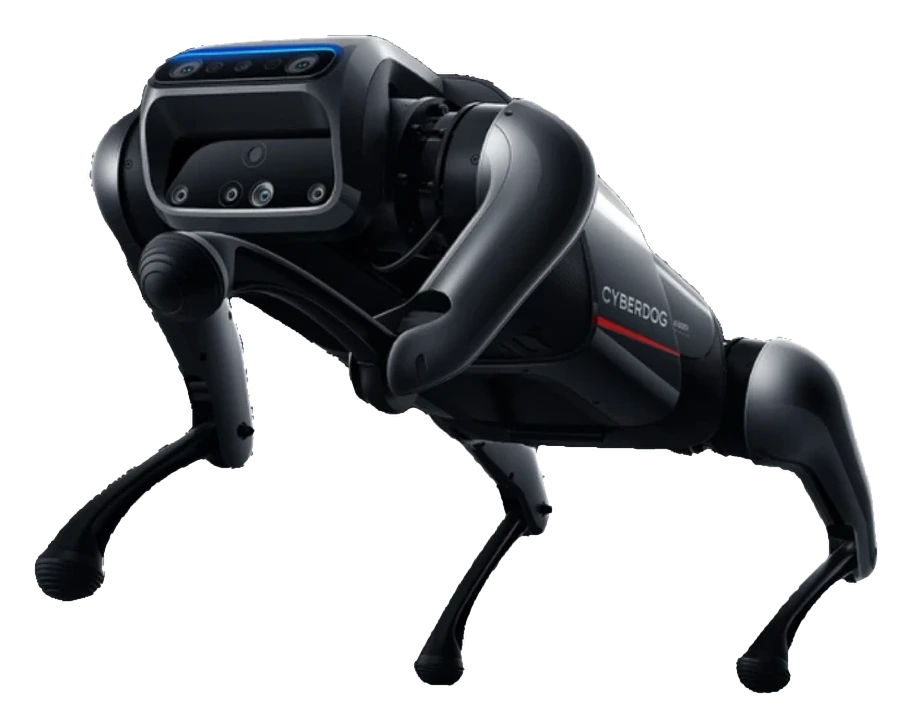
Xiaomi
Where to buy
No official US channel; Xiaomi sells in China, and a US-shipping reseller shows it out of stock
Developer community documents firmware stability regressions

Boston Dynamics
Where to buy
Sold to businesses and universities only. The maker lists no price; the figure shown is a cost guide’s
Enterprise deployments expand into automotive factory automation globally
Full specifications13 figures on record · 10 differ
Some links earn Robovations a commission. Nothing on this page is ranked by it.
 Go2
Go2 CyberDog 2
 Spot
SpotWhat the price buys
Carrying, staying up and working alone
Spot carries 30.9 lb, against about 17.6 lb for the Go2 and 2.2 lb for the CyberDog 2. Its maker documents mapped missions and self-docking. Go2 runtime is listed at 1 to 2 hours and Spot at 90 minutes. Spot is sold to businesses only, with no price listed.
$1,600–$4,500
Air $1,600, Pro $2,800, X $4,500, excluding tax and freight. EDU is by quote.
Unitree Go2 specs pageRMB 12,999
China launch price, about $1,785 per launch news. A reseller shows $2,999, out of stock.
Launch news and reseller listingNot found
Maker pages say contact sales. One cost guide reports $74,500 for the Explorer Kit.
Cost guide17.6lb
Pro, X and EDU about 17.6 lb (8 kg); Air about 15.4 lb. Maximum 22 to 26 lb.
Unitree Go2 specs page2.2lb
Reseller page: a maximum payload of 2.2 lb (1 kg).
Reseller listing30.9lb
Developer documentation lists max weight 30.9 lb (14 kg) across two payload ports.
Boston Dynamics developer documentation1–2h
Air, Pro and X list about 1 to 2 hours. EDU, with a larger battery, lists 2 to 4 hours.
Unitree Go2 specs page1.5h
A robot guide cites this as the maker’s figure. Not found on a maker page.
Robot guide citing maker specs90min
Average runtime with a 564 Wh battery; recharge 60 minutes.
Boston Dynamics Spot page- Obstacle avoidance
- 4D LiDAR
- Mapped missions: not found
4D LiDAR with obstacle avoidance on every version. Side-follow comes with Pro and above.
Unitree Go2 specs page- Obstacle avoidance
- Navigation and SLAM (guide)
- Mapped missions: not found
Guide lists navigation, tracking, SLAM and obstacle avoidance. Mapped inspection routes not found.
Robot guide citing maker specs- Missions and Autowalk
- Hazard avoidance
- Self-docking
Documentation lists GraphNav, missions, Autowalk and hazard avoidance. Product page lists autonomous charging.
Boston Dynamics documentationSecondary development: not supported on Air and Pro, partial on X, full on EDU.
Unitree Go2 specs pageReseller lists Ubuntu 18.04, ROS2 and a Jetson Xavier NX module.
Reseller listingMaker points to an SDK for building applications and payloads on its developer site.
Boston Dynamics FAQUnitree’s shop sells in USD with US shipping. The buyer pays customs duties and taxes.
Unitree shopXiaomi sells in China. The US-shipping reseller shows it out of stock, and voice control is Chinese only.
Reseller listingMaker says products are not intended for purchase by individuals for non-commercial use.
Boston Dynamics FAQSame on all three: a four-legged walker with obstacle avoidance.

Everything else
Where they land among 45 specialty robots
Only the measures on which these three differ. The bar is the whole category; the block is the typical middle half; the tick is the median.
Sources
Where every figure comes from
- Go2 · Unitree Go2 specs page and Unitree shop, read 2 Oct 2026
- CyberDog 2 · Giztop reseller listing; robot guide page; TechNode launch news (Aug 2023)
- Spot · Boston Dynamics Spot page, developer documentation, FAQ, arm page and 2020 sales notices; Standard Bots cost guide for the reported price
Figures come from each maker’s page where one exists, read on 2 Oct 2026. The CyberDog 2 has no maker page that opened, so its figures are marked as reseller or guide sources.
Questions
What readers ask
Can an individual buy one of these?
Unitree’s shop sells the Go2 in USD with US shipping. Boston Dynamics says Spot is not intended for purchase by individuals for non-commercial use. The CyberDog 2 is sold through a reseller that shows it out of stock.
Can any of these inspect a facility on its own?
Spot’s documentation lists mapped missions, Autowalk and hazard avoidance. For the Go2 and CyberDog 2, obstacle avoidance was found on the pages opened, but no mapped inspection routes.
Which of these has a manipulation arm?
Spot has an optional arm that lifts up to 24.3 lb (11 kg), with about 3.3 ft of reach. No arm option was found for the Go2 or CyberDog 2 on the pages opened.
Common questions