Skip to content
Saved

Goal-based/Robot Pool Cleaners/4 robots compared/Reviewed Jun 23, 2026

Legacy-brand in-ground pool robots: coverage and ecosystem fit
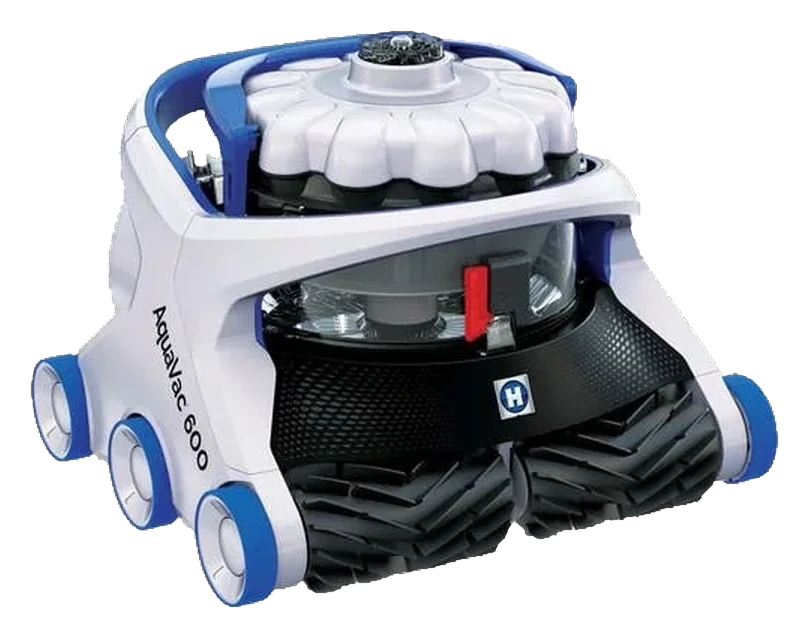
Navigation architecture splits at Level II and III.The AquaVac 6 Series and Elite Pro operate at Level III through mapped or gyroscope-guided paths; the Freedom and TigerShark QC operate at Level II, relying on mode selection or random pathing without dynamic recovery.
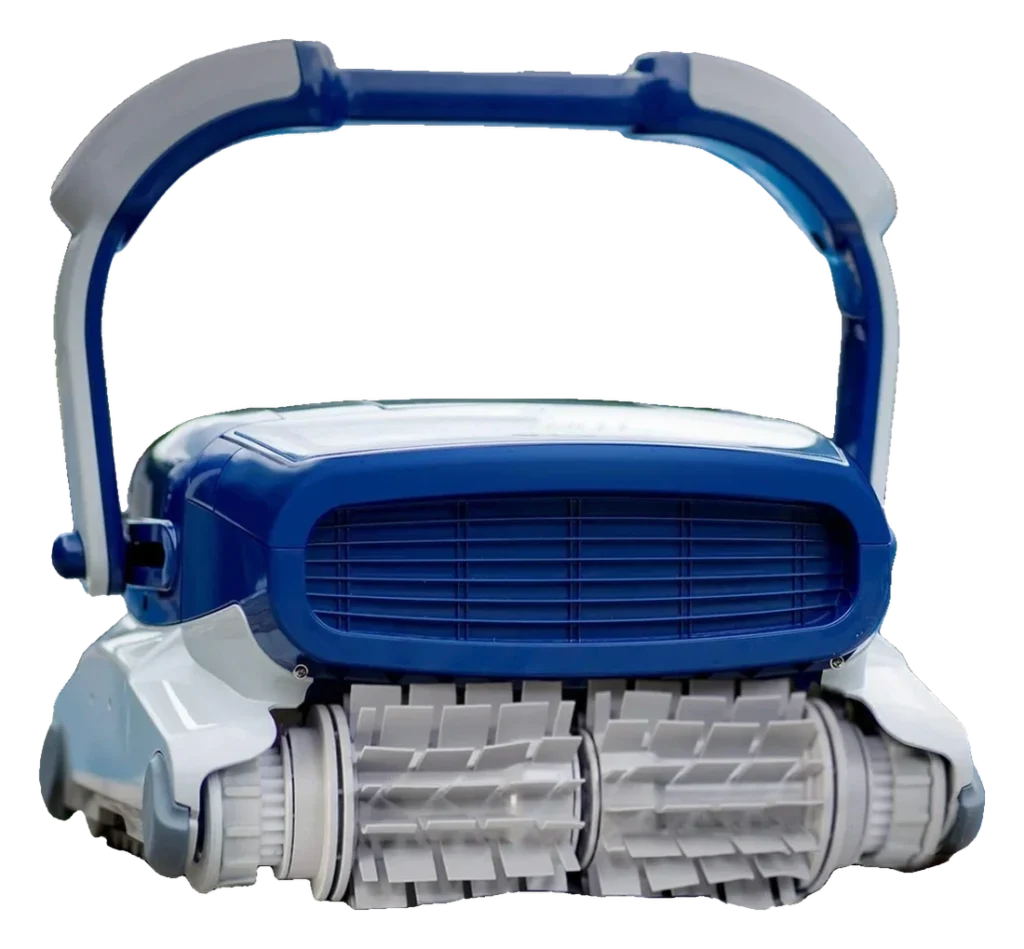
Hayward AquaVac 6 SeriesView recordHaywardIIIAquaVac 6 SeriesPower sourceCorded (50-60 ft)
Aquabot Elite ProView recordAquabotIIIElite ProPower sourceCorded
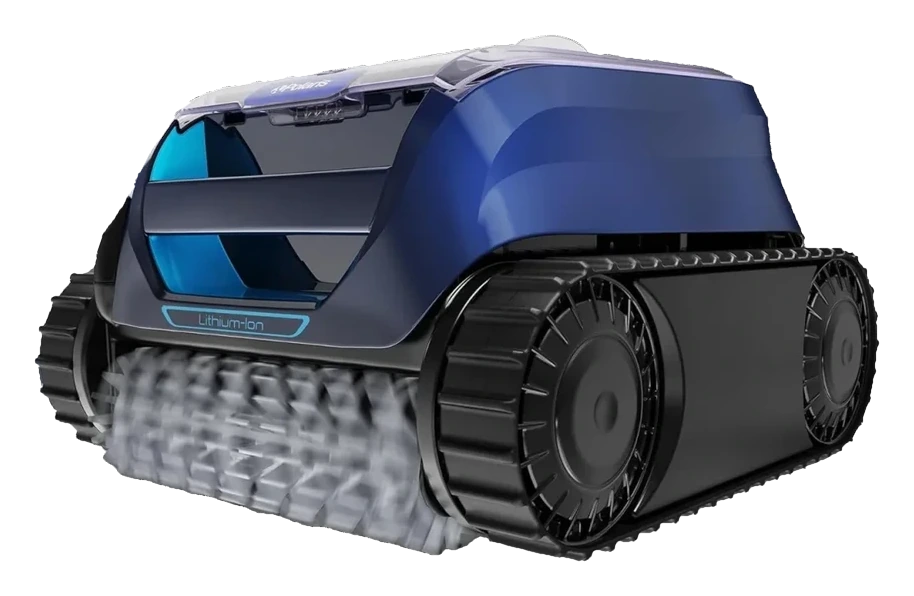
Polaris FreedomView recordPolarisIIFreedomPower sourceBattery (Li-ion)
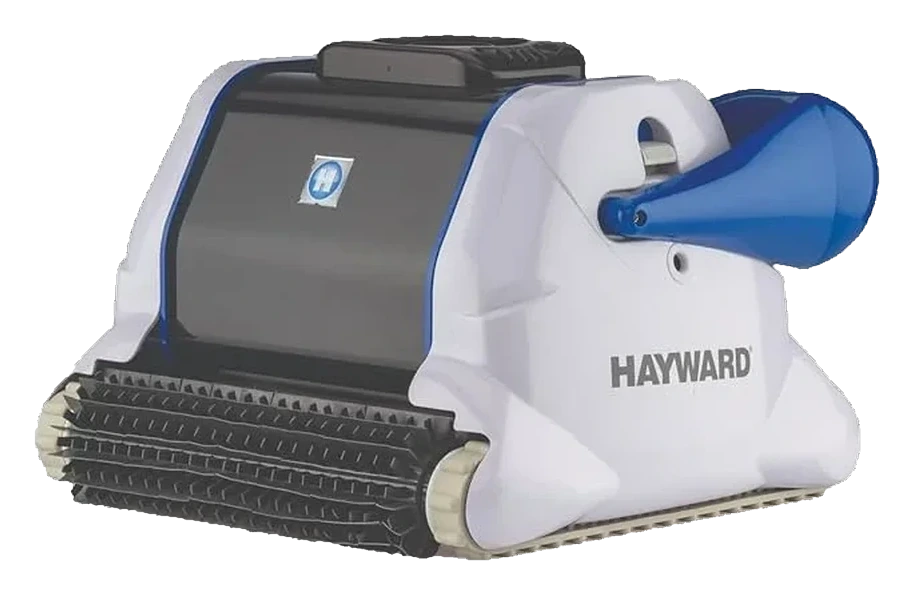
Hayward TigerShark QCView recordHaywardIITigerShark QCPower sourceCorded (55 ft)
Full specifications13 measurements · 39 of 52 documented
MSRP
Not documented
$1,599
$1,399
$1,489
Navigation
Mapped boundary coverage with systematic floor and wall traversal; roller-driven waterline contact.
Gyroscope navigation with Bluetooth app control through the Aquabot RC app
Intelligent multi-mode path (Floor, Floor/Walls/Waterline, Waterline Only, SMART Cycle); app-controlled via iAquaLink
On-board microprocessor scans the pool, calculates its size and plots a route across floor, walls, coves and waterline
Connectivity
wifi
bluetooth
wifi, bluetooth
Not documented
Dimensions (W×D×H)
16.5 × 18 × 10 in
Not documented
18 × 18 × 17 in
16.5 × 16.5 × 13.5 in
Weight
18.3 lbs
Not documented
22 lbs
21.5 lbs
Readiness
Ready Now
Ready Now
Ready Now
Ready Now
Released
Jan 2021
Not documented
Mar 2023
Jan 2018
Power type
Corded, low-voltage cable from a poolside control unit
Corded
Cordless battery
Corded
Surfaces cleaned
Floor, walls and waterline
Floor, walls, coves and waterline
Cable length
Not documented
60 ft
Not documented
55 ft
Max pool length
Not documented
60 ft
Not documented
40 ft
Filtration
Not documented
2 micron
Not documented
5 micron
Cycle length
Not documented
Not documented
150 min
240 min
01/05

How does each robot navigate and cover the pool floor?

Navigation method determines coverage completeness and predictability. These four robots represent three distinct approaches within the legacy-brand segment.
Where they differHayward AquaVac 6 Series — Navigation method: Mapped boundary + systematic traverse
EvidenceHayward AquaVac 6 SeriesAquabot Elite ProPolaris FreedomHayward TigerShark QC
Navigation methodMapped boundary + systematic traverseDiffersGyroscope smart navigationMulti-mode path with SMART CycleRandom-path suction propulsion
Autonomy classificationLevel III (Conditional Autonomy)Level III (Conditional Autonomy)Level II (Assisted Autonomy)Level II (Assisted Autonomy)
Coverage dead zones documentedComplex geometry onlyCorners at coverage edgeNone documented for standard poolsSystematic; pools over 15,000 gal
App or scheduling availableNoYes (WiFi)Yes (Bluetooth / iAquaLink)No
Sources & evidence
Hayward manufacturer documentation

AquaVac 6 Series product documentation describes mapped boundary coverage with systematic floor and wall traversal as distinct from random-path predecessors.

Reddit r/swimmingpools, owner reports

TigerShark QC owner reports on pool supply forums confirm unvisited dead zones in pools exceeding 15,000 gallons, consistent with random-path behavior.

02/05

Which robots clean walls and waterline, and how?

Wall and waterline coverage separates these models sharply. Three of the four address vertical surfaces; the TigerShark QC does not.

Where they differHayward AquaVac 6 Series — Wall climbing documented: Yes (articulated arm)
EvidenceHayward AquaVac 6 SeriesAquabot Elite ProPolaris FreedomHayward TigerShark QC
Wall climbing documentedYes (articulated arm)DiffersPartial (floor-focused)Yes (climb mode)No
Waterline reach documentedYesPartial per manufacturer specsYes (dedicated mode)No
Wall mechanism6-roller arm with brush contactDiffersGyroscope-guided climbMode-selected driveFloor only
Owner-reported wall coverageCorner gaps on complex poolsBelow-waterline emphasisConsistent on gunite/plasterNot applicable
Sources & evidence
Hayward manufacturer documentation

Hayward AquaVac 6 Series product specifications document six variable-speed rollers and a dedicated articulated arm as the structural wall-climb mechanism, distinct from gyroscope or mode-based approaches.

Polaris manufacturer documentation, polarispool.com

Polaris Freedom manufacturer specifications document wall and waterline as discrete cleaning modes selectable by the operator; owner reports confirm reliable performance on gunite and plaster surfaces.

Aquabot manufacturer documentation, roboticreviews.com

Aquabot Elite Pro manufacturer specs state floor-focused gyroscope mapping; wall and waterline reach documented as partial coverage, not a dedicated wall-climb mode.

03/05

How does power architecture affect setup and session length?

Corded versus cordless is the primary operational split. Three models run on cords; the Polaris Freedom operates on a battery with a documented 2.5-hour session limit.

Where they differPolaris Freedom — Power source: Battery (Li-ion)
EvidenceHayward AquaVac 6 SeriesAquabot Elite ProPolaris FreedomHayward TigerShark QC
Power sourceCorded (50-60 ft)CordedBattery (Li-ion)DiffersCorded (55 ft)
Runtime per sessionContinuous (corded)Continuous (corded)150 min (2.5 hr)4-6 hr (continuous)
Recharge / reset requiredNoNo8 hr charge after sessionNo
Cable management burdenCord routing requiredSwivel + reel managementNone55 ft cord routing
Sources & evidence
Polaris manufacturer documentation, polarispool.com

Polaris Freedom specifications document 150-minute runtime and a manufacturer-specified 8-hour charge cycle; no autonomous return-to-dock capability is listed.

Hayward manufacturer documentation, Inyo Pools product listing

TigerShark QC manufacturer specs document a 55-foot power cord and 4-6 hour autonomous floor-cleaning cycle once deployed; no scheduling or remote control.

04/05

What does routine maintenance look like for each model?

Filter type, replacement cost, and service frequency differ meaningfully across these four robots. Corded and cordless models share some burdens; battery degradation is unique to one.

Where they differPolaris Freedom — Battery replacement cost: ~$150-200 (when capacity drops)
EvidenceHayward AquaVac 6 SeriesAquabot Elite ProPolaris FreedomHayward TigerShark QC
Filter typeCartridge or bag (owner-selectable)CartridgeCartridgeFine-mesh cartridge (100 micron)
Filter replacement cost (approx.)$15-60 depending on variant$45-75 per cartridge$30-40 monthly moderate use$30-50 basket replacement
Battery replacement costNot applicableNot applicable~$150-200 (when capacity drops)DiffersNot applicable
Cable or hose wear intervalSeasonal inspection; no hoseAnnual swivel (~$30-50)Dock contact cleaning quarterlyHose replacement ~2-3 seasons
Sources & evidence
Polaris manufacturer documentation

Polaris Freedom maintenance documentation lists battery capacity test as an annual task; replacement battery cost approximately $150-200 when runtime drops below 80% of rated.

Inyo Pools product listing; Reddit r/swimmingpools owner reports

TigerShark QC owner reports and retail documentation confirm hose deterioration within 2-3 seasons of UV and chlorine exposure; replacement hose approximately $80-120.

Hayward manufacturer documentation

AquaVac 6 Series maintenance documentation covers both cartridge ($30-60) and bag filter ($15-25) variants; arm brush pad inspection is an additional monthly task not shared by the other models.

05/05

How do brand ecosystem and service infrastructure compare?

Legacy pool brands carry existing dealer and service networks. App integration, firmware update history, and service availability differ across Hayward, Aquabot, and Polaris.

Where they differHayward TigerShark QC — Saltwater pool compatibility: Not recommended (corrosion risk)
EvidenceHayward AquaVac 6 SeriesAquabot Elite ProPolaris FreedomHayward TigerShark QC
App connectivityNoneWiFi (smartphone scheduling)Bluetooth / iAquaLinkNone
Saltwater pool compatibilityNot documentedNot documentedNot documentedNot recommended (corrosion risk)Differs
Manufacturer service networkHayward pool supply distributionAuthorized dealer networkPolaris / Fluidra distributionHayward pool supply distribution
Documented firmware / calibration issuesArm misalignment (owner-reported)Gyroscope drift (patches ongoing)None documented in subject contextNone; no firmware dependencies
Sources & evidence
Hayward manufacturer documentation; Reddit r/swimmingpools

TigerShark QC is documented as incompatible with saltwater chlorine generator pools; plastic and stainless fasteners corrode within 1-2 seasons per manufacturer guidance and owner reports.

roboticreviews.com; poolbots.com Aquabot Elite Pro review

Aquabot Elite Pro product documentation and retailer reviews confirm gyroscope recalibration drift as a documented early-ownership issue with firmware patches in progress as of the last evaluation date.

In closing

What the evidence shows

Patterns that emerged across the questions above.

01

Navigation architecture splits at Level II and III

The AquaVac 6 Series and Elite Pro operate at Level III through mapped or gyroscope-guided paths; the Freedom and TigerShark QC operate at Level II, relying on mode selection or random pathing without dynamic recovery.

02

Wall and waterline reach is not universal

Three of the four robots address walls in some form; the TigerShark QC is floor-only. The AquaVac 6 Series deploys a dedicated articulated arm; the Freedom and Elite Pro use mode-based or gyroscope-guided approaches.

03

Battery architecture introduces a unique long-term cost

The Polaris Freedom is the only cordless model; it removes cable management friction but adds a battery replacement cost of roughly $150-200 when capacity degrades, a cost absent from all three corded models.

Common questions

What readers ask about this comparison.

Q.
Does the Polaris Freedom's 2.5-hour runtime cover a standard pool in one session?
Polaris manufacturer documentation states one full-coverage cycle for routine maintenance on pools up to approximately 25,000 gallons within the rated 150-minute runtime. Heavy debris loads or pools with irregular geometry may require a second cycle. Each additional cycle requires an 8-hour recharge.
Q.
Is the TigerShark QC floor-only, or does it clean walls?
Floor only. Manufacturer documentation and owner reports confirm the TigerShark QC does not climb walls or reach vertical surfaces. Steps and sidewalls require separate manual tools.
Q.
What makes the AquaVac 6 Series wall-climb different from the Polaris Freedom?
The AquaVac 6 Series uses a dedicated articulated arm with six variable-speed rollers maintaining continuous brush contact on the wall surface. The Polaris Freedom uses a mode-selected drive approach without a separate arm mechanism. Owner reports for the AquaVac note occasional arm misalignment on complex pool geometry.
Q.
Does the Aquabot Elite Pro work in saltwater pools?
Saltwater compatibility is not documented in the Aquabot Elite Pro subject context. The TigerShark QC is the only model among these four with an explicit saltwater incompatibility warning; verify saltwater rating directly with Aquabot before purchase.
Q.
Which of these robots requires the least manual interaction per session?
All four require manual placement at the start of each session. The corded models (AquaVac 6 Series, Elite Pro, TigerShark QC) run until retrieved; the Polaris Freedom stops after 150 minutes and requires manual retrieval for recharging. None of the four has an autonomous dock-return capability documented in the subject context.
Next up

MOVA T1 Station vs Ecovacs Winbot Mini 2: cordless or corded?

Read the comparison
Comparison ID: RV–CMP–7505 · Last reviewed Jun 23, 2026 · Based on owner reports, manufacturer documentation, and firmware release notes