Skip to content
Saved
Comparison · 2 robots

Roborock Qrevo Slim · TP-Link Tapo RV30 Plus

All robot vacuums. Every measure below is plotted against the full class, so a difference can be read against how much the class itself varies.
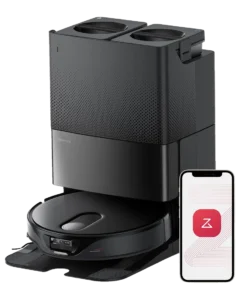
  1. Roborock Qrevo Slim
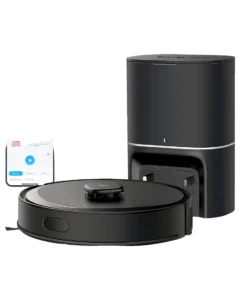
  2. TP-Link Tapo RV30 Plus
Roborock

Roborock Qrevo Slim

Autonomy
III Conditional Autonomy
Score
78/100 Strong
Readiness
Ready Now
Price
$1,399.99confirmed
TP-Link

TP-Link Tapo RV30 Plus

Autonomy
III Conditional Autonomy
Score
78/100 Strong
Readiness
Ready Now
Price
$599list

Up to three

01 Classification

What each one does on its own.

The Autonomy Ladder is the same five rungs for every robot on the site. A rung describes the conditions a robot handles without you, not how good it is.

V
Generalized
Any task, any setting
IV
Environmental
Handles new obstacles without help
III
Conditional
Finishes familiar jobs on its own
Roborock Qrevo SlimTP-Link Tapo RV30 Plus
II
Assisted
Runs preset routines, needs rescue
I
Manual
One action, on command
02 Assessment

Where they actually differ.

The Robovations Score is nine inputs across three pillars, each weighted as shown and each scored so that more is better. A robot can lead on one and trail on another, which is the point of showing them apart. Cost of ownership and data handling are reported on each robot's own page and are never averaged into the score.

Capability

Task completion16% of score
Does it finish the job it is sold to do, unattended
  • Roborock Qrevo Slim72
  • TP-Link Tapo RV30 Plus70
18median 72 across 354 scored robots100
Coverage and navigation10% of score
Does it work the whole area, and hold that between runs
  • Roborock Qrevo Slim94
  • TP-Link Tapo RV30 Plus72
15median 70 across 344 scored robots100
Edge-case recovery10% of score
Does it recover from the failures its category presents
  • Roborock Qrevo Slim66
  • TP-Link Tapo RV30 Plus70
18median 50 across 261 scored robots100
Operating envelope4% of score
How far conditions can vary before performance drops
  • Roborock Qrevo Slim75
  • TP-Link Tapo RV30 Plus60
25median 70 across 320 scored robots100

Dependability

Field failure rate16% of score
Documented hardware failures per owner-year
  • Roborock Qrevo Slim85
  • TP-Link Tapo RV30 Plus91
6median 70 across 344 scored robots100
Software stability14% of score
Whether updates fix more than they break
  • Roborock Qrevo Slim74
  • TP-Link Tapo RV30 Plus86
15median 65 across 275 scored robots100
Support longevity10% of score
Committed parts, service and updates, with dates
  • Roborock Qrevo Slim88
  • TP-Link Tapo RV30 Plus76
0median 63 across 354 scored robots100

Ownership burden

Routine maintenance12% of score
Hands-on time it asks for in normal operation
  • Roborock Qrevo Slim72
  • TP-Link Tapo RV30 Plus81
22median 68 across 355 scored robots100
Consumables8% of score
Parts that must be bought to keep it working
  • Roborock Qrevo Slim77
  • TP-Link Tapo RV30 Plus80
30median 69 across 354 scored robots100
03 Measured against the class

How far apart is a long way?

A number only means something next to the spread it sits in. Each track below is the real range across every classified robot in the class, with the median marked.

Price193 with a published figure
  • Roborock Qrevo Slim$1,399.99
  • TP-Link Tapo RV30 Plus$599
$129.99median $699.99$1,799
Suction (mode not stated)169 with a published figure
  • Roborock Qrevo Slim11,000 Pa
  • TP-Link Tapo RV30 Plus4,200 Pa
1,000 Pamedian 8,000 Pa36,000 Pa
Runtime168 with a published figure
  • Roborock Qrevo Slim110 min
  • TP-Link Tapo RV30 Plus180 min
60 minmedian 180 min360 min
Charge time150 with a published figure
  • Roborock Qrevo Slim180 min
  • TP-Link Tapo RV30 Plus210 min
90 minmedian 240 min420 min
Noise148 with a published figure
  • Roborock Qrevo Slim66 dB
  • TP-Link Tapo RV30 Plus60 dB
43 dBmedian 67 dB80 dB
Weight171 with a published figure
  • Roborock Qrevo Slim9 lbs
  • TP-Link Tapo RV30 Plus8.2 lbs
3.3 lbsmedian 8.2 lbs36.4 lbs
Height189 with a published figure
  • Roborock Qrevo Slim3.2 in
  • TP-Link Tapo RV30 Plus3.7 in
2.6 inmedian 3.8 in21.4 in
04 Ownership

What the numbers leave out.

The trade-off

What each design gives up to be good at what it is good at.

Roborock Qrevo Slim

The slim form factor is genuine, not a gimmick. But it comes at the cost of dust and water tank capacity. You are choosing furniture access over runtime convenience in the same product.

TP-Link Tapo RV30 Plus

Suction at 4,200 Pa reflects the mid-tier price point. Owner reports show capable performance on hard floors and low-pile carpet, with slower hair pickup on deep pile than 8,000+ Pa models achieve.

The auto-empty dock uses a 4 liter sealed bag that TP-Link rates for up to 70 days between changes. At that interval the consumable runs roughly five bags a year at $5-8 each, invisible at purchase but part of total cost of ownership.

Who each one is wrong for

Stated by the record itself. A robot being wrong for a household is a fact about fit, not a fault.

Roborock Qrevo Slim
Large homes requiring extended runtime coverage
Water tank and dust bin capacity are proportional to the slim form. Runs max 110 minutes; homes over 2,000 sqft may require two cycles per day.
Owners wanting edge-focused mopping
FlexiArm side brush and FlexiArm mop pad both extend past the chassis at walls and corners, so edge coverage is not limited to what the flat pads reach.
High-pile or shag carpet homes
Rotating pads are optimized for hard and low-pile surfaces. Manufacturer documentation does not recommend use on high-pile carpet.
TP-Link Tapo RV30 Plus
High-pile carpet or heavy pet-hair environments
Suction at 4,200 Pa sits mid-range against flagship models (8,000-22,000 Pa). Owner reports document slower pickup on deep pile and residue remaining after a single pass in heavy-shedding homes.
Homes requiring true hands-off operation
Auto-empty dock reduces bin-emptying frequency but does not eliminate all maintenance. Monthly dust-bag replacement and dock filter cleaning are required.
Homes with 5 GHz-only Wi-Fi or unstable 2.4 GHz networks
Requires 2.4 GHz connectivity. Homes lacking stable 2.4 GHz band report frequent mapping dropouts and schedule failures.

What stays your job

The upkeep ownership hands back to you, whatever the autonomy level says.

Roborock Qrevo Slim
  • Weekly: Empty dust bin on pet-hair or high-debris homes; clear wheel debris.
  • Monthly: Swap or wash mop pads; descale water chamber with provided solution.
  • Every 3-6 months: Replace rotating mop pads (~$25-30 OEM per pair on pet homes).
  • Every 3-6 months: Replace primary brush and side brush (~$20-25 for kit).
  • As needed: Top up the dock’s 4 L clean-water tank and empty the dirty-water tank. The Multifunctional Dock 3.0 refills the robot’s onboard tank during a run, so there is no mid-cycle handling.
TP-Link Tapo RV30 Plus
  • Weekly: Inspect dust bag seal in dock for visible dust leakage; wipe exterior if dusty (~1 min).
  • Monthly: Clean dock filter with dry cloth (~3 min); clean main vacuum filter by tapping against trash. Vacuum filter replacement every 6 months (~$12-15).
  • Every 70 days: Replace the 4 liter sealed dust bag in the auto-empty dock (~$5-8 per bag). TP-Link rates a bag for up to 70 days; heavy-shedding homes reach it sooner.
  • Every 3-6 months: Wipe LiDAR lens with dry cloth to prevent navigation errors; inspect side brush for tangled hair.
  • Quarterly: Deep-clean dock interior with vacuum to remove settled dust particles from the auto-empty chamber (~5 min).
05 Evidence

How much each of these is standing on.

Classifications rest on different depths of evidence. A pre-release assessment and a verified one are not the same kind of claim.

Evidence behind each classification
Robot Evidence status Sources reviewed Last assessed
Roborock Qrevo Slim Pending 1 Aug 2026
TP-Link Tapo RV30 Plus Verified 6 Aug 2026

Robovations classifies robots; it does not rank them. Nothing on this page is a recommendation, and no manufacturer influences a classification or its placement here.