Skip to content
Saved
Comparison · 2 robots

Galaxea R1 · Xiaomi CyberOne

All humanoid robots. Every measure below is plotted against the full class, so a difference can be read against how much the class itself varies.

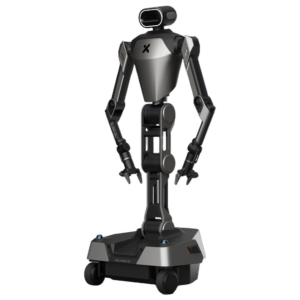
  1. Galaxea R1
  2. Xiaomi CyberOne
Galaxea AI

Galaxea R1

Autonomy
II Assisted Autonomy
Score
50/100 Plausible
Readiness
Early Stage
Price
Not tracked
Xiaomi

Xiaomi CyberOne

Autonomy
II Assisted Autonomy
Score
44/100 Concept Stage
Readiness
Promising Progress
Price
Not tracked

Up to three

01 Classification

What each one does on its own.

The Autonomy Ladder is the same five rungs for every robot on the site. A rung describes the conditions a robot handles without you, not how good it is.

V
Generalized
Any task, any setting
IV
Environmental
Handles new obstacles without help
III
Conditional
Finishes familiar jobs on its own
II
Assisted
Runs preset routines, needs rescue
Galaxea R1Xiaomi CyberOne
I
Manual
One action, on command
02 Assessment

Where they actually differ.

The Robovations Score is nine inputs across three pillars, each weighted as shown and each scored so that more is better. A robot can lead on one and trail on another, which is the point of showing them apart. Cost of ownership and data handling are reported on each robot's own page and are never averaged into the score.

None of these robots carries a scored assessment yet, so there is nothing to plot here. The classification and evidence below still apply.

03 Measured against the class

How far apart is a long way?

A number only means something next to the spread it sits in. Each track below is the real range across every classified robot in the class, with the median marked.

These robots share no measured specification with enough published figures to plot. That is a gap in the record, not a finding about the robots.

04 Ownership

What the numbers leave out.

The trade-off

What each design gives up to be good at what it is good at.

Galaxea R1

R1 ships with genuinely open tooling, datasets, ROS2, and an SDK, that lowers the barrier for outside researchers to build on it, but the same teleoperation-centric training approach that enables this openness means no specific task is independently confirmed as autonomous.

A concrete, Forbes-reported price range ($44,500-$64,000) is unusually specific for an early-stage humanoid platform, but it applies to an enterprise or research sale, not a consumer purchase, and could not be cross-checked against the manufacturer’s own site.

Xiaomi CyberOne

Bipedal form factor delivers natural movement and object manipulation, but no consumer deployment or operational evidence exists to calibrate reliability or task capability.

Who each one is wrong for

Stated by the record itself. A robot being wrong for a household is a fact about fit, not a fault.

Galaxea R1
Any consumer or household use
Not sold to consumers; purchasable only by research institutions and enterprises, per every source reviewed.
Buyers seeking confirmed autonomous task completion
No independent source confirms R1 completing any specific task without human teleoperation; the vendor's own training method relies on direct human control of the arm.
Buyers needing to verify specifications against the manufacturer's own site
galaxea.ai was unreachable during this review (expired SSL certificate); specification claims here rely on a retailer listing, an unofficial user-guide mirror, and independent press.
Xiaomi CyberOne
Consumer home automation buyers
No retail availability or consumer pricing. Research-only deployment excludes residential use cases. No timeline for consumer release.
Any buyer or operator, of any kind
There is no access model. CyberOne has never been sold, leased, loaned, or made available through a research, educational or corporate program, and Xiaomi has published no purchase path and no support infrastructure for it.
Buyers needing near-term deployment
No documented release date or commercial availability timeline. Development stage unspecified; minimum viable timeline unknown.
Buyers seeking operating cost or consumable documentation
The only economic figure Xiaomi has published is a build cost of 600,000 to 700,000 yuan per unit, roughly $89,000 to $104,000, stated in 2022 as the reason mass production was not feasible. That is what a unit costs to make, not a price to buy one. No acquisition, maintenance or consumable costs exist because no unit has been distributed.

What stays your job

The upkeep ownership hands back to you, whatever the autonomy level says.

Galaxea R1

Not recorded for this robot.

Xiaomi CyberOne
  • Not applicable: No CyberOne has been distributed to an owner or operator, so there is no maintenance regime, service network, or consumable schedule to describe.
05 Evidence

How much each of these is standing on.

Classifications rest on different depths of evidence. A pre-release assessment and a verified one are not the same kind of claim.

Evidence behind each classification
Robot Evidence status Sources reviewed Last assessed
Galaxea R1 Verified 7 Aug 2026
Xiaomi CyberOne Pre-Release 10 Aug 2026

Robovations classifies robots; it does not rank them. Nothing on this page is a recommendation, and no manufacturer influences a classification or its placement here.