

Agility Robotics
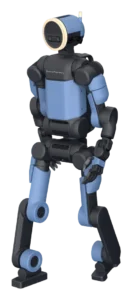
Digit
- Autonomy
- IIIConditional Autonomy
- Score
- 75/100 Promising
- Readiness
- Not assessed
- Price
- $250,000list
All humanoid robots. Every measure below is plotted against the full class, so a difference can be read against how much the class itself varies.
Up to three
The Autonomy Ladder is the same five rungs for every robot on the site. A rung describes the conditions a robot handles without you, not how good it is.
The Robovations Score is nine inputs across three pillars, each weighted as shown and each scored so that more is better. A robot can lead on one and trail on another, which is the point of showing them apart. Cost of ownership and data handling are reported on each robot's own page and are never averaged into the score.
None of these robots carries a scored assessment yet, so there is nothing to plot here. The classification and evidence below still apply.
A number only means something next to the spread it sits in. Each track below is the real range across every classified robot in the class, with the median marked.
Not compared, because fewer than two of these robots carry a published figure: Price, Suction, Noise.
What each design gives up to be good at what it is good at.
Industrial deployment validates conditional autonomy in logistics, but operational scope remains tethered to supervised, mapped facilities with no demonstrated cross-environment generalization.
Bipedal humanoid form enables navigation through existing human-scale infrastructure, but at a maximum walking speed of 5.0 km/h a unit moves goods more slowly than the wheeled platforms it shares a floor with.
Enterprise-only distribution model ensures engineering support and long-term roadmap alignment but restricts market access and eliminates price competition or independent evaluation.
Electric actuation enables precise control and extended sequences, but requires careful thermal management and ongoing firmware tuning.
Research-grade flexibility permits custom task definition and algorithm development, but demands expert operators and extended integration timelines.
Stated by the record itself. A robot being wrong for a household is a fact about fit, not a fault.
The upkeep ownership hands back to you, whatever the autonomy level says.
Classifications rest on different depths of evidence. A pre-release assessment and a verified one are not the same kind of claim.
| Robot | Evidence status | Sources reviewed | Last assessed |
|---|---|---|---|
| Digit | Pre-Release | 10 | Sep 2026 |
| Boston Dynamics Atlas | Not Consumer-Ready | 8 | Sep 2026 |
Comparing across classes is allowed — the page will switch to per-class positioning and tell you it has.