
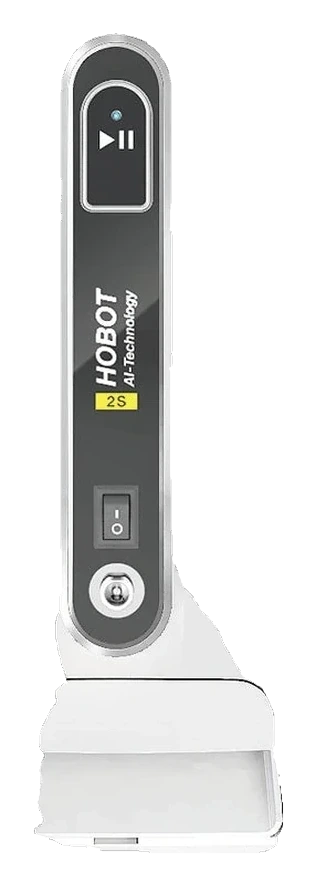
HOBOT
HOBOT 2S
- Autonomy
- IIAssisted
- Score
- 51/100Limited
- Readiness
- Ready Now
- Price
- $349list
HOBOT

Ecovacs
Up to three
All robot window cleaners. Every figure below is placed against the whole class, so a gap can be read against how much the class itself varies.
The conditions each robot was assessed against, side by side. Rows marked in gold are where these machines genuinely differ.
| Condition | HOBOT 2S | Ecovacs Winbot 920 |
|---|---|---|
| Window style | ||
| Standard residential | GoodInfrared edge detection works reliably on standard frame widths and glass profiles. | GoodOptimized for 6-12 sq ft panes on standard residential frames. Four-stage path covers standard sizes adequately. |
| Large panes (8 ft+)they differ | GoodDual-channel water dispensing handles wide panes without streaking; edge detection functions normally. | DependsPanes above 15 sq ft require multiple four-stage cycles or manual repositioning. Fixed path design does not optimize for pane size. |
| Specialty / texturedthey differ | PoorCurved mullions, recessed frames, or textured glass defeat edge detection; manufacturer specs exclude specialty surfaces. | DependsCurved or heavily subdivided glass confuses the fixed path logic. Manual repositioning frequent; best suited to flat, uniform windows. |
| Frame style | ||
| Frameless / minimalthey differ | GoodFrameless windows provide consistent surface; edge detection uses glass perimeter for positioning. | DependsFixed path logic struggles without visible boundaries. Frameless glass may cause robot drift or repetitive repositioning attempts. |
| Standard mullions | GoodStandard framed windows are the primary design case; edge detection calibrated for frame-edge transitions. | GoodStandard wood, aluminum, or vinyl frames provide visual cues for path logic. Four-stage routine executes predictably on framed windows. |
| Heavy bezels | DependsThick or recessed frames may confuse edge detection; manual override required more frequently. | DependsMetal frames with complex joinery trap spray moisture in recesses. Weekly inspection needed to prevent water pooling and intake clogging. |
| Building height | ||
| Single-story | GoodGround-level placement eliminates fall concern and simplifies manual repositioning. | GoodGround-level and platform windows are primary design target. Simple four-stage path and safety rope handling straightforward. |
| 2 – 3 stories | GoodTwo to three-story homes manageable with portable ladder or interior placement; safety rope secures unit if suction fails. | GoodSecond-story windows (15-20 ft) manageable with external rope anchor and GFCI-protected power outlet. |
| 4+ storiesthey differ | PoorMulti-story repositioning becomes repetitive hauling; exterior access points on tall buildings create safety and practical burden. | DependsHeights above 20 feet approach motor power limits and cable routing challenges. Secondary tether strongly recommended; newer models handle high-altitude better. |
| Power preference | ||
| Corded OK | GoodHOBOT 2S is cordless. No corded operation available. | Good20-meter power cable with outdoor connector. Requires outlet within cable range; extension use discouraged by manufacturer. |
| Cordless preferredthey differ | GoodCordless operation with USB rechargeable batteries; runtime is 20-30 minutes depending on usage. | PoorWinbot 920 is corded only; no battery option. Newer W1 Pro offers cordless operation if needed. |
| No preference | GoodCordless batteries sufficient for typical window-cleaning sessions; no corded option necessary. | GoodCorded operation is standard; cordless variant not available for this model. |
A robot being poor for a condition is a fact about fit, not a fault. “Depends” means the record names a limit worth reading, not that the answer is unknown.
Nine inputs across three pillars, each weighted as shown and each scored so more is better. A robot can lead on one and trail on another, which is the point of showing them apart.
A number only means something next to the spread it sits in. Each track is the real range across every classified robot in the class, with the median marked.
Not compared, because fewer than two of these robots carry a published figure: Suction, Runtime, Charge time.
Written on each record, and the only thing here every robot on the site carries.
What each design gives up to be good at what it is good at.
You gain stable autonomous cleaning of a pane once positioned, but you lose multi-window autonomy. Manual placement is the structural constraint.
Dual ultrasonic spray nozzles wet the pane evenly, but they draw from one tank, so a large job means taking the unit off the glass to refill.
You are freed from the ladder, but the machine is never untethered: a 4.5 m safety rope anchored to a fixed object indoors and a permanently attached 5 m mains cord are both part of every session.
Simple to operate, fixed in what it does: the pad sequence and spray volume are the same on lightly dusted glass as on mineral-etched glass, so heavy soiling takes a second run rather than a longer first one.
Stated by the record itself. A robot being wrong for a household is a fact about fit, not a fault.
The upkeep ownership hands back to you, whatever the autonomy level says.
Classifications rest on different depths of evidence. A pre-release assessment and a verified one are not the same kind of claim.
| Robot | Evidence status | Sources reviewed | Last assessed |
|---|---|---|---|
| HOBOT 2S | Provisional | 4 | Sep 2026 |
| Ecovacs Winbot 920 | Discontinued | 5 | Oct 2026 |
Evidence status counts the sources behind a classification, not their kind. A high count can be maker documentation and price coverage, so read it as how much was reviewed rather than as independent testing. How we weigh evidence.
 The full recordHOBOT 2SSpecifications, evidence, the Fit Check in full, and every tracked change.
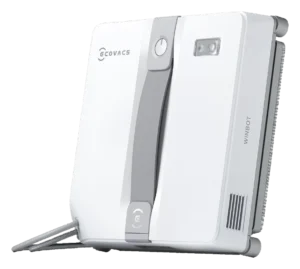 The full recordEcovacs Winbot 920Specifications, evidence, the Fit Check in full, and every tracked change.
Robovations classifies robots; it does not rank them. Nothing on this page is a recommendation, and no manufacturer influences a classification or its placement here.
Comparing across classes is allowed — the page will switch to per-class positioning and tell you it has.