What should you check before giving a robot vacuum to an older parent?
A robot vacuum is mostly an app, an account and a company, and for an older recipient the real question is not how well it cleans but what happens when something goes wrong and the giver is not there to fix it. Setup, network compatibility, upkeep time and the maker's own staying power decide how the gift actually lives in someone else's home.
On this page3 sections
A 2025 survey of more than 3,600 U.S. adults age 50 and older asked what keeps them from taking up new technology. Ease of use came back at 20 percent and setup and support at 19 percent, the two answers most likely to turn a helpful device into a chore for the person receiving it.
A robot vacuum is a natural present for a parent who is slowing down on floors. But for an older recipient, whether it cleans well matters less than what happens when something goes wrong and the giver is three states away. Most of what can go wrong is knowable before the box is wrapped.
Five things decide how one of these machines lives in someone else’s home:
- Setup: nearly every model needs a phone app and a maker account.
- Network: most want a 2.4 GHz WiFi network and cannot get past a shared-network sign-in.
- The dock: a self-emptying base is large and still needs tending.
- Upkeep: brushes, filters and bins ask for regular hands-on time.
- The company: apps and cloud features last only as long as the maker keeps them running.
The setup is an app and an account
Past basic manual driving, a robot vacuum does almost nothing without its phone app. Scheduling, no-go zones, cleaning maps, firmware and even naming a room all live there, and reaching them means creating an account with the maker and pairing the robot over WiFi. This is how the category works, whatever brand is on the box.
The network is where a well-meant gift can simply stall. iRobot’s robots connect to 2.4 GHz WiFi and, by the maker’s own support documentation, cannot get past a captive portal. That arrangement is common in senior living and assisted living, where residents share a managed connection rather than a home router they control.
Term
Captive portalA captive portal is the sign-in screen a shared or public network shows before granting internet access, the kind you tap through at a hotel or clinic. A robot vacuum has no browser to complete it, so it never connects.On a private home router the pairing is a few minutes of tapping. On a building network that requires that sign-in step, it may not be possible at all, and that is worth confirming before the gift rather than discovering it on the day.
What it asks of whoever keeps it running
Routine upkeep on a robot vacuum runs a median of about an hour a month across the models tracked here, with a quarter of them under 45 minutes and a quarter over 90. That is emptying bins, clearing hair from the brush, rinsing or swapping filters and wiping sensors, spread across the weeks rather than done all at once.
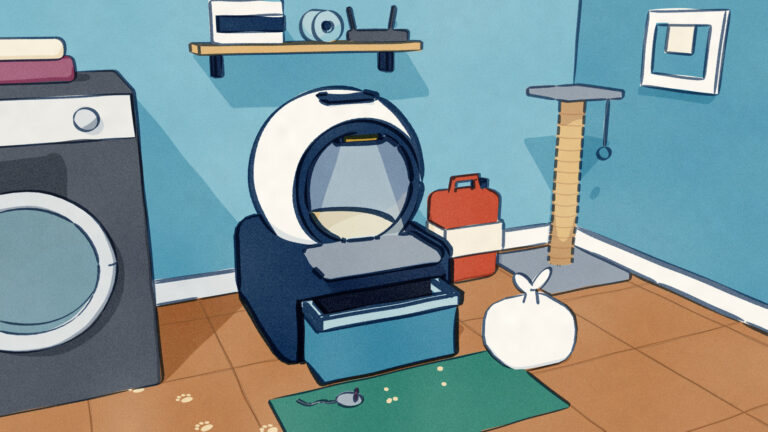
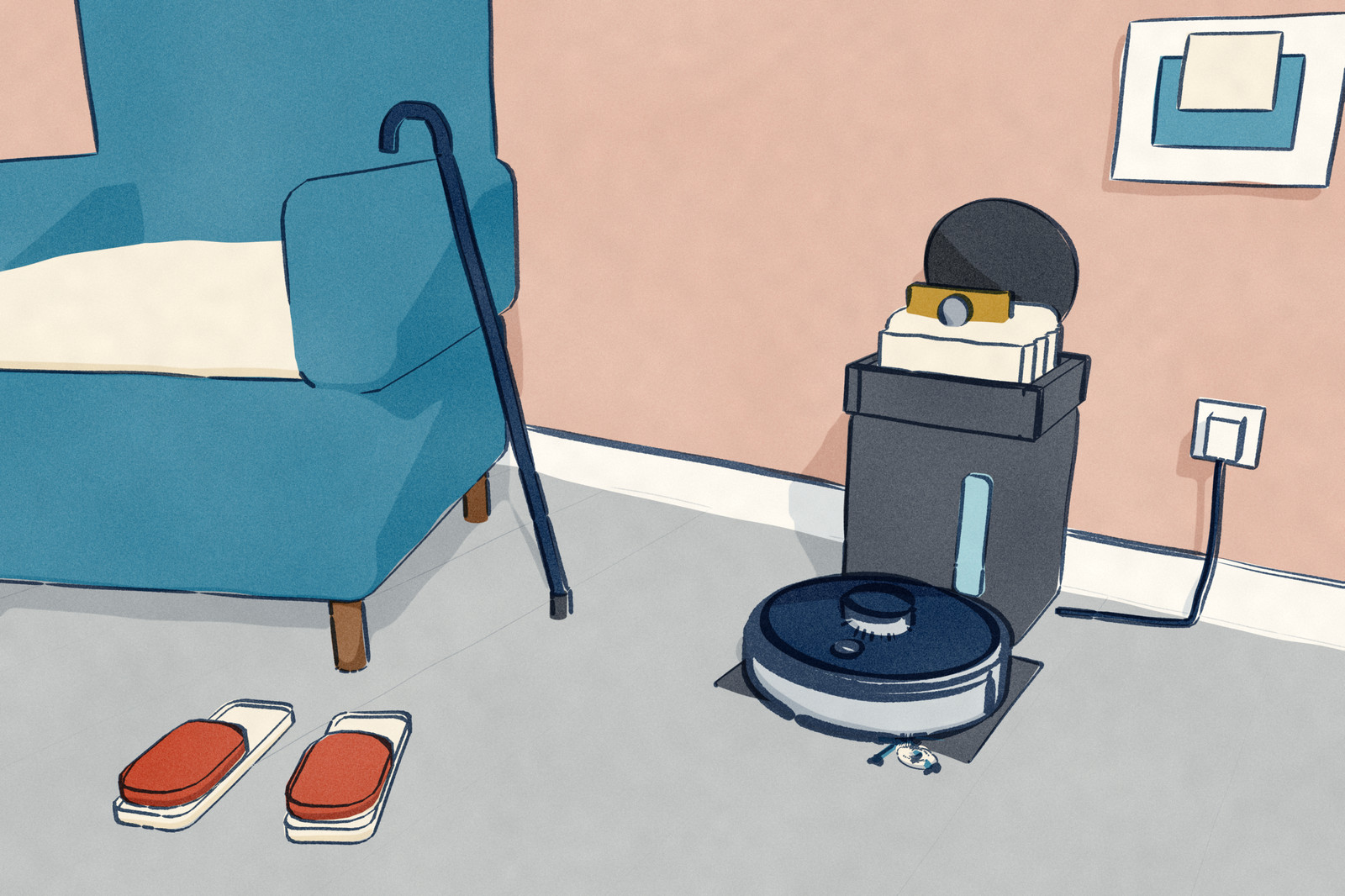
The dock adds its own footprint. A self-emptying base stands roughly as tall as a small kitchen bin, needs a power outlet and a clear approach on the floor, and empties the robot into a bag that becomes a recurring purchase. It cuts how often someone empties the robot; it does not remove the task, because the bag, the filters and the brush still need hands.
For a gift, the real question the hour a month raises is who does it. If the recipient cannot bend to a low dock or manage the app, that upkeep quietly transfers to whoever gave the robot, on visits or over the phone.
When the maker goes away
The most durable risk is not mechanical. Some robot vacuums lean on the maker’s cloud for the features owners actually use, so when the servers go dark, those features go with them. Neato Robotics is the plain example. The company stopped operating in 2023, and in a service notice dated October 6, 2025 it began phasing out its cloud, ending app control, scheduling and saved maps.
The robot did not become a paperweight. A Neato owner can still run a clean, but only in the way the notice describes.
Your Neato robot will continue to function manually. Simply press the button once to launch a full house run.
What that looks like in practice is a machine dropping back to a single button: no map, no schedule, no app. The smart parts of the robot were living on someone else’s servers, and the servers were switched off. For an owner who bought the machine for the app, most of what they paid for is now gone.
Figure
What a cloud shutdown leaves behind
- The updateOne day, unannounced in any specification. Nothing physical left the machine on it.
- What stoppedThe dashed run is the service the buyer paid for and did not get.
- Hardware unchangedThe sensor and the radio it used are both still fitted and still working.
- Still runningunchanged by the update
- Withdrawnhardware unchanged, permission removed
Corporate trouble does not always end that way, which is the hard part for anyone buying now. In December 2025 iRobot, the maker of Roomba, filed a prepackaged Chapter 11 reorganization, and it completed the process in January 2026 under new ownership. Through it, the company said its app functionality and product support would keep running, and they did.
So one maker’s cloud went dark and took the schedules with it, while another passed through bankruptcy and kept the app on. A buyer cannot tell in advance which a company will turn out to be.
Cloud dependence is about what the robot needs to work today; support longevity is about how long the maker keeps the app, the parts and the updates coming. A gift can be fine on both counts and still lose one of them in a year.
These five checks do not rule the gift out. The fix is to do the hard part yourself: set the robot up before wrapping it, on your own network and your own phone, or plan to do the pairing and the account together on the day.
The alternative is a parent alone with a box, an app that wants an email and a password, and a WiFi network that may never let the robot on at all.