Lifecycle
What Repairing a Robot Vacuum or Robot Mower Involves After the Warranty Ends
Six robots across three manufacturers publish exact costs for brushes, filters, and blades, down to the dollar. None of the same records document a mainboard part number, a battery-pack replacement procedure, or what happens to a robot's cloud account when a controller board gets swapped, a gap that turns a routine warranty question into an unanswered one.
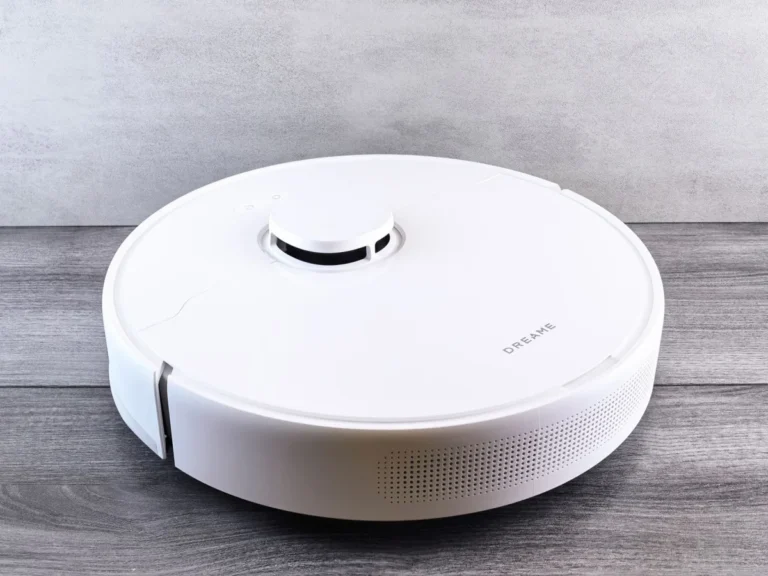
Photo by W.carter on Wikimedia Commons (CC BY-SA 4.0)
On this page5 sections
Robot vacuums and robot mowers are marketed with the vocabulary of durable appliances, build quality, multi-year ownership, seasons of unattended service. The support structure underneath looks more like a phone or a laptop.
A printed warranty covers the first stretch of ownership, and once that period lapses, what happens to the robot depends on something the box rarely spells out: which parts the manufacturer expects an owner to replace, and which parts were never designed to be opened at all.
The product specifications catalogued for individual robots in the Robovations database are explicit about the first category. Brush sets, filters, mop pads, and mower blades appear in published maintenance schedules with intervals and approximate costs attached.
The second category, mainboards, battery packs, sensor turrets, and drive modules, is largely absent from that same documentation across every robot examined here. That asymmetry is the structural pattern this piece traces across six catalogued robots spanning two categories and three manufacturers.
Consumables by designThe schedule is dominated by parts sold as consumables
Every vacuum record examined here lists a maintenance schedule dominated by parts sold as consumables. On the iRobot Roomba j7+, the published service items are dual multi-surface brushes replaced roughly every three to six months at an estimated $30 to $40 per set, alongside a self-empty dock bag rated for about 30 uses in a typical home.
The iRobot Roomba s9+, an older flagship from the same lineup released in 2019, documents a denser list: side brush replacement every six to eight months, a main brush swap annually, and an annual HEPA filter, adding up to a specified $120 to $150 a year in consumables. Neither record treats any of this as a repair. Both treat it as routine ownership cost, itemized the same way a car’s oil-change interval is itemized.
Term
OEM consumableA replacement part sold directly by the manufacturer for a component expected to wear out through normal use. Brushes, filters, pads, and blades are typical examples, distinct from a structural or electronic component the manufacturer does not sell as a standalone part.Roborock’s records follow the same pattern with different figures attached. The Roborock S8 Pro Ultra lists an annual main and side brush swap at an OEM cost near $40, alongside a monthly dock filter rinse performed by hand rather than a factory service visit. The older Roborock S5 Max, seven years into its production run and now sold at clearance pricing, specifies a comparable annual mop pad and filter replacement.
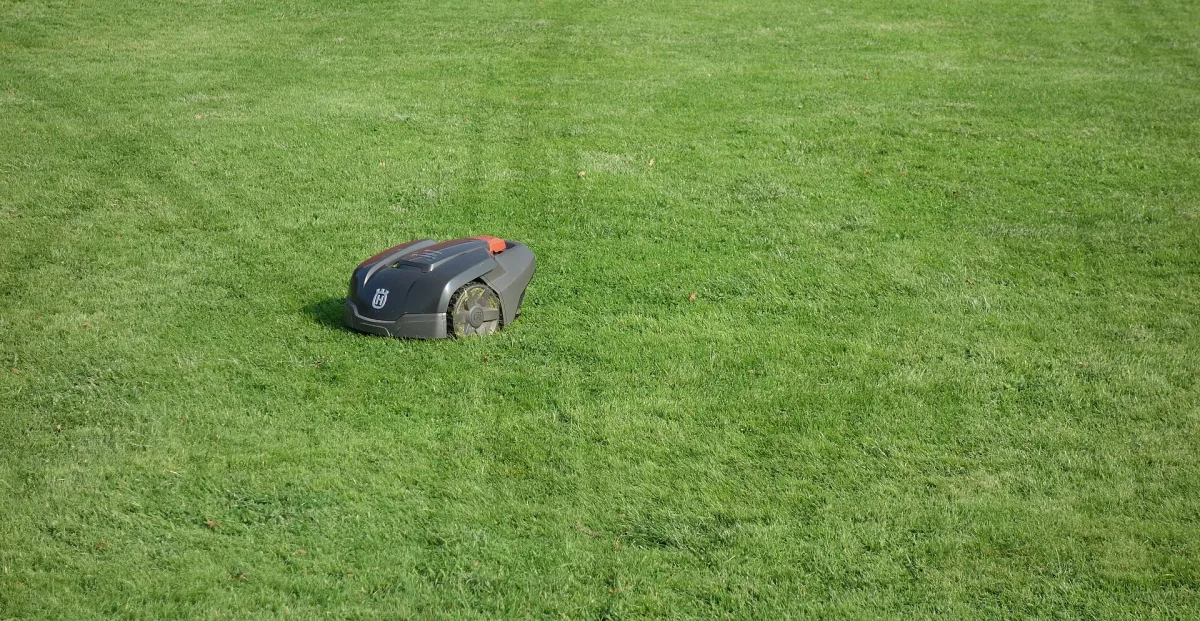
Mowers apply the identical logic to a different consumable: the Husqvarna Automower 450X NERA specifies blade sharpening or replacement every three to six months, a cost tied to how much grass the unit cuts in a season rather than to a fixed calendar interval.
Robovations database
Where iRobot Roomba j7+ sits
Measured against every published robot in robot vacuums
full rangemiddle halfmedianthis robot
- List price214 in robot vacuums$800med $800
- Suction207 in robot vacuums1,700med 10,000
- Runtime186 in robot vacuums75med 180
- Five-year cost173 in robot vacuums$1,200med $1,400
Where the documentation stopsBatteries, sensor turrets, and mainboards: the parts the spec sheets skip
The published specification for every robot examined here stops short of one category: the electronics and drivetrain that make the consumables above worth replacing in the first place. None of the six products catalogued in this piece document a battery-pack replacement procedure, a mainboard part number, or a sensor-turret service path.
The battery is addressed only in terms of how it degrades over time. The Husqvarna Automower 450X NERA’s own record notes that owner reports describe 85 to 90 percent capacity retention after two seasons, without specifying what happens once that curve continues downward and the pack falls short of a full mowing session.
The absence spans a consistent set of components across every record examined:
- Battery packs, and any cell-level replacement or refurbishment option
- Mainboards and the controller electronics that run navigation and scheduling
- LiDAR or camera turrets used for mapping and obstacle detection
- Wheel drive modules, drive motors, and the gearing that moves the chassis
This is not a claim that no repair path exists anywhere for these components. It is a statement about what is and is not itemized in the manufacturer-facing documentation this database draws from. The gap holds across price tiers: a $329 clearance-priced Roborock S5 Max and a $1,599Roborock S8 Pro Ultra both publish detailed brush and filter schedules, and neither publishes a documented mainboard or wheel-module repair procedure.
Term
Field-replaceable unitA component designed to be swapped as a single sealed module rather than repaired internally, such as a dock pump or a battery pack. Whether a given manufacturer actually sells that module to owners or independent shops is a separate, product-specific question this database does not track for the robots covered here.Robot mowers complicate the picture in a useful way. The Husqvarna Automower 315X, in market since 2016, credits its decade of availability in its own readiness assessment to a broad owner base that supports documentation and spare-parts access, a claim the vacuum records in this set do not make about their own drivetrains.
The same mower’s record also lists boundary-wire splicing and drive-track service as routine maintenance lines rather than emergency repairs. Whether that reflects a genuine difference in how mower manufacturers support hardware in the field, or simply a difference in how thoroughly each product category happens to be documented, is not something the specification data resolves on its own.
Marketing claim against the record
What is claimed, and what the record documents
iRobot Roomba j7+
ClaimediRobot as a stable, long-term platform
RecordedGoing-concern notice filed January 2024; iRobot disclosed material doubt about ability to continue as a going concern without additional capital or restructuring per SEC filingJan 2024 · Amazon acquisition of iRobot collapses, triggering going-concern disclosure
ClaimedAmazon acquisition would accelerate iRobot innovation
RecordedEU regulators blocked the deal citing competition concerns; deal termination fee of $94 million paid to iRobot per published reports, providing short-term liquidity but not the operational backing of the acquisitionJan 2024 · Amazon acquisition of iRobot collapses, triggering going-concern disclosure
Claimedj-series receives regular capability updates
RecordedFirmware update frequency for j-series declined noticeably in the months following the layoffs per community-tracked iRobot changelog entriesJan 2024 · Amazon acquisition of iRobot collapses, triggering going-concern disclosure
Claimed31% workforce reduction limited to non-product functions
RecordediRobot CEO disclosed in January 2024 statement that engineering and product teams were included in reductions; specific team compositions not disclosedJan 2024 · Amazon acquisition of iRobot collapses, triggering going-concern disclosure
The left column quotes the manufacturer. The right is what the tracker entry documented at the time, and it is the column the classification is built from.
Repair, replace, or exchangeNo product here publishes a warranty length
None of the products in this set publish a fixed warranty length, an authorized-repair-center list, or a defined spare-parts-availability window in the specification fields this database tracks.
That absence is a real gap in the record, not a rhetorical one, and it means this piece cannot state how long any specific model’s post-warranty parts supply lasts, or how that window compares across the three manufacturers covered here. What the catalog does document, in at least one case, is warranty scope at the component level rather than the whole unit.
Term
Whole-unit replacementA manufacturer or retailer resolving a failed robot by issuing a new or refurbished unit rather than repairing the specific broken component. The default outcome, in practice, wherever a repair path for a given component is not documented or offered.The Roborock S8 Pro Ultra’s own record specifies a two-year dock warranty covering pump and motor failures, a narrower and more specific commitment than a blanket unit warranty would be. The Husqvarna Automower 450X NERA’s record references only a standard manufacturer warranty covering defects, with no duration specified in the source material reviewed.
The practical question for an owner past that window is whether a broken unit gets repaired or replaced wholesale. Consumable-level failures, a worn brush motor, a clogged dock pump, a dulled blade, are addressed through parts already documented and priced in the schedules above.
Term
Board-level repairDiagnosing and fixing a specific failed component on a circuit board, rather than replacing the entire board or the entire unit. Requires documentation, tooling, and parts access this piece did not find published for any of the six robots reviewed.Failures below the consumable level, a dead mainboard, a cracked sensor housing, a battery that no longer holds a charge, fall into the documentation gap already identified, with no recorded owner-facing repair path in any of the six product records. That absence leaves whole-unit replacement as the default outcome by omission, not by any stated manufacturer policy.
A seven-year-old Roborock S5 Max and a current-generation model close to its release price face very different economics under that same gap, even though neither record specifies the age at which a manufacturer stops stocking board-level parts.
Age compounds the gap. A model discontinued three years ago may still have brushes and filters circulating through third-party sellers, because those parts are commodity items with many suppliers, while its proprietary battery pack, its mainboard, and its dock electronics have no documented supply at all.
The consumable tier survives the product; the structural tier generally does not. That asymmetry is visible in the specification data, which continues to list filter and brush intervals for older records while saying nothing about board-level service for any record of any age.
Documented maintenance versus undocumented repair
What appears in the published maintenance schedule
| Robot | Category | Documented consumable | Interval and cost |
|---|---|---|---|
| Husqvarna Automower 450X NERA | Robot mower | Blade set | Every 3 to 6 months, $40 to $80 |
| Husqvarna Automower 315X | Robot mower | Blade set | Annually, $40 to $60 |
| iRobot Roomba s9+ | Robot vacuum | Brushes and HEPA filter | Annually, $85 to $115 combined |
| iRobot Roomba j7+ | Robot vacuum | Multi-surface brush set | Every 3 to 6 months, $30 to $40 |
| Roborock S8 Pro Ultra | Robot vacuum | Main and side brush | Annually, about $40 |
| Roborock S5 Max | Robot vacuum | Mop pad and filter | Annually, $30 to $40 combined |
Where these sit
The rung each one is classified at
The cloud dependency layerA mainboard swap is a software problem too
Every robot in this set requires an internet-connected mobile app for setup. The iRobot Roomba s9+‘s own readiness record describes onboarding as WiFi pairing, app activation, and dock positioning. The Husqvarna Automower 450X NERA ties its EPOS satellite positioning to an app-based boundary map the owner configures before the first mowing session.
Neither of those is a cosmetic feature bolted onto a mechanical product. The app is where the robot’s working identity actually lives: its floor plan or mowing boundary, its cleaning or cutting schedule, its firmware version, its pairing with a specific dock or charging station.
Term
Re-pairingRe-establishing the link between a robot’s hardware and the manufacturer’s cloud account and mobile app after a component swap, factory reset, or extended offline period. Distinct from the mechanical repair itself, and not addressed in the maintenance documentation reviewed for this piece.That structure changes what a mainboard swap involves in practice. Replacing a controller board on a robot vacuum or mower is, mechanically, a matter of connectors and mounting screws.
Reconnecting that board to the owner’s cloud account, the stored map, the paired dock, and the manufacturer’s authentication servers is a separate step layered on top, and it is a step none of the manufacturer documentation reviewed for this piece publishes a procedure for. The physical unit functions closer to a terminal for that identity than the whole of it.
Term
Service channelThe path through which a repair is performed: manufacturer-authorized service, an independent third-party shop, or the owner directly. Which channel is available for a given component, and whether it can restore cloud pairing, is not published in the specification data reviewed for this piece.An independent shop capable of desoldering and replacing a failed component still depends on the manufacturer’s servers accepting that hardware back into an owner’s account, a dependency the shop does not control and the published specifications do not describe either way.
This is a structural feature of connected consumer robotics generally, visible here through what the specification data does and does not say across three brands and two product categories, rather than a claim about any single manufacturer’s intent or aftermarket policy.
The practical consequence is that repair is rarely a question of whether a part can physically be replaced. It is a question of whether the replacement can be sourced, and whether the machine will accept it once fitted.
Both constraints sit outside the owner’s control and outside the specification sheet, which is why a robot can remain mechanically sound and still reach the end of its serviceable life. A vacuum with a functioning motor, intact brushes, and a failed mainboard is not a broken machine in any meaningful engineering sense. It is a machine whose repair path was never published.
Figure
Which costs come back, and how often
- Paid oncethe purchase, and only the purchase
- Comes backevery token is another time you pay for it
Robovations tracker
What has actually changed
5 recorded updates for iRobot Roomba j7+
- Amazon acquisition of iRobot collapses, triggering going-concern disclosure
Amazon terminated its $1.7 billion acquisition of iRobot in January 2024 following European Commission opposition, triggering an immediate going-concern disclosure and workforce reduction of approximately 31 percent at iRobot. The j7+ continued to ship and receive firmware support, but the corporate instability introduced documented uncertainty about the product's long-term update roadmap and manufacturer warranty backstop. Watch iRobot's firmware update cadence and parts supply continuity over the following 12 months as the indicator of operational stability.
Setback - MIT Technology Review reports leaked Roomba J-series test images from data labelers
MIT Technology Review reported in December 2022 that contracted Scale AI data-labeling workers shared images captured by pre-production Roomba J-series test robots, including one photo taken in a bathroom. iRobot said the images came from development hardware in its data-collection program, not retail j7+ units, and terminated its relationship with Scale AI. Watch for how iRobot documents safeguards on any future in-home data collection.
Setback - iRobot expands PrecisionVision object library via OTA firmware update
iRobot pushed OTA firmware updates across 2022 that expanded PrecisionVision's recognized object library and improved avoidance reliability on dark and partially obscured obstacles, two categories that drew critical early reviews at launch. Owner forums and iRobot's published changelog documented fewer false-stops and missed detections compared to the launch firmware. Watch for whether the expanded training set materially reduces the documented failure rate on transparent or very-low-contrast obstacles, which firmware notes did not specifically address.
Incremental - iRobot Roomba j7+ Pet Owner Official Promise launched
iRobot announced the Roomba j7+ Pet Owner Official Promise, a guarantee replacing any j7-series robot failing to detect and avoid pet waste on first encounter.
Lateral - iRobot Roomba j7+ enters retail with PrecisionVision obstacle avoidance
iRobot commercially released the Roomba j7+ in September 2021 at an MSRP of $849, pairing the Genius 3.0 Home Intelligence platform with a new RGB camera-based obstacle detection system called PrecisionVision. The launch moved camera-trained object avoidance from lab demonstration to a shipping consumer product, the first in iRobot's lineup at scale. Watch whether subsequent firmware updates expand the recognized object library beyond the initial training set.
Incremental
What the record showsThe pattern across three brands and two categories
Across six robots from three manufacturers, the published record is consistent in shape even where the numbers differ. Brushes, filters, mop pads, and blades are documented, priced, and scheduled in the specification data this piece draws from.
Mainboards, battery packs, sensor turrets, and drive modules are not, in any of the six product records reviewed. That is a description of what the catalog says, not an accusation against any single brand: individual manufacturers may publish deeper service documentation elsewhere than what appears in these product records.
Two questions separate a robot that stays serviceable from one that does not, and both can be asked before purchase rather than discovered afterward. The first is whether the manufacturer publishes a parts catalogue extending past consumables, since a brand that lists a replacement wheel module or battery pack has committed to stocking it.
The second is whether the machine’s core functions survive without the manufacturer’s servers, because a repair that restores the hardware does not help if account pairing cannot be re-established afterward. Neither question is answered by the specification data examined here, and neither is typically addressed on a product listing.
The maintenance schedule ends where the warranty conversation gets interesting. What happens to a robot’s mainboard, battery, or cloud pairing after that point is the part the specification sheet leaves blank.