Analysis
Shark AI Ultra 2-in-1 vs. Shark Matrix Plus: What Actually Differs?
Shark prices these two 2-in-1s a dollar apart and classifies both at the same rung on the Autonomy Ladder. The gap shows up somewhere no spec sheet lists: whether the mop half of '2-in-1' is a mode switch on one chassis, or a separate module a person swaps in by hand before every run.
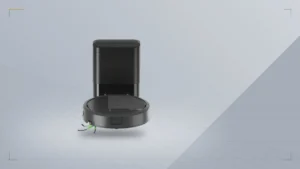
The Shark AI Ultra 2-in-1 lists at $699. The Shark Matrix Plus lists at $700. Both carry Shark’s 360-degree LiDAR turret, both are classified at Level III (Conditional Autonomy) in the Robovations database, and both ship as a vacuum-and-mop combination with a self-emptying base. On paper, choosing between them looks like choosing between two names for the same machine.
The difference is not in the autonomy rung. It shows up in what each robot expects a person to do between runs, and in how each one behaves once something stops it mid-cycle. Neither difference is on the spec sheet. Both are documented in Shark’s own support pages and in outlet reviews of each specific model.
Same price, same rungTwo Robots, One Classification
Robovations classifies both robots at the same rung. Level III means each completes a full cleaning session in a known layout without a person stepping in, and each still needs a person for anything the layout hasn’t already taught it. The AI Ultra launched in January 2022; the Matrix Plus followed in June 2023. The two are not a direct successor pair, despite the shared naming pattern and near-identical price. Shark’s own succession record for the AI Ultra names a later, separate model, the PowerDetect NeverTouch Pro, as its direct successor, not the Matrix Plus.
MSRP gap
1$
Shark lists the AI Ultra 2-in-1 at $699 and the Matrix Plus at $700. What separates them shows up in the mop workflow and the fault reporting, not the price tag.
Fill vs. swapThe Mop Workflow: Two Different Mornings
On the AI Ultra, vacuum and mop functions live in the same body. The app switches between modes, but a person still fits the mop pad, fills the robot’s own water tank by hand before a mopping run, and washes the pad afterward; the dock’s automation stops at the dustbin. It is not hands-off mopping, but it is one machine doing both jobs without any hardware change between them.
To mop with the Matrix Plus, you must manually swap the vacuum module with a separate mopping unit.
The Ambient
The Matrix Plus asks for one more step before that same routine. The Ambient’s review found the dock’s automation stops in the same place, too: it ‘doesn’t refill the water tank or clean the mopping pads’, so the 400 ml tank is filled by hand and the pad is rinsed by hand after every run, the same manual steps the AI Ultra requires, plus the module swap itself.
Dock automation, mapped
What each dock actually automates
- The dock does itruns between cleans without anyone present
- You do itstill a manual step on every all-in-one dock sold
Same LiDAR, less memoryHow Each One Covers a Room
Wired’s review of the AI Ultra found the mapping dependable: the robot split the test house into named rooms with a no-go zone around a fireplace, and the resulting map ‘was incredibly precise’ and persisted between runs. TechGearLab found the Matrix Plus’s first-pass mapping just as strong on its own terms, needing no full perimeter run before reusing a layout, and covering each room with one set of parallel passes followed by a second set at a right angle.
The two differ on what the map remembers, not on how well either one draws it.
One map onlyOne Saved Map, Not Several
TechGearLab’s finding here is specific: the Matrix Plus companion app ‘can only hold one map at a time’. A household with more than one level has to remap every time it switches floors, since nothing in the review or in Shark’s own Matrix Plus support FAQ describes a way to store more than one layout. The AI Ultra’s evidence base doesn’t document the same restriction in either direction, so multi-floor map storage isn’t a confirmed advantage for it, only a confirmed limitation on the Matrix Plus.
Clean stop, silent stopWhen Something Stops, Does It Explain Itself?
Robovations’ Dependability pillar scores a separate input for how clearly a robot reports what stopped it, apart from how often it stops at all.
Term
Edge recoveryOne of the inputs behind the Robovations Score’s Dependability pillar. It measures how clearly a robot reports what stopped it, since a person resumes the work either way; a robot that explains itself scores higher than one that halts silently, even at the same stop rate.On that input, the two robots separate more than their shared price tag suggests. Owner troubleshooting threads for the Matrix Plus document numbered fault codes rather than plain-language descriptions: Error 5 for a stuck flywheel, Error 10 for a navigation sensor fault, each requiring a separate lookup to translate into an action. The AI Ultra’s record reads differently. Homes and Gardens reports it worked through a cable snag on its own, extracting itself ‘without damaging the cord’, and TechRadar’s review documents its one recorded stall, a bath rug whose half-inch strands twisted the side brush, resolving by returning to the dock rather than needing a manual reset. Neither machine is failure-free: long-strand rugs catch the side brush on both, and the fix is the same on both, lift the rug before a run. What differs is what happens after the stall, not whether one happens at all.
Same label, different chassisThe Hardware Underneath the Shared Name
The two robots don’t share a chassis. Shark’s own specifications put the AI Ultra at 14.5 lbs with a 75 Wh battery and a 110-minute runtime; the Matrix Plus comes in at 7.7 lbs with a 28 Wh battery and a 90-minute runtime, despite the near-identical price. The Matrix Plus publishes a 3,200 Pa suction rating; Shark does not publish a suction figure for the AI Ultra, so the two aren’t directly comparable on that spec. The AI Ultra also runs quieter at its rated peak, 67 dB against the Matrix Plus’s 72 dB, though both numbers come from Shark’s own listings rather than a shared third-party test.
Robovations database
Spec sheet, side by side
| Robot | Weight | Battery | Runtime | Class |
|---|---|---|---|---|
| Shark AI Ultra 2-in-1 | 14.5 lbs | 75 Wh | 110 min | IIIConditional |
| Shark Matrix Plus | 7.7 lbs | 28 Wh | 90 min | IIIConditional |
What the price hidesWhere This Actually Leaves the Choice
Neither robot is more autonomous than the other. The classification puts them at the same rung for the same reason: each handles a known layout on its own and hands off anything it hasn’t already mapped. What separates a $699 robot from a $700 one here is ownership mechanics, not autonomy. Whether the mop half of ‘2-in-1’ is a mode switch on one chassis or a hardware swap fitted by hand. Whether a stall ends with an explanation or a guess. Whether a second floor means a fresh map or a stored one. None of that is visible on either product page’s headline spec, and all of it is documented in the evidence, including an ongoing r/RobotVacuums thread tracking Matrix Plus owner reports as they accumulate.
A one-dollar price gap and an identical Level III classification hide a real difference in what each robot asks its owner to do by hand, and in what it tells them when it stops.