How do robot vacuum mops work: spinning pads, rollers and vibrating pads
Spinning discs, a single buzzing pad, or a self-rinsing roller: three ways a robot vacuum puts a wet cloth to the floor, and three different results.
On this page3 sections
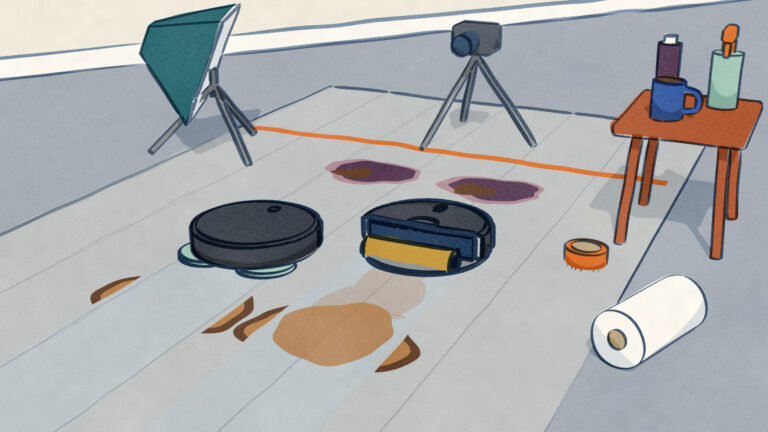
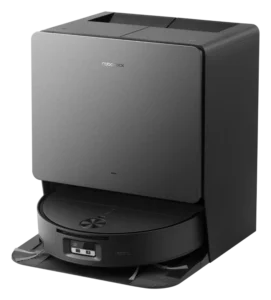
A robot vacuum that mops drags something wet across the floor, and what that something is has settled into three designs. The Roborock Saros 20 Flow Complete, which began shipping in September 2026, carries a rotating roller where most machines still clip on a pair of spinning discs. A third group keeps a single flat pad and shakes it thousands of times a minute.
All three are sold as mopping, and all three leave a floor that looks damp and clean on the first pass. So does the design under the robot actually change the clean you get?
It comes down to the scrubbing itself: how much force reaches the floor, whether the cloth rinses as it works or carries the dirt back to the dock, and how close to a baseboard the wet part can reach.
Those differences decide what a mop does with a dried stain and what it does with a fresh spill on your floor.
How a spinning pad scrubs
The common design clips two round microfiber pads under the back of the robot and spins them, often in opposite directions, at a couple hundred turns a minute. A published breakdown of robot mop types puts spinning pads at up to 260 rpm, pressing down with roughly 6 to 12 newtons, a rotation that adds a scrub a plain dragged cloth cannot manage.
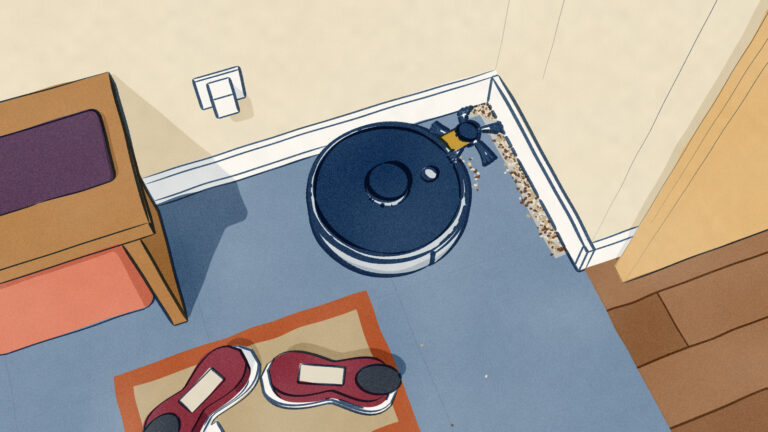
Machines like the Dreame L50 Ultra and the Ecovacs Deebot T90S Pro Omni also swing one pad outward when they sense a wall, buying back the edge the round pads would otherwise skirt.
The limit is water. A spinning pad holds whatever it lifts until the robot returns to the dock to be rinsed. Partway through a run it is already damp with the floor’s own grime, so on a fresh spill it tends to push the mess around rather than take it away. That is why makers point these pads at dried-on marks more than puddles.
the pads absorb the liquid and then spread it around once they become saturated
The roller that rinses itself
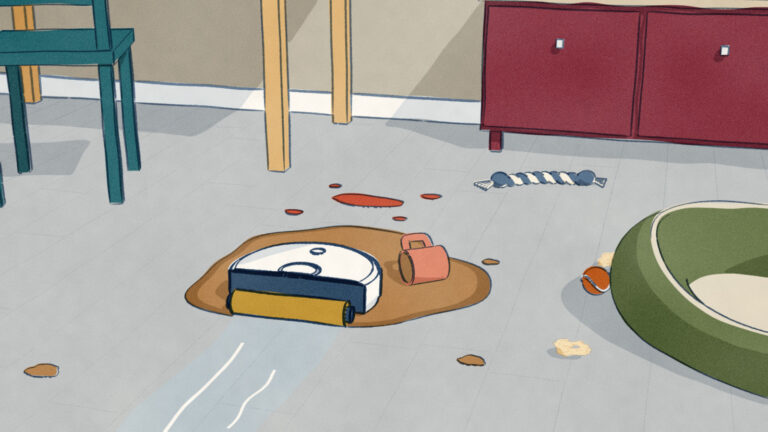
The roller answers the water problem by never staying dirty for long. A cylinder of cloth about the width of the robot turns against the floor while jets wet its leading edge and a scraper peels the dirty water off the back into a separate onboard tank. Only a freshly rinsed strip ever meets the floor.
Roborock markets its version as SpiraFlow and runs the roller past a bank of water outlets. Narwal’s Freo 20 Edge turns a chenille roller on a 10.2 in live-water track, and Eufy sells a line built around a self-rinsing HydroJet roller.
The roller reaches the edge differently too. Instead of swinging a pad outward, the whole cylinder slides sideways toward the wall, up to about 1.9 in on the newest models, and lifts off the floor when the robot climbs onto carpet.
Published figures put a roller’s downward force in the high teens of newtons, above the spinning pad’s single digits to low teens, which is part of why makers reach for it on stubborn messes. Back at the dock, Roborock washes the roller in 212-degree-Fahrenheit water to keep it from souring between runs.
Walking barefoot on my tiles after a session, you can physically feel the lack of grit or residue
The vibrating pad, and what the tests show
The third design keeps a single flat pad but drives it with a motor that shakes it up to 4,000 times a minute, fast enough to sit at the low edge of the sonic range. The pad barely travels across the floor. It buzzes against a dried mark the way a thumbnail worries at one.
With only a light downward force, around 6 to 8 newtons, it trades brute pressure for speed. Roborock, which markets the system as VibraRise, says the vibrating pad lifts dried stains about 30 percent better than a plain dragged pad. It is a single pad that extends toward the edge, and it leans on frequency where the others lean on a counter-rotating scrub or a self-rinse.
Put to a matched test, the three barely separate on the job the marketing leans on hardest. A comparison that scored more than two hundred robot mops on dried stains found roller and spinning systems almost level, 33 points against 32, with plain flat pads trailing at 27, and concluded that the particular machine mattered more than the mechanism under it.
On a wet spill the designs genuinely part ways. A roller keeps lifting dirty water into its tank as it goes, while a spinning or flat pad carries the mess until it reaches the dock.
For most owners that lands somewhere practical. If your messes are dried footprints and tracked-in dust, you will not feel much daylight between the three. A home with a toddler, a dog, and the odd knocked-over glass will notice which mop empties the dirty water as it works, and which one drives it into the next room.