Do robot vacuums clean the whole floor?
Your app shades each room the robot reached. The rug with the black border, the gap under the sofa and the last inch of baseboard keep their own record.
On this page4 sections
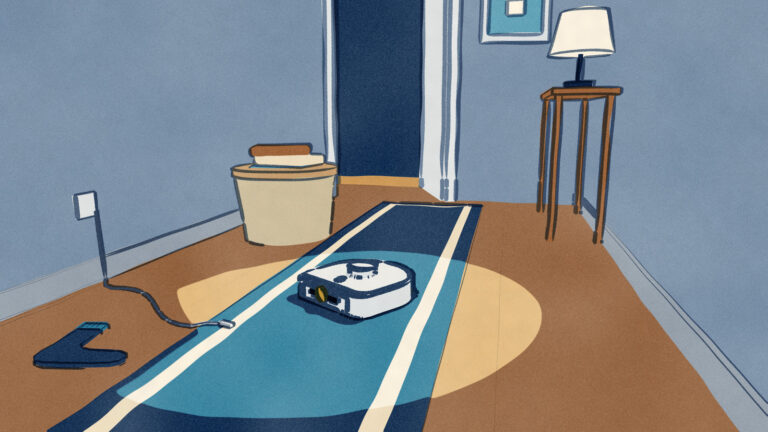
Picture an 8-by-10-foot rug with a brown rectangle woven through the middle. In 2021 a Wyze owner posted exactly that rug online, with a complaint: the robot “gets stuck inside this box every time and usually can only enter and exit from the thinner line on the right side.”
That isn’t the floor the brochures describe. Narwal’s own guide says mapped vacuums “are able to achieve nearly 100% floor coverage during each session.” Knowing the layout of a home, “they can clean under furniture, around obstacles, and into tight corners with precision.”
So which is it? It depends on what you mean by covered. When a run ends, your app shows every room shaded in. That shading tracks where the wheels went, not where the dirt came up. And it’s what you go by when you decide whether the upright vacuum can stay in the closet.
Covered can mean three things: the area a robot mapped, the area its wheels crossed, or the area it left clean. A robot can do well on one and poorly on another. Your app shows the second. The third is the one you still check by hand.
Mapping is the easy one: a robot can build a floor plan without cleaning anything. But the plan is a snapshot that doesn’t redraw itself each run. A Samsung Jet Bot that keeps skipping an area may be reacting to “a reflective surface, or an object that was present at the time of mapping,” even one you’ve since moved.
Where the wheels went
Driven coverage is the line your app draws over the floor plan after a run. It shows the room skipped behind a closed door, and the corner the robot decided it couldn’t reach. Only certain Jet Bot models linked to SmartThings “can display a path visualization,” and the History option in the app tells you whether yours is one.
Robots do try to close their own gaps. A Roomba that runs low heads back to its dock, and it “will automatically continue its cleaning job after roughly 90 minutes of charging.” A Jet Bot, in Samsung’s words, “aims to revisit missed spots up to two more times before concluding the cycle,” and then the run ends, reached or not.
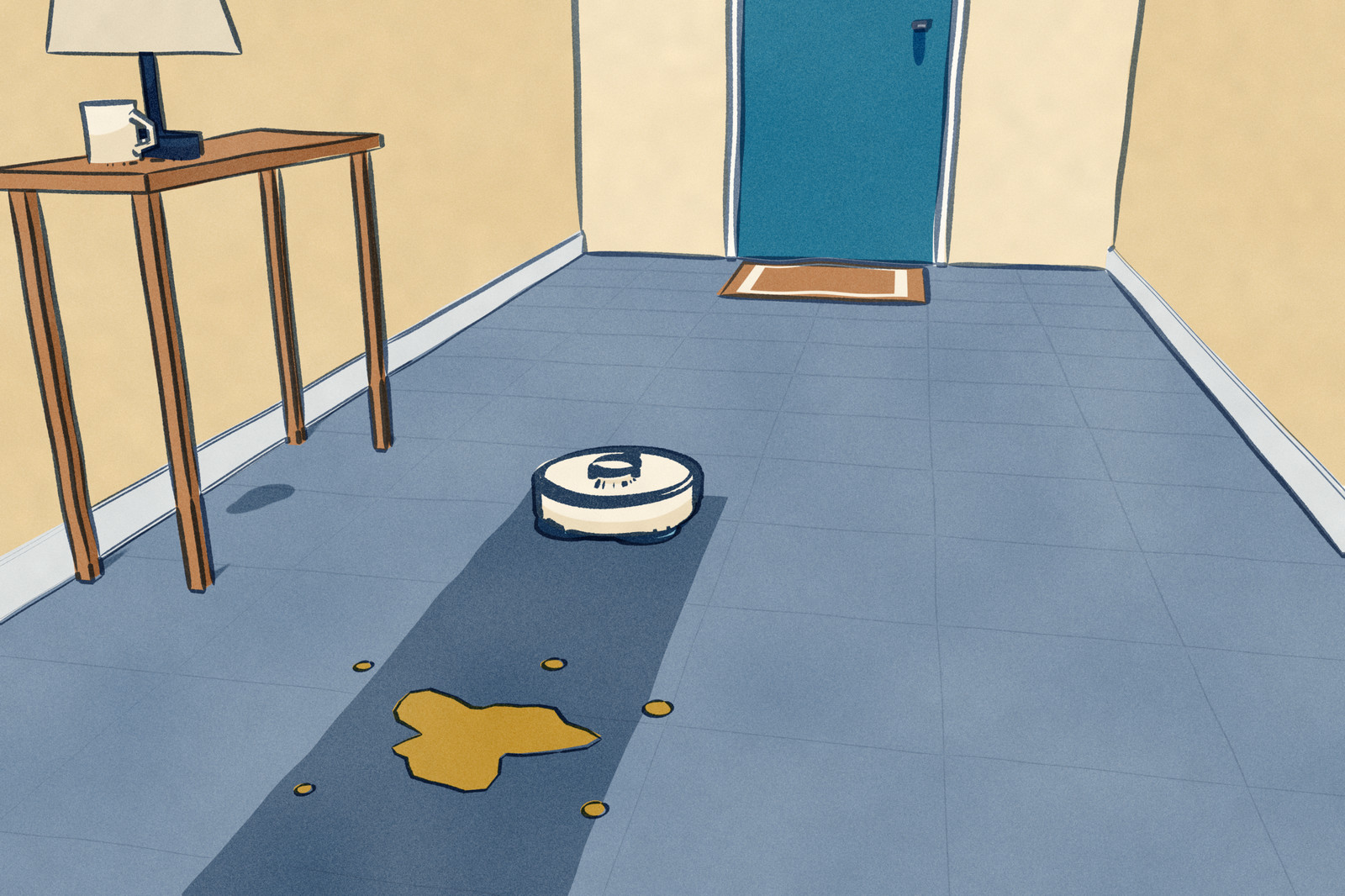
Still, driving over a patch doesn’t finish it. Think of a vacuum passing once over grit trodden into carpet, or a mop gliding over a dried spill. The robot records where it drove, and your map is drawn from that record. So a patch gets shaded the same whether the dirt came up or stayed put.
Floor the robot takes for a staircase
Some floor never gets driven at all, because the robot takes it for a staircase. A Jet Bot counts “dark-colored floors mistaken for edges” among the places it “perceives as risky,” and coverage can come up short in darker, cluttered rooms.
Older Roombas do the same. Their cliff sensors “may view this color as an edge and will not clean over it.” The i, j and s Series handle dark flooring better, though “there is still a chance the cliff sensor may be triggered.”
There is no adjustment that can be made to correct this behavior.
Other owners in that thread describe the same thing on patterned rugs. One wrote that a black line makes the robot “go berserk, stuttering and looping and jerking around like a drunk.” Others taped over the sensors or covered them in foil. iRobot tells its own owners not to, because blocking them “may create an unsafe operating condition.”
Here’s why it happens. The cliff sensors are infrared, there to stop a fall down the stairs. A dark dye sends little of that light back. And to the robot, no light coming back is exactly what the top of a staircase looks like.
Figure
How a dark rug reads as a drop
- Floor returnsThe pulse leaves, meets a surface within range, and comes back. The sensor reads floor and the robot drives on.
- Dark floor scattersA matte black surface absorbs the pulse instead of returning it, so nothing comes back.
- A real dropNothing within range to return from. The signal is identical to the rug, which is why a robot can refuse to cross a dark mat.
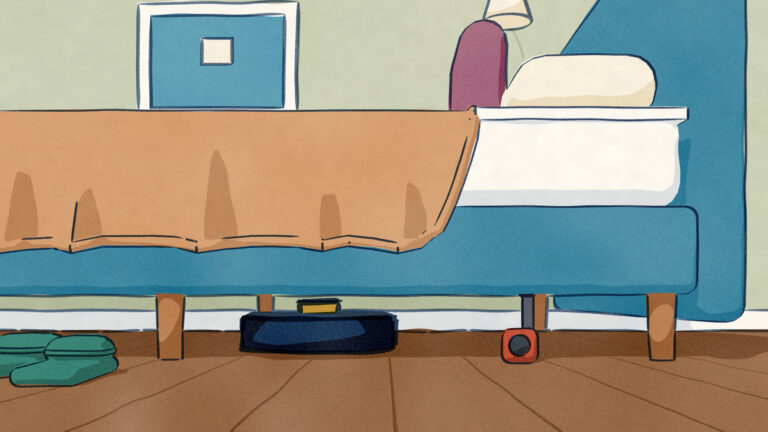
Low furniture takes floor away by height alone. A Jet Bot needs about 6.7 inches of clearance to get under furniture. Roborock built its Saros 10R 3.14 inches tall, thin enough for “effortlessly navigating under sofas and beds.” Whatever sits lower than your robot, the floor under it stays off the route.
Clutter takes more. Before a Roomba run, you’re asked to pick up “clothing items, loose cables, toys, etc.” And if you move something the robot has already bumped, “the robot will have no way of knowing,” and it may skip that area. How well a robot steers around cords varies from machine to machine in obstacle-course testing.
What the robot finished
The third kind, completion, asks whether the job got done: the grit lifted, the spill gone, the edge reached. It’s the one you care about most, and the hardest to measure. One review lab spreads measured amounts of rice, sand, cereal and coffee grounds on its own floors to see how much each robot removes.
Put through those tests, the Saros 10R cleared 92 percent of the debris on hard floor and 82 percent on carpet. Its room coverage came in at 85 percent, “which is better than average,” and it steered around every obstacle the testers set out, socks and cords included.
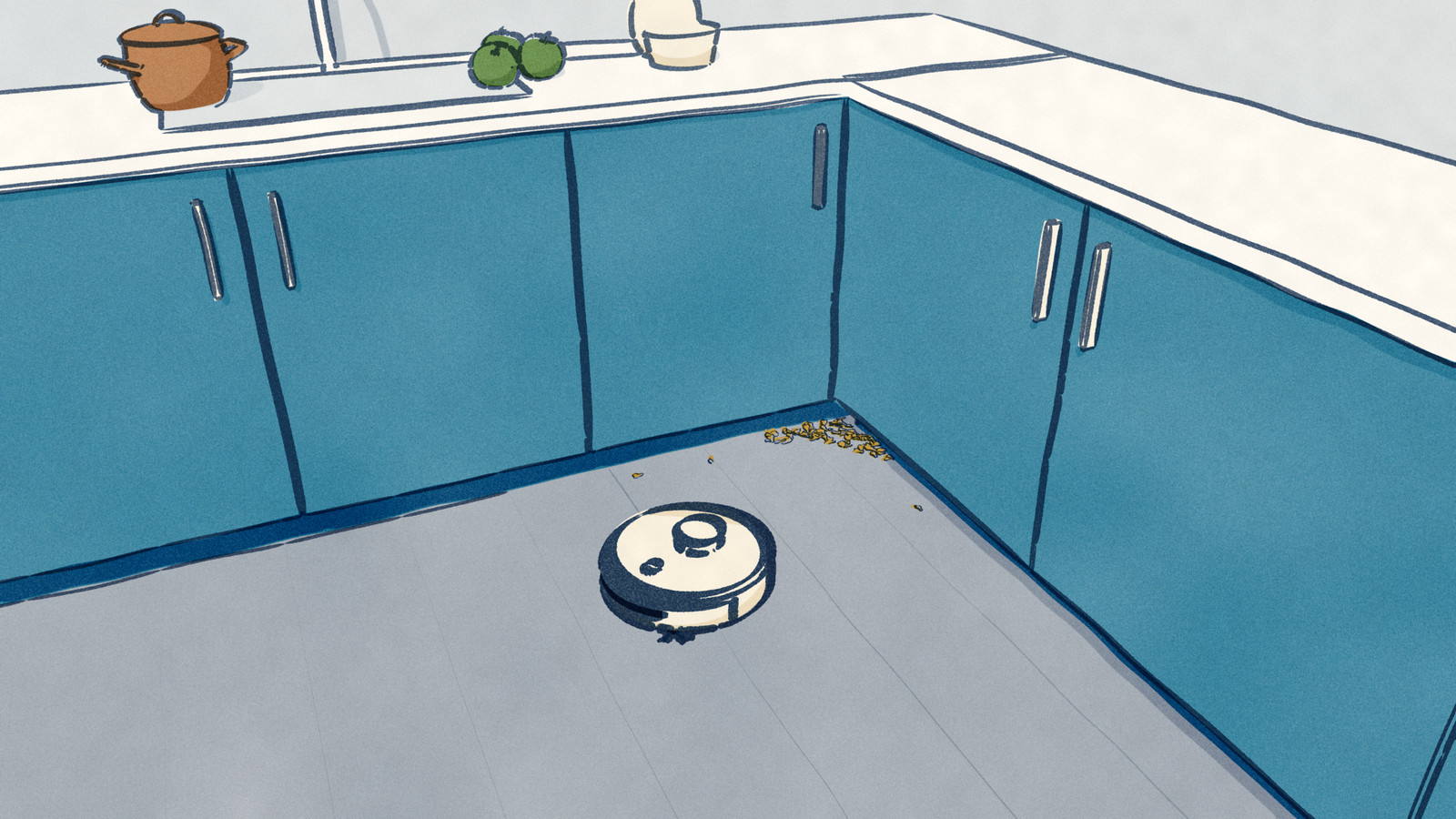
Corners are where driven and finished drift furthest apart. A round robot can’t reach into a right angle, so the last strip along a wall depends on a side brush sweeping debris toward the inlet. The Saros 10R pushes its side brush and mop out on arms.
Roborock advertises “100% Edge and Corner Coverage” certified by TÜV Rheinland, and a “100% Hair Removal Rate” certified by SGS. In the lab’s corner test, the robot picked up scattered coffee grounds “within 0.1 inches of the wall,” leaving “a few flecks” behind.
Hair was another story. The robot got 56 percent of the pet hair up, and edges and corners gave it “a little trouble.” The certifications and the review come from different tests on different floors. “Actual coverage depends on the environment,” reads the footnote for corners, and the hair result “may vary according to the home environment.”
Reading your map at home
The three measurements
Same word, three different claims
| Promise | What it measures | What it hides |
|---|---|---|
| Percent mapped | Area the robot modeled | Whether any work happened there |
| Percent driven | Area the wheels crossed | Whether the pass was effective |
| Percent completed | Area finished to standard | Hard to measure, absent from path maps |
So your app’s map is the driven record, even when a maker calls it clean. iRobot’s Clean Map report, under History, “shows the areas that have been cleaned.” And if a room the robot used to clean drops off it, the map itself may be at fault, and an old report can bring back the earlier map.
Read that way, a room shaded in means the wheels crossed it; whether the grit came up isn’t in the picture. A path that stops at the border of a dark rug means the robot took that border for an edge. A bare patch under the sofa means the sofa sits lower than the robot.
Your carpet keeps a path map of its own, in the pile. The Saros 10R left checkerboard rows on the testers’ rugs, “showing us that nowhere was left unvacuumed.” Up close, though, the pile still held fine debris “simply lifted to the top of the carpet and not removed entirely.”
In a furnished home, then, a robot vacuum doesn’t clean the whole floor. But what it misses is predictable: the floor under low furniture, dark rugs, the patch around a cord or a moved chair, and the last flecks in a corner.
Another owner in that thread described a robot that keeps to a rug’s patterned border and “traps itself under the couch.” That, the owner added, “is the cleanest that spot has been since I redid the living room.” And the rug lay in “the room that needs the vacuum the most.”