Skip to content
Saved

Goal-based/Humanoid Robots/2 robots compared/Reviewed Aug 2026

Honor D1 Lightning vs HMND 01 Alpha: what’s each actually for?
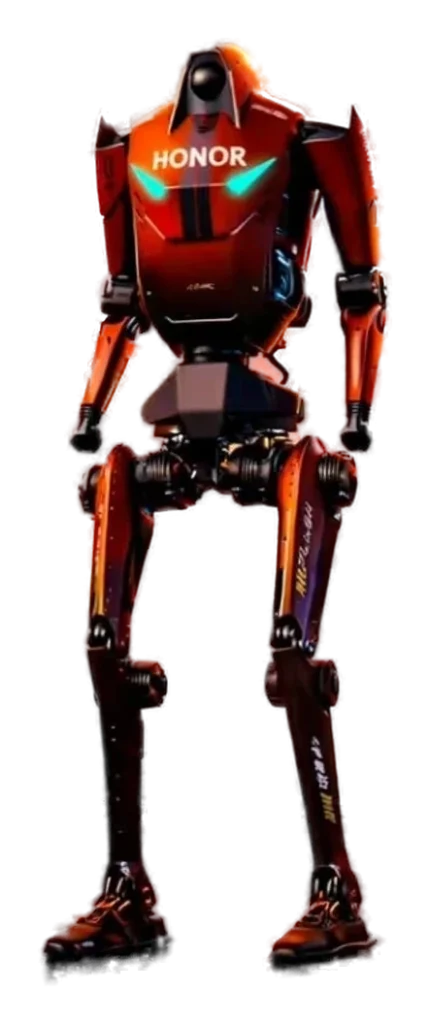
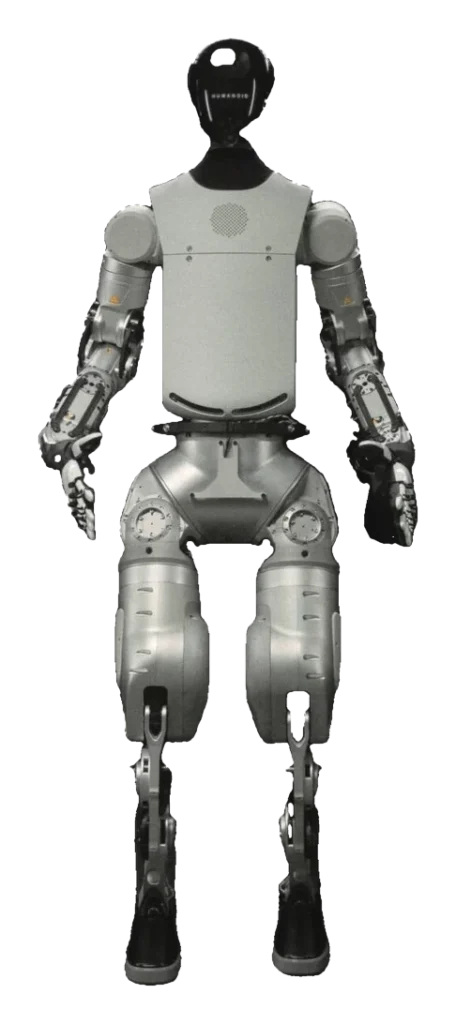
Each robot demonstrates one capability, not the other.Honor D1 Lightning's public evidence is locomotion; HMND 01 Alpha's is manipulation. Neither company has disclosed the capability the other demonstrated, so the two records do not overlap.
Full specifications10 measurements · 14 of 20 documented
Rated runtime
Not documented
240 min
Battery type
Li-ion
Li-ion
Navigation
Autonomous bipedal gait control and dynamic balance on a prepared, marked course. Honor has not disclosed the sensor or navigation architecture. The machine has no head and no eyes, so camera-based path following does not describe it.
360-degree RGB cameras, dual depth sensors, 6D force/torque sensors, haptic feedback; NVIDIA Jetson Thor processing; KinetIQ VLM and VLA-based reasoning
Connectivity
wifi
Not documented
Weight
Not documented
661.4 lbs
Form factor
bipedal
wheeled_base
Released
Mar 2026
Sep 2025
Degrees of Freedom
Not documented
29
Payload
Not documented
33.1 lb
Max speed
Not documented
4.5 mph
01/05

What was demonstrated, and where?

Each company has released one headline public demonstration. This section compares what was actually shown and under what conditions.
Where they differHMND 01 Alpha — Demonstration setting: Live industrial production environment
EvidenceHonor D1 LightningHMND 01 Alpha
Headline public demonstrationFull marathon, bipedal running gaitManipulation trial, Siemens Erlangen plant
Demonstration settingPublic outdoor road courseLive industrial production environmentDiffers
Demonstration formatSingle public event (company-run)Customer-site trial (named partner: Siemens)Differs
Sources & evidence
Honor manufacturer demonstration footage

Company-released footage documents Honor D1 Lightning completing a full marathon distance on a public course, demonstrating sustained bipedal locomotion rather than a short staged clip.

HMND Siemens Erlangen trial documentation

HMND's Siemens Erlangen trial is documented as a customer-site deployment, the only public demonstration in this comparison involving a named third-party industrial partner rather than a company-run event.

02/05

What capability does each disclose beyond the headline demo?

One demonstration proves locomotion; the other proves manipulation. Neither company has disclosed the capability the other one showed.

Where they differHonor D1 Lightning — Dynamic locomotion disclosed: Yes, marathon distance completed
EvidenceHonor D1 LightningHMND 01 Alpha
Dynamic locomotion disclosedYes, marathon distance completedDiffersNot disclosed
Manipulation capability disclosedNot disclosedYes, documented at Siemens trialDiffers
Household or consumer task shownNone shownNone shown
Sources & evidence
Honor manufacturer demonstration footage

Honor's marathon completion is the only disclosed evidence of dynamic bipedal running in this comparison; no manipulation capability has been shown or described by the company.

HMND Siemens Erlangen trial documentation

The Siemens Erlangen trial documents HMND 01 Alpha performing manipulation tasks under an industrial customer's supervision, the only disclosed manipulation evidence in this comparison.

03/05

What is each company's manufacturing track record?

An established consumer electronics maker and a seven-month-old robotics startup are producing these two demonstrations. Their histories differ sharply.

Where they differHMND 01 Alpha — Manufacturer history: First-time robotics manufacturer (founded 2025)
EvidenceHonor D1 LightningHMND 01 Alpha
Manufacturer historyEstablished consumer electronics manufacturerFirst-time robotics manufacturer (founded 2025)Differs
Time to public trial disclosedNot disclosed~7 months (company-stated)Differs
Independent customer validationNot disclosed (company-run demo)Named industrial customer trial (Siemens)
Sources & evidence
HMND company development timeline statement

HMND is described as a first-time robotics manufacturer that reached a functional industrial manipulator within roughly seven months of starting development, a timeline the company has stated publicly.

HMND Siemens Erlangen trial documentation

The Siemens trial is the only independently hosted evaluation in this comparison; Honor's marathon demonstration was organized and run by the company itself.

04/05

What is the path to availability?

Neither robot has a confirmed consumer purchase pathway. This section compares what timeline detail, if any, each company has disclosed.

Where they differHMND 01 Alpha — Ship date or availability window: Beta unit targeted Q3 2026 (non-consumer)
EvidenceHonor D1 LightningHMND 01 Alpha
Disclosed pricingNot disclosedNot disclosed
Ship date or availability windowNot disclosedBeta unit targeted Q3 2026 (non-consumer)Differs
Safety certification (EU production)Not disclosedNo published EU production certification
Consumer purchase pathwayNone announcedNone announced
Sources & evidence
HMND manufacturer disclosure (Beta timeline)

HMND has stated a Q3 2026 target for beta units without confirming a consumer ship date or price; Honor has disclosed no timeline for either.

Manufacturer disclosure gap (both companies)

No EU production safety certification has been published for HMND 01 Alpha, and Honor D1 Lightning's certification status has not been disclosed at all.

05/05

Where does each classify, and why does evidence stop there?

Both robots land on the same Autonomy Ladder rung. What each is missing to move higher differs by robot.

EvidenceHonor D1 LightningHMND 01 Alpha
Assigned autonomy classificationLevel III (Conditional Autonomy)Level III (Conditional Autonomy)
Basis for classificationLocomotion demo only, no manipulation disclosedManipulation trial documented; no consumer pathway
Consumer pathway statusNot established (Alpha Strategy language only)Not established (Beta unclear ship date)
Stated blocker to a higher classificationManipulation disclosure, commercial commitmentPricing, ship date, EU safety certification
Sources & evidence
Robovations Autonomy Ladder classification

Both robots are classified at Level III, Conditional Autonomy, on the strength of task-specific demonstrations; neither has shown end-to-end autonomous operation across a broader consumer environment.

Robovations classification analysis

Honor's path to a higher classification depends on manipulation disclosure and a stated commercial plan, neither of which the company has signaled; HMND's depends on pricing, a ship date, and safety certification.

In closing

What the evidence shows

Patterns that emerged across the questions above.

01

Each robot demonstrates one capability, not the other

Honor D1 Lightning's public evidence is locomotion; HMND 01 Alpha's is manipulation. Neither company has disclosed the capability the other demonstrated, so the two records do not overlap.

02

Neither has a disclosed consumer pathway

No pricing, confirmed ship date, or purchase pathway exists for either robot. HMND names a Q3 2026 beta target; Honor has not disclosed a timeline at all.

03

Disclosure detail differs more than capability does

HMND's Siemens trial and development timeline are documented through a named third party. Honor's marathon demonstration is company-run, with locomotion detail but no independent manipulation or certification disclosure.

Common questions

What readers ask about this comparison.

Q.
Are Honor D1 Lightning and HMND 01 Alpha the same type of robot?
Both are Level III bipedal humanoids, but their disclosed evidence covers different capabilities. Honor D1 Lightning has shown locomotion; HMND 01 Alpha has shown manipulation.
Q.
Can either robot be purchased yet?
No. Neither company has announced pricing or a consumer ship date. HMND has stated a Q3 2026 target for beta units, which is not a consumer availability date.
Q.
Has either robot been independently tested?
HMND 01 Alpha completed a documented trial at a named industrial customer site, Siemens’ Erlangen facility. Honor D1 Lightning’s marathon demonstration was organized by the company itself, per manufacturer footage.
Q.
Why are both classified at the same Autonomy Ladder level?
Level III reflects task-specific, conditional autonomy rather than open-ended consumer operation. Each robot has demonstrated one such task, running for Honor D1 Lightning and manipulation for HMND 01 Alpha, but neither has shown broader autonomous operation.
Q.
What would move either robot to a higher classification?
Honor D1 Lightning would need disclosed manipulation capability and a stated commercial plan. HMND 01 Alpha would need disclosed pricing, a confirmed ship date, and published EU production safety certification.
Next up

Honor D1 Lightning vs Tiangong 3.0: what can each robot do?

Read the comparison
Comparison ID: RV–CMP–9281 · Last reviewed Aug 25, 2026 · Based on owner reports, manufacturer documentation, and firmware release notes