Skip to content
Saved
ROBOVATIONS/COMPARISON3 ROBOTS COMPAREDREASSESSED 2026.06.23

Goal-based

Restaurant server robots: matching the runner to your floor plan

All three robots target restaurant tray delivery, but their body widths, tray capacities, and autonomy levels differ in ways that become operational decisions before a contract is signed.
Bear Robotics Servi
Bear Robotics

Bear Robotics Servi

Level III
Pudu BellaBot
Pudu Robotics

Pudu BellaBot

Level III
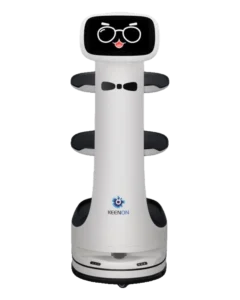
Keenon DinerBot T10
Keenon Robotics

Keenon DinerBot T10

Level II
$17,900BuyAmazon
Price range$17,900
Autonomy spreadLevel II–III
Robots compared3

Classification, not a ranking. Every mark below is documented evidence, not a purchase recommendation.

01/05

Which robot fits the narrowest dining-room aisles?

Body width sets the minimum aisle clearance needed for unobstructed navigation. Dimensional differences here are not cosmetic.

Where they differBear Robotics Servi — Body width (manufacturer spec): 17.5 in
EvidenceBear Robotics ServiPudu BellaBotKeenon DinerBot T10
Body width (manufacturer spec)17.5 inDiffers30 in19.13 in
Body depth17 in24 in21.85 in
Navigation aisle lockup documented?Not documentedYes (narrow passages)Yes (stop + operator fallback)
Outdoor/variable layout supportNo; site survey requiredNo; weather sensors undocumentedNot supported
Sources & evidence
Bear Robotics and Pudu Robotics manufacturer specs

Servi's 17.5-inch width is the narrowest of the three per manufacturer-published dimensions; BellaBot's 30-inch chassis is flagged in Pudu's own documentation as causing navigation lockups in tight passages.

Pudu Robotics deployment documentation

Pudu's skip-for profile explicitly lists tight table spacing as a disqualifier; BellaBot is documented at 2.5 feet wide, making it the structurally widest unit of these three.

02/05

How does tray payload differ across the three platforms?

Payload capacity per trip determines how many units a venue needs to cover peak service volume. Each platform carries trays differently.

Where they differKeenon DinerBot T10 — Tray configuration: Multi-tray parallel transport
EvidenceBear Robotics ServiPudu BellaBotKeenon DinerBot T10
Documented max payload per tripNot published~8 lbs max per tray shelfMulti-tray; exact limit not published
Tray configurationMulti-shelf tray rackStacked removable traysMulti-tray parallel transportDiffers
Units needed per shift (high-volume venue)Operator-dependent; not published2-3 per shift (Pudu estimate)Not published
Full-size dinner plate support documented?Not specifiedNo; tray size limits platesNot specified
Sources & evidence
Pudu Robotics product specifications and trade documentation

BellaBot's 8-lb per-shelf payload limit is documented in Pudu trade materials; it is the only unit of the three with a published per-tray weight figure.

Keenon Robotics product brief and Robovations product records

Keenon documentation describes DinerBot T10 as supporting parallel multi-tray transport in shift-based protocols, a documented capability neither Servi nor BellaBot explicitly names in the same terms.

03/05

What autonomy level does each robot operate at, and what does that mean for staff?

Autonomy classification determines how often staff must intervene and under what conditions. Two of these robots sit at different Ladder rungs.

Where they differKeenon DinerBot T10 — Teleop fallback documented?: Yes; operator takes control on failure
EvidenceBear Robotics ServiPudu BellaBotKeenon DinerBot T10
Autonomy Ladder classificationLevel III (Conditional)Level III (Conditional)Level II (Assisted)
Teleop fallback documented?No teleop documentedNo teleop documentedYes; operator takes control on failureDiffers
Edge-case recovery modeStaff repositioning requiredStaff repositioning requiredRemote operator override
Stuck episodes (documented frequency)Not published2-5 per shift (busy venues)Sensor stop; operator response required
Sources & evidence
Keenon Robotics deployment brief; Robovations autonomy ladder methodology

Keenon's documentation explicitly describes a teleoperation fallback when obstacle avoidance fails, which caps classification at Level II per the Robovations Autonomy Ladder; Servi and BellaBot have no such documented fallback and both classify at Level III.

Pudu Robotics operator experience reports (50,000+ unit fleet)

BellaBot's 2-5 stuck episodes per shift in busy venues is documented from Pudu operator experience reports across active deployments; Servi provides no equivalent failure-frequency disclosure.

04/05

How much floor-mapping and setup work does each robot require?

Initial setup burden matters for operators with seasonal layouts, pop-up venues, or frequent furniture reconfiguration. Mapping overhead varies across these platforms.

EvidenceBear Robotics ServiPudu BellaBotKeenon DinerBot T10
Initial mapping time (venue-specific)Pre-deployment site survey; duration not published4-8 hours LiDAR mapping1-2 weeks (scanning + training)
Layout-change recoveryRetraining required; duration not specifiedRe-mapping required per changeWaypoint update required
Multi-floor supportNo; single-floorElevator-dependent; no stair climbingSingle-floor only; manual transfer required
Navigation methodLiDAR SLAM + learned routesLiDAR SLAM + monocular cameraProprietary multi-sensor + local mapping
Sources & evidence
Pudu Robotics deployment documentation and hospitality case studies

Pudu publishes a 4-8 hour venue mapping requirement before BellaBot launch; temporary event setups break navigation and require full re-mapping, per Pudu deployment documentation.

Keenon Robotics product brief

Keenon reports a 1-2 week setup window including layout scanning, handoff-zone marking, and staff training; this is the longest documented onboarding of the three platforms.

05/05

How does guest-facing expressiveness compare across these platforms?

Dining venues differ on whether they want the robot to blend in or engage diners. Each platform presents a different guest-interaction posture.

Where they differPudu BellaBot — Display/face hardware: Cat-face animated display
EvidenceBear Robotics ServiPudu BellaBotKeenon DinerBot T10
Display/face hardwareTablet screen; functional UICat-face animated displayDiffersDisplay screen; functional UI
Guest interaction styleNeutral; task-focusedExpressive; animated reactionsNeutral; task-focused
Noise level (manufacturer spec)70 dB68 dBNot published
Sound/audio interactionVoice prompts (documented)Voice prompts + audio cuesNot documented
Sources & evidence
Pudu Robotics product marketing materials and manufacturer documentation

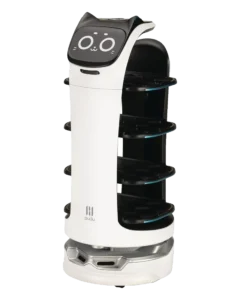
BellaBot is the only platform of these three with a manufacturer-designed animated cat-face display specifically marketed as a guest engagement feature; Servi and DinerBot T10 use functional display screens without the animated persona.

Bear Robotics and Pudu Robotics manufacturer specifications

Servi's 70 dB and BellaBot's 68 dB noise figures are manufacturer-published specs; Keenon provides no noise-level figure for the DinerBot T10 in available documentation.

In closing

What the evidence shows

Patterns that emerged across the questions above.

01

Chassis width is the first filter

At 17.5 inches, Servi fits aisles that rule out BellaBot's 30-inch frame; DinerBot T10 sits between them. Floor geometry narrows the candidate list before any other dimension applies.

02

Autonomy levels differ by one meaningful rung

Servi and BellaBot classify at Level III with staff repositioning on failure; DinerBot T10 sits at Level II because its teleoperation fallback is a documented architectural dependency, not an edge case.

03

Setup overhead varies by weeks, not hours

BellaBot requires 4-8 hours of LiDAR mapping; DinerBot T10 onboarding runs 1-2 weeks including staff training. Venues with frequent layout changes carry that re-mapping cost on an ongoing basis.

Common questions

What readers ask about this comparison.

Q.
Which of these robots is narrowest and most suited to tight dining-room aisles?
Servi’s manufacturer-published width is 17.5 inches, making it the narrowest of the three. Pudu’s own deployment documentation flags BellaBot (30 inches) as prone to navigation lockup in tight passages. DinerBot T10 sits at 19.13 inches per Keenon’s specs.
Q.
Why is the Keenon DinerBot T10 classified at Level II when the other two are Level III?
Keenon’s documentation describes an explicit teleoperation fallback: when obstacle avoidance fails, a remote operator takes manual control. The Robovations Autonomy Ladder caps any robot with a documented teleoperation dependency at Level II regardless of autonomous-mode performance. Servi and BellaBot have no such documented fallback, which supports Level III classification.
Q.
How long does venue setup take before any of these robots can begin service?
BellaBot requires 4-8 hours of LiDAR floor mapping. Keenon reports a 1-2 week onboarding window for DinerBot T10 including layout scanning, handoff-zone marking, and staff training. Servi requires a pre-deployment site survey; Bear Robotics has not published a specific setup-duration figure.
Q.
Can any of these robots handle multi-floor restaurants independently?
None of the three support autonomous stair navigation. BellaBot is elevator-dependent; DinerBot T10 requires manual transfer between floors and Keenon recommends separate units per level. Servi’s documentation does not address multi-floor operation.
Q.
What happens when any of these robots encounters an unexpected obstacle mid-service?
Servi and BellaBot stop and require staff to reposition the unit. BellaBot deployments in busy venues document 2-5 stuck episodes per shift per Pudu operator reports. DinerBot T10 sends a stop alert and routes control to a remote operator via teleoperation, which is the mechanism that caps it at Level II.
Next up

Do robot vacuums with cameras avoid obstacles better than bump sensors?

Read the comparison
Comparison ID: RV–CMP–7442 · Last reviewed Jun 23, 2026 · Based on owner reports, manufacturer documentation, and firmware release notes