How do you verify a robot vacuum’s no-cloud privacy claim?
A robot vacuum maker can state its cameras never touch the cloud. That line is the company describing its own machine. What else would you need to trust it?
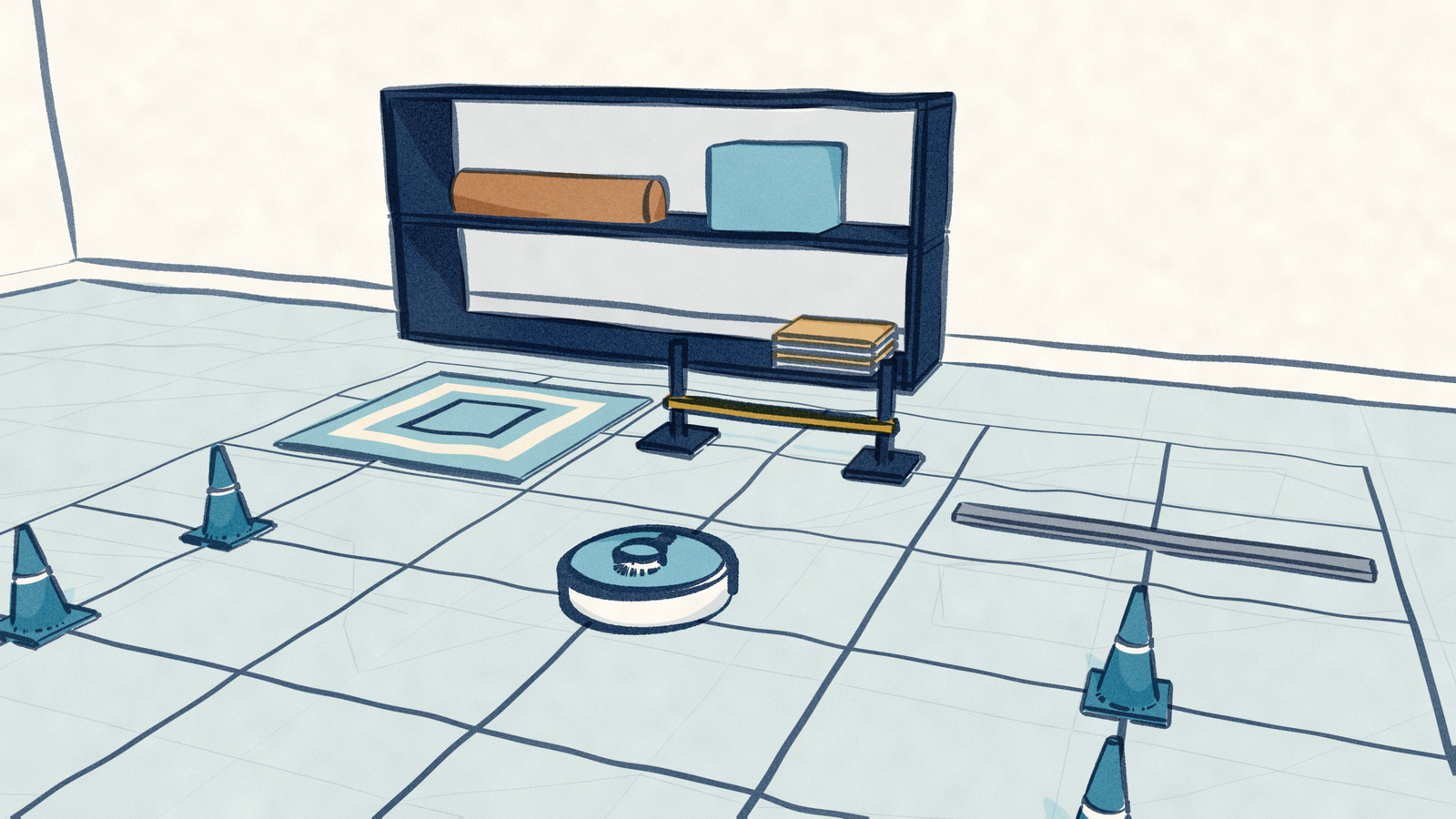
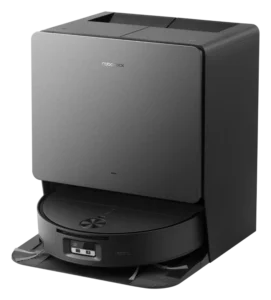
Roborock keeps a page it calls a Trust Center, and near the top it answers the question a lot of owners ask before they set a camera on wheels loose in the living room. The robot’s obstacle camera, it says, does its thinking inside the machine. All AI computations are performed on-device, the page states, with nothing sent to the cloud.
Read as a sentence, that settles it. Read as evidence, it is a particular kind of thing: a company describing its own product. A privacy claim written by the maker is a statement of intent, and intent is not the same as a measurement of what the machine actually sends.
All AI computations are performed on-device, with no data sent to the cloud or shared with third parties.
This is the line any classification has to walk. A maker’s own policy sits at the lowest tier of evidence, not because makers lie, but because a self-description can be rewritten, scoped to a single model, or quietly narrowed later.
A claim moves up only when an outside document shows what crosses the boundary of the home: a network capture, a teardown, a regulator’s finding, a filing. Until then it stays provisional, and the accurate label is unverified rather than false.
Figure
What crosses the boundary of the home
- Stays putMap and compute are hardware you own, so the same three streams never leave the building.
- Floor mapCrosses the wall. Anything over this line is held on a vendor server, under their retention policy rather than yours, for as long as they choose.
- Obstacle photosCrosses the same wall to the same server.
- Voice clipsCrosses the same wall to the same server.
How far a self-description can travel shows up in Roborock’s own paperwork. On March 31, 2025, the company changed the privacy policy on its Korean site. Until February 2025 it had told Korean customers their data was not sent to China.
The updated policy said app data may be processed in China, and may be shared with Tuya Smart, a cloud platform based in Hangzhou. Roborock holds about half of South Korea’s robot-vacuum market, and the change drew data-leak concerns there.
Nothing in that rewrite contradicts the Trust Center line about on-device AI. They describe different data: one is the obstacle camera, the other is the app account. But a reader who had taken the first as a blanket promise now has two maker documents to reconcile, both true, both the company’s own words, a year apart. That is the exact gap a verified-versus-provisional rule is built to hold open.
What would actually settle it
Outside confirmation looks different, and the most concrete example in recent memory did not come from a lab bench. At a security conference in August 2024, researchers took apart several Ecovacs models and showed what the machines did rather than what the policy said.
Data stayed on Ecovacs’ cloud servers after a user deleted their account, the authentication token with it, and the cameras and microphones could be reached remotely. Ecovacs told a reporter that owners did not need to worry excessively.
That finding is the kind of document the first tier lacks. It records behavior, from a source with no reason to flatter the product, open to anyone who wants to check it.
A maker’s privacy claim describes what a company means to do with your data. Only an outside measurement describes what the machine on your floor actually sends, and for most robots in most homes, no one has taken that measurement yet.