
- Changes
- 4
- Tracking since
- Apr 2024
- Latest
- Aug 24, 2026
- Net movement
- Classification stable
- 2026
-
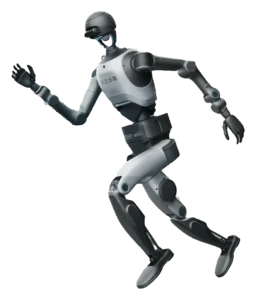
X-Humanoid Tiangong gains a direct successor in Tiangong 3.0
X-Humanoid's catalog now names Tiangong 3.0, unveiled 10 Feb 2026 with whole-body, high-dynamic motion control integrated with tactile capability, as the direct successor to the original Tiangong platform introduced by the Beijing Humanoid Robot Innovation Center in 2024.
Full assessment2 claims · 2 technical notes · 2 sources
Where it standsAutonomy LadderIIIIIIIVVLevel IIAssisted AutonomyHuman ReadinessReady NowNew to MarketWaitKnown IssuesNot ratedPre-Consumer Assessment03050717659PlausibleWhat happenedTiangong 3.0 is reported entering mass production and delivery in the second half of 2026. This entry records the succession itself; it does not evaluate Tiangong 3.0, which has its own record.
WatchingWhether X-Humanoid continues supporting deployed original Tiangong units as the newer generation scales.
Bottom lineA newer-generation platform has been named as Tiangong's successor; what that means for existing Tiangong units' ongoing support has not been separately confirmed.
ImpactOn autonomy
- No autonomy change to the original Tiangong from this succession
- Tiangong 3.0 is a separate, newer-generation platform with its own capability set
On readiness
- The original Tiangong now has a named successor in the catalog
- No statement from X-Humanoid about discontinuing or continuing original Tiangong support was found in the sources reviewed
Claim check2 maker claims checked against the record. Open one to read the finding.
Coverage of Tiangong 3.0 emphasizes it as an industry-first advance
Documented findingThe reported first is specifically whole-body, high-dynamic motion control integrated with tactile capability on a full-size humanoid, a documented technical claim distinct from a general capability upgradeA successor announcement can read as the predecessor being obsolete
Documented findingNo source reviewed states the original Tiangong platform is discontinued or that support ends; the succession fact concerns the catalog relationship, not a confirmed end-of-lifeEvidence2 sources · all linked
21Jun 2026Aug 2026filed 24 Aug 2026- 1Gasgoo21 Aug 2026
- 2Gasgoo (mass delivery report)9 Jun 2026
Technical notes2 sectionsSuccession
X-Humanoid’s Tiangong 3.0 is now recorded as the direct successor to the original Tiangong platform. Tiangong 3.0 was unveiled 10 Feb 2026, described as the industry’s first full-size humanoid robot to achieve whole-body, high-dynamic motion control integrated with tactile capabilities, standing 169 cm and weighing 62 kg with 43 degrees of freedom, running on the Huisi Kaiwu embodied intelligence system. Tiangong 3.0 is reported entering mass production and delivery in H2 2026.
The Original Platform
The original Tiangong platform was introduced by the Beijing Humanoid Robot Innovation Center in 2024 as an open hardware and software platform, later releasing schematics and the Pelican-VL model, and completing a widely reported humanoid half-marathon in April 2025. This entry documents the succession relationship as it now stands in the catalog; it is not an evaluation of Tiangong 3.0’s own capabilities, which has a separate record.
- 2025
-
Tiangong completes world's first humanoid half-marathon in Beijing Yizhuang
On April 19, 2025, the Tiangong Ultra humanoid completed a half-marathon course in Beijing Yizhuang, covering approximately 21 km with three battery swaps performed by support personnel during the run.
Full assessment4 claims · 4 technical notes · 2 sources
Where it standsAutonomy LadderIIIIIIIVVLevel IIAssisted AutonomyHuman ReadinessReady NowNew to MarketWaitKnown IssuesNot ratedPre-Consumer Assessment↑ moved by this entry03050717659PlausibleWhat happenedThe event received international press coverage as the first humanoid robot to complete that distance. Precise gait parameters, total intervention time, and route-generalization testing were not disclosed alongside the result.
Bottom lineThe April 2025 half-marathon is a documented endurance milestone for bipedal humanoid locomotion; route-specific training and unanswered failure-mode questions limit what can be inferred about generalized capability.
ImpactOn autonomy
- 21-km continuous bipedal locomotion completed without documented teleop intervention
- Sustained outdoor gait on a prepared route over an extended duration validated
- Endurance performance on a single fixed route confirmed; generalization to novel routes not demonstrated
- Event represents longest documented continuous autonomous humanoid bipedal run at time of completion
On readiness
- Marathon result demonstrates hardware durability beyond laboratory conditions
- Event conducted on a closed prepared course; unstructured real-world navigation capability unproven
- No commercial deployment or availability announcement accompanied the demonstration
- Result elevates platform visibility without changing research-only access model
Claim check4 maker claims checked against the record. Open one to read the finding.
World's first humanoid half-marathon completion
Documented findingInternational press coverage confirmed the April 2025 Yizhuang event; no prior documented humanoid completion of a 21-km distance identified in coverage at time of eventFully autonomous operation throughout the course
Documented findingThree battery swaps by support personnel were required to complete the course; a support runner accompanied the robot throughout. The run demonstrated endurance capability within a supported operational envelope, not unassisted autonomy.Result proves Tiangong ready for real-world deployment
Documented findingThe course was a closed, prepared route; generalization to unstructured environments was not demonstrated by this eventTiangong's gait architecture enables human-comparable endurance
Documented findingCompletion time and comparison to human marathon performance reported in some coverage; biomechanical efficiency analysis not publishedEvidence2 sources · all linked
1219 Apr 202522 Apr 2025filed 19 Apr 2025- 1Interesting Engineering19 Apr 2025
- 2IEEE Spectrum22 Apr 2025
Technical notes4 sectionsEvent Details
The half-marathon took place in Beijing’s Yizhuang district in April 2025, a purpose-planned urban robotics demonstration zone. The course distance was approximately 21 km, matching standard half-marathon distance. The Tiangong completed the course while other humanoid robots from competing teams also participated; Tiangong was reported as the first to finish.
Locomotion Performance
Manufacturer reports described continuous bipedal walking/running gait over the full distance. The WISE KAIWU autonomy foundation and Pelican-VL perception system were the active software stack during the event. Specific gait parameters, stride frequency, and completion time were referenced in press coverage but precise figures varied across reports.
What Was Not Disclosed
Whether human operators intervened at any point during the course was not confirmed in available coverage. Joint wear, battery consumption data, and thermal performance figures were not published post-event. The degree to which the Tiangong’s gait model was specifically trained on the Yizhuang route geometry was not addressed in manufacturer statements.
Platform Status After Event
The half-marathon result did not trigger a commercial availability announcement. The research platform access model remained unchanged. Post-event coverage noted sustained interest from international robotics research groups.
- 2024
-
Tiangong open platform releases hardware schematics and Pelican-VL model
The Beijing Humanoid Robot Innovation Center distributed Tiangong's physical hardware blueprints and the Pelican-VL vision-language model to academic and industrial research partners in late 2024.
Full assessment4 claims · 4 technical notes · 2 sources
Where it standsAutonomy LadderIIIIIIIVVLevel IIAssisted AutonomyHuman ReadinessReady NowNew to MarketWaitKnown IssuesNot ratedPre-Consumer Assessment03050717659PlausibleWhat happenedThe release operationalized the open-platform commitment described at the April 2024 introduction. Third-party research outputs using these materials had not yet been published as of the release date.
Bottom lineThe late 2024 release delivered on the open-platform commitment; research utility depends on downstream partner publications that had not yet appeared at release date.
ImpactOn autonomy
- Pelican-VL vision-language model made available for partner fine-tuning and evaluation
- Hardware schematics enable derivative bipedal builds with the 43 DOF architecture
- WISE KAIWU software foundation accessible to institutional partners for task-model development
- Third-party capability extensions now possible without full hardware procurement
On readiness
- Open schematic release lowers barrier for research institutions to access platform specifications
- Commercial licensing terms for derivative products remain incompletely specified
- Consumer access path not established by this release; academic and industrial focus maintained
- No SDK developer portal or public API endpoint announced alongside schematic release
Claim check4 maker claims checked against the record. Open one to read the finding.
Pelican-VL enables robust visual scene understanding for unstructured environments
Documented findingModel released to partners; independent benchmarks against standard vision-language tasks not published at time of releaseOpen hardware schematics enable true community development
Documented findingBlueprints released; commercial derivative licensing terms not fully specified, limiting some use casesWISE KAIWU foundation provides generalized task reasoning
Documented findingSoftware layer described and released; task generalization evidence limited to locomotion at release date; manipulation and reasoning benchmarks not publishedTiangong open platform supports full stack development
Documented findingHardware and core software released; integration documentation completeness and support infrastructure not independently assessed at time of releaseEvidence2 sources · 1 linked
1215 Nov 202421 Nov 2024filed 15 Nov 2024- 1Beijing Humanoid Robot Innovation Center Official Announcement15 Nov 2024named, not linked
- 2MIT Technology Review21 Nov 2024
Technical notes4 sectionsReleased Materials
The Beijing Humanoid Robot Innovation Center distributed two primary deliverables in this release: (1) physical hardware blueprints for the Tiangong 43 DOF bipedal frame, and (2) the Pelican-VL vision-language model checkpoint. Both were provided to institutional partner organizations under the center’s research access program.
Pelican-VL Architecture
Pelican-VL is described as a vision-language model serving as the primary perception and scene-understanding backbone for the Tiangong autonomy stack. The model handles visual input interpretation for navigation and object interaction decisions. Architecture details, parameter count, and training data provenance were not published in detail alongside the release.
WISE KAIWU Software Foundation
The WISE KAIWU embodied intelligence layer, responsible for task planning and gait command generation, was distributed alongside the Pelican-VL model. Integration between the two software components and the hardware control layer requires platform-specific configuration; documentation completeness was not independently assessed.
Access Model
Distribution was to named institutional partners rather than via a public repository. The distinction between academic-use and commercial-derivative licensing was noted as incompletely specified at the time of the release announcement.
-
Beijing Humanoid Robot Innovation Center introduces Tiangong platform
The Beijing Humanoid Robot Innovation Center announced the Tiangong humanoid platform in 2024, presenting a 42-degree-of-freedom bipedal robot designed for open research deployment.
Full assessment4 claims · 4 technical notes · 2 sources
Where it standsAutonomy LadderIIIIIIIVVLevel IIAssisted AutonomyHuman ReadinessReady NowNew to MarketWaitKnown IssuesNot ratedPre-Consumer Assessment03050717659PlausibleWhat happenedThe center released hardware schematics and core locomotion software to partner institutions. Consumer availability was not part of the announcement; research and industrial pilot access defined the distribution model.
Bottom lineThe 2024 introduction established Tiangong as a credibly specified open research platform; deployment evidence was not yet available.
ImpactOn autonomy
- 43 DOF full-body kinematic architecture publicly described for first time
- WISE KAIWU embodied intelligence foundation disclosed as core autonomy software layer
- Full-body touch-interactive control mode described alongside autonomous gait operation
- Pelican-VL vision-language model named as perception backbone
On readiness
- Open hardware schematic release targets academic and industrial research partners
- No consumer pricing, retail channel, or deployment support infrastructure announced
- Research access model positioned as primary distribution; commercial path not described
Claim check4 maker claims checked against the record. Open one to read the finding.
Open platform with freely accessible hardware schematics
Documented findingManufacturer confirmed schematic release; licensing terms for commercial derivative use not fully detailed at announcementTiangong designed for real-world deployment in factories and warehouses
Documented findingIndustrial use cases described; no factory or warehouse deployment case studies published at platform introductionWISE KAIWU foundation enables generalized task completion
Documented findingEmbodied intelligence software layer named and described; task generalization evidence limited to locomotion demonstrations at announcement stage42 DOF architecture enables human-comparable dexterity
Documented findingJoint count confirms high kinematic range; dexterity benchmarks against manipulation tasks not published at announcementEvidence2 sources · 1 linked
12Apr 2024May 2024filed 25 Apr 2024- 1Beijing Humanoid Robot Innovation Center Press Release25 Apr 2024named, not linked
- 2TrendForce3 May 2024
Technical notes4 sections
Platform Specification
Tiangong is a full-size bipedal humanoid with 42 degrees of freedom across its kinematic chain. The platform is developed by the Beijing Humanoid Robot Innovation Center, a state-affiliated robotics research organization. The WISE KAIWU embodied intelligence foundation serves as the primary autonomy software layer, with the Pelican-VL vision-language model handling visual perception and scene understanding.
Open Access Model
At the 2024 introduction, the center released physical hardware blueprints and core locomotion algorithms to research partners. This open-architecture approach distinguishes Tiangong from commercially closed humanoid platforms. The scope of the open license, including commercial derivative restrictions, was not fully specified in initial announcements.
Control Modes
Manufacturer documentation describes two primary control modes: full-body touch-interactive control (a form of kinesthetic guidance) and autonomous gait operation. The relationship between these modes in task execution workflows was not detailed at launch.
Form Factor
Bipedal configuration targeting environments where humanoid form factor is necessary for multi-floor access or use of human-designed tools. No arm manipulation payload or gripper specification published at announcement.