
- Changes
- 2
- Tracking since
- Nov 2020
- Latest
- Oct 15, 2023
- Net movement
- Classification stable
- 2023
-
Wyze data exposure incident affects app-connected vacuum users
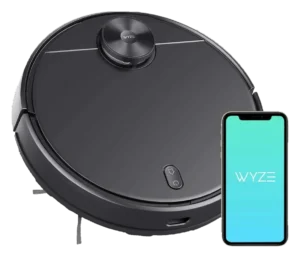
A September 2023 Wyze platform incident caused by a caching library error during AWS outage recovery mixed device and user IDs, exposing camera feed thumbnails to unintended accounts; the robot vacuum's cloud-mandatory architecture placed its stored floor maps and scheduling data within the same affected platform surface.
Full assessment4 claims · 4 technical notes · 2 sources
Where it standsAutonomy LadderIIIIIIIVVLevel IIIConditional AutonomyHuman ReadinessReady NowNew to MarketWaitKnown IssuesNot ratedRobovations Score04055708564CapableWhat happenedWyze disclosed the incident weeks after detection, drawing criticism for delayed notification. Owners should verify account credentials were rotated and review app permission scope.
Bottom lineThe incident did not alter the vacuum's physical capabilities but confirmed that its cloud-mandatory architecture means platform-level security events directly affect robot operation and stored home environment data.
ImpactOn autonomy
- Cloud map storage remains mandatory; no local-only fallback exists for affected owners
- Scheduled cleaning sessions require active Wyze account; credential compromise disrupts all automated operation
- LiDAR floor maps stored server-side represent a documented privacy surface with no owner-controlled encryption
On readiness
- Incident confirmed no offline operating mode exists; network dependency is a hard architectural constraint
- Owner reports document confusion during service disruption; no onboard controls bypass app requirement
- Post-incident, replacement credential setup requires full re-pairing and map rebuilding
Claim check4 maker claims checked against the record. Open one to read the finding.
Secure smart home integration via the Wyze app
Documented findingSeptember 2023 incident, caused by a caching library error mixing device and user IDs during AWS outage recovery, exposed camera thumbnails to unintended accounts; Wyze disclosed weeks after detection per company statementConvenient cloud scheduling and map storage
Documented findingCloud dependency means any platform-level breach directly impacts vacuum operation and stored floor map dataWi-Fi connectivity enables always-on control
Documented findingCredential exposure required owners to rotate passwords and re-pair devices; no local fallback preserved uninterrupted operationPrivacy protections for home environment data
Documented findingFloor maps and scheduling data share the same credential surface as camera feeds; no separate vacuum-specific encryption documentedEvidence2 sources · 1 linked
12Sep 2023Oct 2023filed 15 Oct 2023- 1Wyze Blog / Security Disclosure28 Sep 2023
- 2The Verge5 Oct 2023named, not linked
Technical notes4 sectionsIncident Scope
Wyze disclosed in September 2023 that a caching library error during AWS outage recovery caused device and user IDs to be mixed, resulting in camera feed thumbnails being visible to unintended users. The incident affected the broader Wyze platform, which controls all app-connected Wyze products including the robot vacuum.
Vacuum-Specific Exposure
The Wyze Robot Vacuum (model WYZEVRV112) stores LiDAR-generated floor maps server-side and requires an active Wyze account for all scheduled and app-triggered cleaning. This architecture means the vacuum’s operating data sits within the same credential surface as the camera ecosystem implicated in the incident.
Owner Impact
Affected owners needed to rotate account credentials, re-authenticate the Wyze app, and in some cases re-pair the vacuum to restore scheduling. No firmware update was issued specific to the vacuum; remediation operated at the account and platform level. Wyze’s privacy score for the vacuum reflects a 62/100 rating on the Robovations classification, noting cloud dependency as a documented constraint prior to this event.
No Hardware Change
Suction, navigation, and LiDAR mapping hardware were unaffected. The setback classification applies to the platform trust and privacy surface, not physical capability.
- 2020
-
Wyze opens $199 preorders for its first robot vacuum with LiDAR mapping
Wyze opened preorders on November 10, 2020 for a $199 robot vacuum with LiDAR room mapping, SLAM navigation, and app-controlled virtual walls, undercutting LiDAR-equipped rivals priced several hundred dollars higher.
Full assessment3 claims · 2 technical notes · 2 sources
Where it standsAutonomy LadderIIIIIIIVVLevel IIIConditional AutonomyHuman ReadinessReady NowNew to MarketWaitKnown IssuesNot ratedRobovations Score04055708564CapableWhat happenedThe unit was slated to ship in January 2021 at a higher retail price. Independent reviews of cleaning performance and navigation reliability were not yet available at announcement.
Bottom lineThe preorder announcement undercut LiDAR-equipped competitors on price, but independent testing after launch found the mapping technology did not fully translate into consistent dock-return performance.
ImpactOn autonomy
- LiDAR mapping and SLAM enable room-by-room navigation, per manufacturer specifications.
- Seven sensor groups reportedly scan up to 2,016 distance points for mapping.
- App-based virtual walls restrict cleaning zones without physical barrier strips.
On readiness
- Preorder price of $199 undercut LiDAR-equipped competitors priced several hundred more.
- Retail price was set to rise near $249 once general shipping began.
- Shipping was slated for January 2021, about two months after preorders opened.
Claim check3 maker claims checked against the record. Open one to read the finding.
Wyze positioned the $199 preorder price as a budget alternative to LiDAR-equipped rivals costing hundreds more
Documented findingCoverage confirmed the retail price rose to about $249 to $250 once general shipping began in January 2021LiDAR mapping and SLAM software were marketed as enabling precise, obstacle-aware room navigation
Documented findingIndependent testing found the unit returned to its charging dock only about half the time in trialsManufacturer specifications cited seven sensor groups scanning up to 2,016 distance points for mapping
Documented findingIndependent testing measured strong hardwood pickup near 98 percent but weaker results on fine carpet debrisEvidence2 sources · all linked
1210 Nov 202011 Nov 2020filed 10 Nov 2020Technical notes2 sections
Launch Specifications
Wyze opened preorders on November 10, 2020 for a robot vacuum priced at $199, positioned below LiDAR-equipped competitors that commonly sold for several hundred dollars more. Manufacturer specifications described LiDAR-based room mapping paired with Simultaneous Location and Mapping (SLAM) software, seven sensor groups capable of scanning up to 2,016 distance points, and 2100Pa of suction power. App controls included virtual walls for restricting cleaning zones, scheduled cleaning sessions, and self-charging return-to-dock behavior.
Retail Timeline
Coverage at the time described the $199 figure as an introductory preorder price, with general shipping slated for January 2021 and retail pricing expected to rise to roughly $249 to $250 once units reached wider availability. The vacuum was Wyze’s first entry into robot vacuums, extending a product line built around budget-priced smart home hardware. Independent lab reviews published after the January 2021 launch later measured hardwood and carpet pickup rates and found the unit returned to its charging dock inconsistently during trials.