
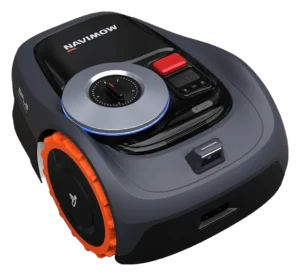
- Changes
- 3
- Tracking since
- Mar 2024
- Latest
- Oct 5, 2024
- Net movement
- Promising Progress to Ready Now
- 2024
-
Owner community documents RTK signal loss patterns across geographic regions
Owner-report aggregation on a user forum and related forums through mid-to-late 2024 established that RTK signal interruption affected a broader range of suburban yards than press reviews captured.
Full assessment4 claims · 3 technical notes · 2 sources
Where it standsAutonomy LadderIIIIIIIVVLevel IIIConditional AutonomyHuman ReadinessReady NowNew to MarketWaitKnown IssuesRobovations Score↓ moved by this entry04055708573StrongWhat happenedUsers with partial tree canopy, not only dense forest, reported frequent return-to-dock cycles. The pattern informed Robovations' reliability scoring and reinforced the safety note regarding unattended operation without physical perimeter fencing.
Bottom lineOwner aggregation refined the effective buyer profile from 'suburban yards' to 'suburban yards with clear sky access,' a meaningful distinction that the manufacturer's broad marketing did not reflect.
ImpactOn autonomy
- RTK reliability in partially-wooded yards documented as materially lower than open-sky press-review conditions
- Return-to-dock frequency in affected yards reduces effective autonomous coverage per session
- No firmware or hardware change documented to address the signal-loss pattern during this period
On readiness
- Buyer profile for Ready Now status narrowed: open-sky suburban yards, not the broader suburban category
- Owner reports confirm blade-maintenance cadence aligns with manufacturer documentation; no maintenance-burden surprises
- RTK recalibration friction reported as manageable annually; no multi-step failure patterns documented
Claim check4 maker claims checked against the record. Open one to read the finding.
Works for standard suburban yards
Documented findingOwner reports indicate 'standard suburban' with partial tree canopy triggers RTK interruptions frequently enough to reduce autonomous coverage; open-sky yards perform as documentedAutonomous operation without user intervention
Documented findingUsers in affected geographic zones describe monitoring app alerts for return-to-dock events multiple times per session; intervention sometimes required to restart mowing cycleCentimeter-level accuracy at all times
Documented findingSignal interruption events correlate with accuracy degradation; manufacturer RTK specification is accurate under signal-stable conditions, not universally applicableSuitable for most residential properties
Documented findingOwner reports from northeastern US and Pacific Northwest indicate geographic-specific reliability issues tied to tree density and ionospheric variability in those regionsEvidence2 sources · 1 linked
12Sep 2024Oct 2024filed 5 Oct 2024- 1Reddit r/automower14 Sep 2024
- 2Reddit r/navimow2 Oct 2024named, not linked
Technical notes3 sectionsOwner-Report Signal Loss Patterns
Discussion threads on a user forum documented RTK signal loss affecting users in wooded or partially wooded suburban zones in multiple US regions during the 2024 mowing season. Reports described return-to-dock events occurring 2-5 times per session in affected yards, reducing effective autonomous coverage by an estimated 20-40 percent per session based on user descriptions. No specific firmware version was consistently cited as a change point in these reports.
Geographic Pattern
Reports clustered from users in the northeastern United States and Pacific Northwest, regions with denser canopy and ionospheric conditions that differ from the European and open-sky US markets where the product first gained commercial traction. Users in flat, open suburban zones reported no significant interruption pattern.
Safety Dimension
Several owner reports noted that return-to-dock on signal loss means the mower halts blade operation and navigates home, not that it stops in place. Manufacturer safety documentation was consistent with this behavior. The absence of obstacle detection remained a noted owner concern for yards with irregular pedestrian or pet access patterns.
-
Press reviews document RTK signal loss as primary operational limitation
Independent press reviews published in spring and early summer 2024 provided the first sustained third-party documentation of Navimow i Series performance under real suburban conditions.
Full assessment4 claims · 3 technical notes · 2 sources
Where it standsAutonomy LadderIIIIIIIVVLevel IIIConditional AutonomyHuman Readinessmoved by this entryReady NowNew to MarketWaitKnown IssuesRobovations Score04055708573StrongWhat happenedRTK signal loss under moderate tree canopy emerged as a consistent finding across multiple publications, confirming a capability boundary not fully disclosed in manufacturer marketing. Readiness classification moved from provisional to documented-with-caveats based on this evidence accumulation.
Bottom linePress reviews confirmed the core RTK autonomy claim while establishing canopy interference as a documented operational boundary rather than a rare edge case.
ImpactOn autonomy
- Tree canopy interference with RTK signal confirmed by multiple independent reviewers, not just edge cases
- Autonomous return-to-dock on signal loss documented as functional but operationally disruptive for partially wooded yards
- Centimeter-level accuracy under open-sky conditions confirmed as genuine; claimed precision does not transfer to canopy-adjacent zones
On readiness
- Third-party reviews established a credible evidence base for suburban open-yard performance
- Canopy limitation documented in public reviews; buyers in wooded regions now have pre-purchase evidence of the constraint
- Setup time reported as manageable by both reviewers; onboarding friction lower than expected from manufacturer documentation
Claim check4 maker claims checked against the record. Open one to read the finding.
Works anywhere without wire
Documented findingA hands-on review documented repeated return-to-dock events under tree-adjacent sections of a standard suburban yardEffortless autonomous operation
Documented findingAnother hands-on review noted the system works as described under open conditions; the word 'effortless' overstates performance in partially shaded yardsReplaces traditional mowing entirely
Documented findingBoth reviews noted the mower handles routine coverage; owner intervention required for signal-loss recovery and edge trimming not within the mower's operational scopeSuperior to wire-guided systems
Documented findingReviewers framed wire-free as a different trade-off, not an upgrade; no perimeter wire is exchanged for satellite dependency. Neither publication used 'superior' framingEvidence2 sources · all linked
12Apr 2024Jun 2024filed 10 Jun 2024- 1Tom's Guide18 Apr 2024
- 2Engadget22 May 2024
Technical notes3 sectionsSignal Loss Behavior Under Review Conditions
A hands-on field review of the i110 documented repeated RTK signal interruption when the mower entered sections of a suburban yard adjacent to mature trees. The system response, returning to dock and waiting for satellite lock recovery, functioned as documented by Segway. Recovery times in the review ranged from several minutes to requiring manual intervention in dense-canopy transitions.
Open-Sky Performance
Both hands-on reviews confirmed that open-sky mowing operated systematically and quietly at the documented 58 dB noise level. Coverage patterns were consistent with manufacturer’s systematic-navigation claims.
Setup Process Documentation
One hands-on review documented the RTK service area mapping process at approximately 30-45 minutes for initial yard registration. Another described the onboarding as less complicated than anticipated from the RTK concept. Neither review documented significant firmware issues or connectivity failures outside the RTK signal-loss scenario.
-
Segway Navimow i Series launches commercially in United States market
Segway made the Navimow i Series available to North American consumers in early 2024, marking the first US retail presence for the wire-free RTK mower line.
Full assessment4 claims · 3 technical notes · 2 sources
Where it standsAutonomy LadderIIIIIIIVVLevel IIIConditional AutonomyHuman ReadinessReady NowNew to MarketWaitKnown IssuesRobovations Score04055708573StrongWhat happenedThe launch established an entry price point near $999 for the i105 model.
WatchingWhether sustained GNSS signal quality in varied North American geography matches the controlled European market performance documented at launch.
Bottom lineUS launch confirmed wire-free positioning as a commercial product, not a prototype; the satellite dependency that replaces wire installation is a real operational constraint, not resolved by marketing framing.
ImpactOn autonomy
- RTK-based autonomous mowing confirmed commercially available without perimeter wire
- Multi-satellite lock enables centimeter-level navigation in supported US service regions
- Autonomous return-to-dock confirmed functional under standard suburban conditions
On readiness
- US retail availability moved product from import-only to consumer-accessible purchase channel
- Manufacturer-direct and select dealer network established initial distribution footprint
- RTK service registration confirmed as one-time setup, no recurring subscription documented at launch
Claim check4 maker claims checked against the record. Open one to read the finding.
Wire-free, worry-free operation
Documented findingNo perimeter wire required; RTK signal dependency introduces a different constraint not present in wire-based systemsWorks for any yard
Documented findingManufacturer documentation scopes operation to yards with clear satellite visibility; tree canopy or structures degrade performanceSimple setup compared to wire-guided mowers
Documented findingNo wire trenching required; RTK service registration and yard mapping add a software setup step absent from manual-boundary systemsCentimeter-level accuracy
Documented findingRTK correction enables precise navigation under clear-sky conditions; accuracy degrades with signal interference, per manufacturer technical documentationEvidence2 sources · 1 linked
12Mar 2024Apr 2024filed 15 Mar 2024- 1Segway Navimow US Press Release1 Mar 2024named, not linked
- 2Tom's Guide18 Apr 2024
Technical notes3 sections
Product Configuration at US Launch
The i Series entered North American retail with two primary configurations: the i105 targeting yards under approximately 5,400 square feet, and the i110 targeting yards under approximately 10,800 square feet. RTK positioning system uses multi-constellation GNSS reception with real-time kinematic correction via Segway’s positioning network. Navigation accuracy under clear-sky conditions documented at centimeter level by manufacturer. Battery capacity rated at 28 Wh; runtime 60 minutes per charge.
Service Area Registration
Initial operation requires RTK service area mapping through the Segway Navimow mobile application. The mapping process documents property boundaries via satellite coordinates rather than physical wire. Setup time documented at approximately 30-60 minutes for initial yard registration.
Geographic Availability
US launch coverage followed European market entry. Supported regions determined by GNSS infrastructure availability. Manufacturer documentation notes geographic restrictions in areas with sparse satellite coverage.