
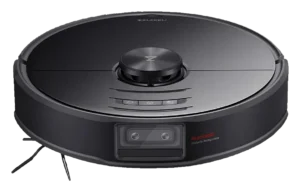
- Changes
- 4
- Tracking since
- Apr 2020
- Latest
- Mar 15, 2024
- Net movement
- Classification stable
- 2024
-
S7 and S8 generations reposition S6 MaxV as legacy platform
By early 2024, Roborock's S7 and S8 lines had fully displaced the S6 MaxV in retail positioning; the model migrated to clearance and third-party reseller channels.
Full assessment4 claims · 4 technical notes · 2 sources
Where it standsAutonomy LadderIIIIIIIVVLevel IIIConditional AutonomyHuman ReadinessReady NowNew to MarketWaitKnown IssuesNot ratedRobovations Score04055708568CapableWhat happenedThe most consequential shift for current owners is the narrowing firmware update cadence documented in Roborock support forums.
WatchingWhether Roborock extends or closes the firmware support window as S9-series launches approach.
Bottom lineThe S6 MaxV reached end-of-active-development status by 2024; the classification reflects a robot that performs as documented but is no longer receiving capability investment from its manufacturer.
ImpactOn autonomy
- Level III classification unchanged; no new navigation capability added
- Dual-camera obstacle avoidance remains the same architecture as at launch
- Firmware iteration rate slowed compared to 2021-2022 active development window
On readiness
- Clearance pricing improved out-of-pocket value but narrowed service parts availability
- Owner reports document longer wait times for replacement brush and filter sourcing
- App support confirmed active; cloud mapping storage unchanged as of early 2024
Claim check4 maker claims checked against the record. Open one to read the finding.
Industry-first dual-camera obstacle avoidance
Documented findingAccurate at 2020 launch; S7 MaxV Ultra and S8 MaxV Ultra extended the same dual-camera architecture with added height-awareness. The S6 MaxV's system remains functional but no longer represents the category ceiling.Continuous improvement through firmware updates
Documented findingRoborock firmware notes confirm updates through 2023. Owner reports on Roborock Community forums note reduced update frequency in 2024 compared to the 2021-2022 active development period.Compatible with all Roborock accessories and docks
Documented findingThe S6 MaxV uses an older dock connector standard. Accessories designed for the S8 dock ecosystem are not cross-compatible. Owner reports confirm replacement parts remain available but sourcing time increased.Reliable obstacle avoidance in all conditions
Documented findingOwner reports document persistent false positives on reflective floors and low-light navigation degradation. These are known limitations acknowledged in Roborock FAQ documentation.Evidence2 sources · 0 linked
12Feb 2024Mar 2024filed 15 Mar 2024
- 1Roborock Community Forum20 Feb 2024named, not linked
- 2Amazon customer reviews (Roborock S6 MaxV)5 Mar 2024named, not linked
Technical notes4 sections
Retail and Commercial Position
By Q1 2024, the S6 MaxV had exited primary retail listings on Roborock’s own storefront in most regions, appearing in clearance or refurbished inventory channels. The S7 MaxV Ultra and S8 series assumed equivalent price-tier positioning.
Firmware Status
Roborock’s published changelog confirms firmware updates were issued through 2023. The documented update cadence through the 2021-2023 window addressed dual-camera calibration, dock connectivity, and multi-floor mapping reliability. No new capability additions were documented in firmware notes after mid-2023 per Roborock Community forum disclosures.
Hardware Compatibility
The S6 MaxV dock uses a connector standard that predates the S7 and S8 dock ecosystem. Owners report that while the dock itself remains functional, sourcing replacement dock contact pads and mop tray components through official channels became slower in 2024. Third-party consumables (filters, brushes, mop pads) remain widely available.
Owner Fleet Context
Reddit and Amazon owner reports from early 2024 indicate the installed base continues operating reliably for vacuum-primary use cases. Mop pad maintenance burden remains the most-cited friction point, consistent with the product’s documented trade-offs at classification.
- 2022
-
Roborock S6 MaxV's firmware trail ends after January 2022 release
The firmware archive robotinfo.dev lists version 3.5.8_6246, dated January 20, 2022, as the most recent documented Roborock S6 MaxV build, roughly a year and a half after the model's 2020 launch.
Full assessment3 claims · 3 technical notes · 2 sources
Where it standsAutonomy LadderIIIIIIIVVLevel IIIConditional AutonomyHuman ReadinessReady NowNew to MarketWaitKnown IssuesNot ratedRobovations Score04055708568CapableWhat happenedNo newer version has appeared in the archive in the more than four years since. Owners should check current firmware status directly in the Roborock app rather than assume ongoing updates.
ImpactOn autonomy
- ReactiveAI object recognition remains as documented in the last logged 2022 firmware build.
- No further camera-recognition expansions have been logged since the January 2022 version.
On readiness
- No bug fixes or app-compatibility updates are documented in the archive past January 2022.
- Owners should verify current update availability directly in the Roborock app rather than assume it.
Claim check3 maker claims checked against the record. Open one to read the finding.
Roborock commits to a minimum of two years of security updates per model
Documented findingrobotinfo.dev's archive shows S6 MaxV firmware releases spanning January 2020 to January 2022, about 24 months, before logged updates stoppedReactiveAI keeps improving through regular firmware updates
Documented findingThe last documented recognition-related update in the archive is the July 2020 sock and dustpan expansion; no further recognition changes appear in later logged versionsThe Roborock app keeps devices current with the latest firmware
Documented findingWhether the app currently surfaces a newer S6 MaxV build is unconfirmed absent one logged anywhere to test againstEvidence2 sources · all linked
Technical notes3 sectionsFirmware Timeline
Public firmware-archive project robotinfo.dev documents 17 Roborock S6 MaxV (model roborock.vacuum.a10) firmware releases between January 3, 2020 and January 20, 2022, all within the 3.5.7 to 3.5.8 version branch. The final logged build, 3.5.8_6246, is dated January 20, 2022. No later version appears in the archive as of this entry, more than four years on.
Support Policy Context
Roborock’s published software security support policy commits to “a minimum of 2 years” of security updates per robotic vacuum model after release, with discretionary extensions for serious vulnerabilities. The policy page does not list the S6 MaxV by name among specific models, so no manufacturer-stated end date exists to cite directly; the robotinfo.dev archive is the most specific dated evidence available for this product’s update cadence.
What Remains Unverified
Whether Roborock has issued a build that robotinfo.dev’s volunteer-maintained archive has not yet captured is unconfirmed; the archive depends on rooted devices reporting versions and is not an official changelog.
- 2020
-
Roborock S6 MaxV firmware update expands ReactiveAI object recognition
Roborock began rolling out a firmware update on July 30, 2020 that expanded ReactiveAI's recognition to include socks and other fabric items, plus dustpans, and let owners view photos of objects the camera could not classify.
Full assessment3 claims · 3 technical notes · 2 sources
Where it standsAutonomy LadderIIIIIIIVVLevel IIIConditional AutonomyHuman ReadinessReady NowNew to MarketWaitKnown IssuesNot ratedRobovations Score04055708568CapableWhat happenedThe rollout reached the full install base within about a week. How recognition accuracy held up across the wider object set was for later owner reports to establish.
ImpactOn autonomy
- ReactiveAI's object library expanded to recognize fabric items such as socks on the floor.
- Dustpans added to the set of household objects the camera system identifies and avoids.
- Unknown-object photo review gives owners visibility into what the camera system could not classify.
On readiness
- Update rolled out in stages, reaching the full install base within about a week.
- No hardware change required; the update applied over the air through the Roborock app.
Claim check3 maker claims checked against the record. Open one to read the finding.
ReactiveAI keeps learning to recognize more household objects over time
Documented findingThe July 2020 update documented in Roborock's own community forum and Gizmochina's coverage added sock and dustpan recognition specifically; broader continuous-learning claims are not independently documentedUnknown-object photos help the system improve
Documented findingThe update added a photo-review feature for objects the camera could not classify; whether flagged photos feed back into future recognition training is not documented in available sourcesUpdate rolls out seamlessly to all users
Documented findingCoverage of the rollout described a phased release reaching the full install base over about a week, not a simultaneous push to every unitEvidence2 sources · 1 linked
12Jul 2020Aug 2020filed 30 Jul 2020- 1Roborock Community Forum30 Jul 2020named, not linked
- 2Gizmochina6 Aug 2020
Technical notes3 sectionsUpdate Timeline
Roborock began rolling out a firmware update to the S6 MaxV starting July 30, 2020, according to a Roborock Community Forum discussion tracking the release; the rollout reached the full install base over roughly the following week. Gizmochina’s coverage of the associated software version, published August 6, 2020, described the update as adding several new features and enhancements to the ReactiveAI system.
Recognition Changes
The update expanded ReactiveAI’s object library to include fabric items such as socks and household objects such as dustpans, building on the dual-camera obstacle recognition introduced at the S6 MaxV’s April 2020 launch. It also added a feature letting owners view photos the camera system captured of objects it flagged but could not classify.
Delivery
The update applied over the air through the Roborock app; no hardware change or physical service was required. robotinfo.dev’s public firmware archive lists two S6 MaxV builds bracketing this window, dated June 17 and August 11, 2020, consistent with a rollout that began July 30 and completed within the following days.
-
Roborock unveils S6 MaxV with dual cameras and ReactiveAI obstacle avoidance
Roborock announced the S6 MaxV on April 29, 2020, its first robot vacuum with dual front cameras and a ReactiveAI obstacle-recognition system layered onto existing LiDAR navigation.
Full assessment3 claims · 3 technical notes · 2 sources
Where it standsAutonomy LadderIIIIIIIVVLevel IIIConditional AutonomyHuman ReadinessReady NowNew to MarketWaitKnown IssuesNot ratedRobovations Score04055708568CapableWhat happenedThe company priced the model at $749 with shipping targeted for the end of Q2 2020. How reliably the camera system distinguished real hazards from false positives once units shipped remained an open question.
ImpactOn autonomy
- Dual front cameras add visual obstacle recognition on top of existing LiDAR mapping.
- ReactiveAI processes camera images via an upgraded Qualcomm processor to identify hazards.
- Infrared imaging extends camera-based obstacle detection to low-light and nighttime cleaning runs.
On readiness
- First Roborock model marketed specifically for pet-waste and small-object obstacle avoidance.
- $749 price positions it above the S5 Max, reflecting the added camera hardware.
- Shipping targeted for the end of Q2 2020, about two months after announcement.
Claim check3 maker claims checked against the record. Open one to read the finding.
Dual cameras recognize and avoid common household hazards
Documented findingManufacturer materials describe ReactiveAI as trained on tens of thousands of real-world images; contemporaneous coverage (9to5toys) described the launch claims without independent hazard-avoidance testing data attachedReactiveAI represents a new level of Roborock cleaning intelligence
Documented findingThe system pairs a stereo camera with an upgraded Qualcomm APQ8053 processor per manufacturer specifications; it supplements rather than replaces the existing PreciSense LiDAR mappingInfrared imaging lets the robot see obstacles in the dark
Documented findingManufacturer specifications list infrared imaging for night operation, working alongside the camera-based recognition system rather than as a separate capabilityEvidence2 sources · all linked
- 19to5toys29 Apr 2020
- 2Android Central
Technical notes3 sections
Announcement
Roborock announced the S6 MaxV on April 29, 2020, pricing the model at $749 with shipping targeted for the end of Q2 2020, according to coverage at the time. The model followed the standard S6 and added camera-based obstacle recognition to Roborock’s existing PreciSense LiDAR navigation.
ReactiveAI System
The S6 MaxV uses a stereo camera on the front of the unit to identify and route around common household obstacles, paired with a Qualcomm APQ8053 processor that manufacturer materials describe as roughly 50 percent faster than the chip in the standard S6. Infrared imaging extends the camera system to low-light and nighttime cleaning. Roborock described ReactiveAI as trained on tens of thousands of real-world images of household hazards.
Positioning
At $749, the S6 MaxV launched above the S5 Max in Roborock’s lineup, reflecting the added camera hardware; it was Roborock’s first consumer model to pair dual cameras with LiDAR mapping in a single unit.