
- Changes
- 4
- Tracking since
- Oct 2024
- Latest
- Sep 10, 2025
- Net movement
- Classification stable
- 2025
-
Kepler K2 pilot scope expands as Kepler targets broader industrial customers
Kepler Robotics disclosed expansion of K2 pilot deployments to additional Chinese manufacturing customers, indicating the platform is accumulating live operational hours across more than a single facility.
Full assessment4 claims · 3 technical notes · 2 sources
Where it standsAutonomy LadderIIIIIIIVVLevel IIAssisted AutonomyHuman ReadinessReady NowNew to MarketWaitKnown IssuesNot ratedPre-Consumer Assessment03050717675PromisingWhat happenedThe expansion is a commercial signal rather than a capability advance; K2's autonomy profile and task domain remain unchanged. Track whether Kepler publishes uptime or task-completion data from the expanded pilot cohort.
Bottom linePilot expansion is a commercial progress signal; without published performance data from the expanded cohort, independent assessment of operational depth is not possible.
ImpactOn autonomy
- No documented autonomy capability changes accompany the pilot expansion
- Additional deployment environments may surface task-variation performance data
- Level II classification unchanged; scripted task domain remains the operational boundary
On readiness
- Multiple customer deployments strengthen engineering credibility for Chinese industrial context
- Western commercial path, pricing, and export timeline remain entirely undisclosed
- No independent third-party performance audit published from pilot facilities
Claim check4 maker claims checked against the record. Open one to read the finding.
K2 is proven across multiple real manufacturing environments
Documented findingMultiple pilot customers disclosed; facility types, task variants, and performance metrics from these pilots are not published in accessible sourcesK2 commercial traction demonstrates market readiness
Documented findingPilot expansion indicates customer interest; commercial terms, pricing, and contract structures remain undisclosed; pilot is not the same as general availabilityKepler is scaling humanoid deployment rapidly
Documented findingPilot cohort expansion is incremental; robot count per facility and total units deployed are not reported in accessible materialsK2 handles the full range of factory assembly tasks
Documented findingDeployment scope covers structured, repetitive assembly sequences; adaptation to new task types or product variants in customer facilities is not documentedEvidence2 sources · 1 linked
1210 Sep 202515 Sep 2025filed 10 Sep 2025- 1Kepler Robotics Official Communications10 Sep 2025
- 2The Robot Report15 Sep 2025named, not linked
Technical notes3 sectionsPilot Expansion Context
Kepler indicated that K2 deployments have extended beyond the initial pilot facility to additional manufacturing customers in China. The exact number of facilities, robot units deployed per site, and industry verticals represented in the expanded cohort are not disclosed in accessible sources.
Capability Profile
The expansion does not accompany documented firmware updates, hardware revisions, or task-domain extensions. K2 continues to operate within the assembly and material-handling workflow boundaries established at the initial pilot. On-site operator support remains a standard deployment requirement.
Commercial and Market Signals
Multiple customer pilots in the Chinese manufacturing sector position Kepler as an operational humanoid vendor rather than a demonstration-stage company. The Western market, export licensing, and international commercial structure remain entirely unaddressed in Kepler’s public communications as of this entry period. Competitive context includes other Chinese humanoid manufacturers at similar pilot stages, including Unitree and UBTECH.
-
Kepler K2 enters active pilot deployment at Chinese manufacturing facility
Kepler Robotics disclosed that the Forerunner K2 is operating in an active Chinese manufacturing pilot, moving the platform from staged demonstration to live production deployment.
OverallFull assessment4 claims · 3 technical notes · 2 sources
Where it standsAutonomy LadderIIIIIIIVVLevel IIAssisted AutonomyHuman ReadinessReady NowNew to MarketWaitKnown IssuesNot ratedPre-Consumer Assessment↑ moved by this entry03050717675PromisingWhat happenedThe commercial milestone establishes K2 as the operational generation of Kepler's humanoid line. Sustained uptime data, task failure rates, and the scope of pilot expansion are the key figures to watch.
Bottom linePilot deployment is a meaningful commercial milestone for K2; the absence of performance data means the pilot's operational depth cannot be independently verified.
ImpactOn autonomy
- Autonomy validated in live production environment beyond staged demo conditions
- Real manufacturing cycle timing and part-variation tolerance now accumulating
- On-site operator supervision confirmed as standard deployment requirement
On readiness
- Factory deployment confirms engineering sufficiency for Chinese industrial pilot context
- Western commercial availability and pricing remain entirely undisclosed
- Pilot facility count and product expansion timeline not published
Claim check4 maker claims checked against the record. Open one to read the finding.
K2 is production-deployed and working alongside human workers
Documented findingPilot deployment confirmed; facility count is not disclosed; performance data from the live environment has not been publishedK2 demonstrates commercial readiness
Documented findingCommercial readiness is established for the specific Chinese manufacturing context; the pilot does not constitute broad market availability or exportable product statusHumanoid robots are replacing assembly line workers
Documented findingK2 handles scripted task sequences with on-site operator supervision; the deployment model is augmentation of structured workflows, not worker replacement per available materialsDeployment proves K2 can handle full manufacturing shifts
Documented findingBattery runtime and shift-length endurance figures are not disclosed; deployment scale and shift duration are not reported in accessible sourcesEvidence2 sources · 0 linked
1220 Mar 202525 Mar 2025filed 20 Mar 2025- 1Kepler Robotics Press Release20 Mar 2025named, not linked
- 2South China Morning Post25 Mar 2025named, not linked
Technical notes3 sectionsDeployment Status
Kepler confirmed K2 is operating in at least one active Chinese manufacturing facility in a pilot capacity. The facility’s product type and assembly task specifics are not published in accessible sources. The deployment model requires on-site operators and an established manufacturing infrastructure.
Operational Scope
Pilot operations cover the assembly and material-handling task sequences demonstrated in prior public footage. Adaptation to new product types or novel assembly layouts beyond the pilot’s configured workflows is not documented. Quality control and exception handling continue to depend on human operators.
Commercial Structure
No pricing, contract structure, lease or purchase model, or customer qualification criteria have been disclosed for K2 pilot customers. Western export, international safety certification, and global distribution remain unannounced. The deployment is consistent with Kepler’s stated focus on the Chinese industrial robotics market.
- 2024
-
Kepler K2 public demonstration shows assembly line task execution
Kepler published demonstration footage showing the K2 executing autonomous parts-picking and assembly-placement sequences on a factory floor, without visible teleoperator intervention during the shown workflow.
Full assessment4 claims · 3 technical notes · 2 sources
Where it standsAutonomy LadderIIIIIIIVVLevel IIAssisted AutonomyHuman ReadinessReady NowNew to MarketWaitKnown IssuesNot ratedPre-Consumer Assessment03050717675PromisingWhat happenedThe footage established K2 as a physically operational platform, not a render or prototype. Verification of sustained runtime, error recovery, and cycle repeatability in production conditions remains outstanding.
Bottom lineThe demonstration establishes K2 as a functional hardware platform for factory assembly sequences; it does not demonstrate the adaptive autonomy needed for unstructured or variable production environments.
ImpactOn autonomy
- Picking from bins and placing on assembly fixtures demonstrated in continuous sequence
- Locomotion between workstations shown without manual repositioning
- No teleoperator visible during published task sequences
On readiness
- Video evidence upgrades K2 from announced-only to demonstrated-operational status
- Task domain still bounded to structured manufacturing with stable part presentation
- Pilot customer count and facility names not disclosed in public materials
Claim check4 maker claims checked against the record. Open one to read the finding.
Fully autonomous factory worker executing complex assembly
Documented findingDemonstration footage shows scripted, repeatable picking and placement; task variety is narrow; on-site staff visible in facility shotsK2 ready for immediate industrial deployment
Documented findingDemonstration context is controlled; pilot conditions, fixture layouts, and part tolerances are curated for the demo; generalization to live production lines is not evidencedSmooth, human-comparable locomotion on factory floors
Documented findingPublished footage shows deliberate, controlled movement consistent with Level II scripted locomotion; no obstacle avoidance or dynamic environment response is documented in the demoGripper handles diverse part geometries
Documented findingFootage shows handling of specific part types; gripper adaptation to novel geometries or irregular parts is not demonstrated in available materialsEvidence2 sources · 1 linked
1210 Nov 202414 Nov 2024filed 10 Nov 2024- 1Kepler Robotics YouTube Channel10 Nov 2024
- 2TechCrunch14 Nov 2024named, not linked
Technical notes3 sectionsDemonstrated Capabilities
Published footage documents the K2 performing bin-picking operations and placing components on assembly fixtures in a factory setting. Task sequences are scripted and repeatable. The demonstration shows the robot traversing the factory floor between workstations under its own locomotion. Hands are not shown manipulating diverse or irregular part geometries beyond the specific fixture-matched components in the demo.
Autonomy Scope
No teleoperator interaction is shown during the published task sequences. This is consistent with Level II Assisted Autonomy: the robot executes a pre-programmed task sequence in a known, configured environment. Exception handling, error detection, or autonomous recovery from misplaced parts are not featured in available demonstration materials.
Production Readiness Signals
The demonstration environment is a staged factory floor with controlled part presentation. Kepler did not publish cycle time per task, uptime figures, or error rates alongside the footage. Independent analysis of the demonstration is limited to technology press coverage; no third-party benchmarking data is available.
-
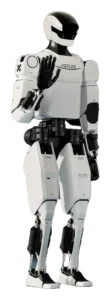
Kepler Robotics Forerunner K2 humanoid formally announced
Kepler Robotics formally introduced the Forerunner K2 as the successor to its first-generation platform, citing gripper refinement and locomotion improvements targeting factory assembly sequences.
Full assessment4 claims · 3 technical notes · 2 sources
Where it standsAutonomy LadderIIIIIIIVVLevel IIAssisted AutonomyHuman ReadinessReady NowNew to MarketWaitKnown IssuesNot ratedPre-Consumer Assessment03050717675PromisingWhat happenedThe announcement confirmed industrial humanoid deployment as Kepler's primary commercialization path.
WatchingFor documented pilot scope and task-range disclosures to verify autonomy claims.
Bottom lineAnnouncement positions K2 as an iterative manufacturing platform improvement; independent evidence validating claimed capability gains over the prior generation is not yet available.
ImpactOn autonomy
- Autonomous gripper control extended to sensing-guided part placement
- Locomotion control refined for structured factory floor navigation
- Scripted assembly sequences demonstrated without teleoperator intervention
On readiness
- K2 positioned as deployment-ready for structured Chinese manufacturing pilots
- No consumer pricing, Western distribution, or timeline announced at launch
- Industrial customer qualification process not disclosed
Claim check4 maker claims checked against the record. Open one to read the finding.
Next-generation gripper intelligence for assembly tasks
Documented findingManufacturer materials describe sensor-guided gripper control; independent specification verification is not availableProduction-ready humanoid for factory deployment
Documented findingK2 targets structured pilot deployments; general-purpose adaptation beyond fixed task sequences is not demonstratedImproved bipedal locomotion over prior Forerunner generation
Documented findingKepler has characterized K2 as an iterative refinement; comparative performance data between K1 and K2 locomotion is not published in accessible sourcesAutonomous task execution without operator involvement
Documented findingDemonstrated autonomy covers scripted manufacturing sequences; exception handling and recovery from assembly errors depends on on-site operators per product documentationEvidence2 sources · 1 linked
12Aug 2024Oct 2024filed 21 Oct 2024- 1Kepler Robotics Official Announcement15 Aug 2024
- 2IEEE Spectrum20 Aug 2024named, not linked
Technical notes3 sections
Platform Generation
K2 is Kepler Robotics’ second humanoid generation under the Forerunner product line. The announcement cited gripper sensing refinement and locomotion control improvements as the primary differentiators from the predecessor platform. Specific actuator counts, degrees of freedom, or payload figures were not published in accessible announcement materials.
Intended Task Domain
K2 targets repetitive manufacturing tasks: parts picking from bins, fixture placement, and simple assembly operations. The operating design domain is structured factory environments with stable product variants and predictable part presentation. Variable product types or novel assembly layouts are outside the documented scope.
Deployment Model
Kepler’s announced commercialization path centers on Chinese manufacturing facility pilots with on-site operator support. Battery runtime, charging infrastructure, and shift-length operational figures were not disclosed at announcement. No export classification, Western safety certification, or international distribution structure was announced.