
- Changes
- 5
- Tracking since
- Sep 2021
- Latest
- Jan 29, 2024
- Net movement
- Classification stable
- 2024
-
Amazon acquisition of iRobot collapses, triggering going-concern disclosure
Amazon terminated its $1.7 billion acquisition of iRobot in January 2024 following European Commission opposition, triggering an immediate going-concern disclosure and workforce reduction of approximately 31 percent at iRobot.
Full assessment4 claims · 4 technical notes · 2 sources
Where it standsAutonomy LadderIIIIIIIVVLevel IIIConditional AutonomyHuman ReadinessReady NowNew to MarketWaitKnown IssuesRobovations Score04055708580StrongWhat happenedThe j7+ continued to ship and receive firmware support, but the corporate instability introduced documented uncertainty about the product's long-term update roadmap and manufacturer warranty backstop.
WatchingIRobot's firmware update cadence and parts supply continuity over the following 12 months as the indicator of operational stability.
Bottom lineThe deal collapse materially affected iRobot's financial position and near-term product investment capacity; j7+ hardware and existing firmware capabilities were unaffected, but the update pipeline slowed.
ImpactOn autonomy
- Firmware update cadence for j-series visibly slowed following workforce reduction per iRobot changelog
- No new PrecisionVision object categories announced post-deal collapse as of mid-2024
- Existing Level III classification capabilities remained intact and unaffected
On readiness
- Going-concern disclosure introduced uncertainty about multi-year support duration
- j7+ remained available at retail with reduced MSRP observed across major channels
- Warranty fulfillment continued but support staffing reduced per iRobot public statements
Claim check4 maker claims checked against the record. Open one to read the finding.
iRobot as a stable, long-term platform
Documented findingGoing-concern notice filed January 2024; iRobot disclosed material doubt about ability to continue as a going concern without additional capital or restructuring per SEC filingAmazon acquisition would accelerate iRobot innovation
Documented findingEU regulators blocked the deal citing competition concerns; deal termination fee of $94 million paid to iRobot per published reports, providing short-term liquidity but not the operational backing of the acquisitionj-series receives regular capability updates
Documented findingFirmware update frequency for j-series declined noticeably in the months following the layoffs per community-tracked iRobot changelog entries31% workforce reduction limited to non-product functions
Documented findingiRobot CEO disclosed in January 2024 statement that engineering and product teams were included in reductions; specific team compositions not disclosedEvidence2 sources · 1 linked
- 1Reuters29 Jan 2024
- 2iRobot Press Release29 Jan 2024named, not linked
Technical notes4 sectionsDeal Termination
Amazon announced termination of the iRobot acquisition in January 2024 after the European Commission opened a formal investigation and signaled intent to block the deal on competition grounds. Amazon paid iRobot a $94 million termination fee as specified in the merger agreement, per financial press reporting at the time.
iRobot Financial Disclosures
Following deal termination, iRobot filed disclosures indicating material doubt about its ability to continue as a going concern without additional financing or strategic action. The company laid off approximately 350 employees, representing roughly 31 percent of its workforce per iRobot’s public announcement in January 2024. iRobot’s CEO Glen Harson departed, and the company entered a restructuring process.
Impact on j7+ Product Line
iRobot publicly committed to continued support for existing products including the j-series. The j7+ remained listed for sale on iRobot’s website and major retail channels. Firmware changelog activity for j-series declined after the restructuring, with community trackers noting reduced release frequency compared to 2022 and 2023 patterns. No end-of-support date was announced for the j7+ platform as of mid-2024.
Pricing Movement
Retail pricing for the j7+ dropped below $700 at major retailers in the months following the deal collapse, reflecting reduced demand or inventory clearing. iRobot’s MSRP was not formally revised but retail prices tracked below the $849 launch MSRP consistently.
- 2022
-
Leaked Roomba J-series test images traced to data labelers
A news report in December 2022 said that contracted Scale AI data-labeling workers shared images captured by pre-production Roomba J-series test robots, including one photo taken in a bathroom. iRobot said the images came from development hardware in its data-collection program, not retail j7+ units, and terminated its relationship with Scale AI.
Full assessment3 claims · 3 technical notes · 2 sources
Where it standsAutonomy LadderIIIIIIIVVLevel IIIConditional AutonomyHuman ReadinessReady NowNew to MarketWaitKnown IssuesRobovations Score04055708580StrongWhat happenedWatchingFor how iRobot documents safeguards on any future in-home data collection.
Bottom lineThe incident documents a lapse in third-party data handling within iRobot's test program, not a demonstrated flaw in the retail j7+'s obstacle-avoidance performance.
ImpactOn autonomy
- No change documented to PrecisionVision's on-device object detection or mapping performance
- iRobot confirmed the leaked images originated from pre-production test units, not retail hardware
On readiness
- Retail availability and setup process for the j7+ were not affected by the report
- Coverage raised trust questions about camera data handling across connected home robots generally
Claim check3 maker claims checked against the record. Open one to read the finding.
iRobot describes its object-recognition data collection as conducted with user consent and privacy protections in place.
Documented findingNews reports said that contracted overseas data-labeling workers could view, and in some cases shared, raw unblurred images captured by test units.iRobot positioned the incident as isolated to development-stage hardware unrelated to consumer products.
Documented findingiRobot confirmed the images came from pre-production Roomba J-series test units and said it terminated its relationship with Scale AI, the data-labeling contractor connected to the leak.PrecisionVision is marketed to consumers as a benefit that improves obstacle avoidance during cleaning runs.
Documented findingReporting showed that same computer-vision training pipeline depended on human review of in-home images by third-party contractors, a step not prominently disclosed to testers.Evidence2 sources · all linked
1219 Dec 202220 Dec 2022filed 19 Dec 2022- 1MIT Technology Review19 Dec 2022
- 2The Verge20 Dec 2022
Technical notes3 sectionsData Collection Program
Reporting in December 2022 described a data collection program iRobot ran with paid testers, in which pre-production Roomba J-series robots captured images to help train the PrecisionVision object-recognition system used on production j7+ units. Some of those images, including one taken inside a bathroom, were later found circulating outside iRobot’s control.
Labeling Pipeline
The images had been sent to a third-party data-labeling firm for human annotation. Contracted workers involved in that annotation process were reported to have shared a subset of images outside their intended review channels, including on social platforms.
Company Response
iRobot said the affected images came from development-stage test units operated under a consent-based testing program, not from robots sold to retail customers, and stated it had ended its relationship with the vendor connected to the leak. The company did not detail specific new technical controls added to the labeling pipeline afterward.
-
iRobot expands PrecisionVision object library via OTA firmware update
iRobot pushed OTA firmware updates across 2022 that expanded PrecisionVision's recognized object library and improved avoidance reliability on dark and partially obscured obstacles, two categories that drew critical early reviews at launch.
OverallFull assessment3 claims · 4 technical notes · 2 sources
Where it standsAutonomy LadderIIIIIIIVVLevel IIIConditional AutonomyHuman ReadinessReady NowNew to MarketWaitKnown IssuesRobovations Score↑ moved by this entry04055708580StrongWhat happenedOwner forums and iRobot's published changelog documented fewer false-stops and missed detections compared to the launch firmware.
WatchingFor whether the expanded training set materially reduces the documented failure rate on transparent or very-low-contrast obstacles, which firmware notes did not specifically address.
Bottom lineThe 2022 firmware updates represented genuine incremental improvement to the j7+'s obstacle avoidance within its existing architecture, not a capability reclassification event.
ImpactOn autonomy
- Expanded object recognition library covers additional household item categories
- Reduced false-positive obstacle halts in normal lighting conditions per changelog
- Dark cord detection accuracy improved relative to launch firmware per owner reports
- Transparent and reflective obstacle limitations remain documented and unresolved
On readiness
- Reduced intervention frequency for owners in typical mixed-floor home environments
- Improved cleaning session completion rates documented in owner community threads
- Firmware delivered silently via Wi-Fi with no user-side configuration required
Claim check3 maker claims checked against the record. Open one to read the finding.
PrecisionVision detects cords and dark obstacles reliably
Documented findingLaunch firmware had documented false negatives on dark cords; 2022 firmware updates improved but did not fully resolve the limitation per iRobot's own release notes and owner testingGenius 3.0 continuously learns from the fleet
Documented findingFleet-learning via opt-in data sharing does occur; iRobot disclosed the mechanism in privacy documentation, though the update frequency and scope of individual improvements are not publicly quantifiedFirmware updates deliver significant capability jumps
Documented finding2022 updates were incremental, not transformative; core Level III operating envelope was unchanged, and the fundamental limitation on novel or extremely dark obstacles persisted per changelog and owner reportsEvidence2 sources · 0 linked
12Aug 2022Sep 2022filed 1 Sep 2022- 1iRobot j Series Software Release Notes15 Aug 2022named, not linked
- 2Reddit r/roomba3 Sep 2022named, not linked
Technical notes4 sectionsFirmware Update Scope
iRobot deployed multiple over-the-air firmware updates across 2022 for the j-series platform, documented in iRobot’s published j-series software release notes. The updates addressed PrecisionVision detection improvements across several household object categories, with dark cables and bundled cords specifically cited in community-sourced comparisons between pre- and post-update behavior.
Object Recognition Changes
iRobot does not publish the full recognized object taxonomy, but firmware notes and owner comparisons indicate the update expanded recognizable categories and improved classifier confidence thresholds for objects that produced high false-negative rates at launch. Specific version numbers for the 2022 update sequence are documented in iRobot’s j-series release notes page on the support site.
Persistent Limitations
iRobot’s changelog and owner forum reports consistently documented that transparent obstacles (glass furniture legs, clear plastic bins), reflective surfaces, and extremely low-contrast dark objects remained outside reliable detection range after the 2022 updates. iRobot recommends virtual no-go boundaries as the primary mitigation for these categories, per support documentation.
Update Delivery
Updates are delivered silently over Wi-Fi when the robot is docked and connected. No manual intervention is required. Owners who disabled auto-updates via app settings would not receive improvements automatically; iRobot’s app prompts users to enable automatic updates per setup documentation.
- 2021
-
iRobot Roomba j7+ Pet Owner Official Promise launched
iRobot announced the Roomba j7+ Pet Owner Official Promise, a guarantee replacing any j7-series robot failing to detect and avoid pet waste on first encounter.
Full assessment3 claims · 3 technical notes · 2 sources
Where it standsAutonomy LadderIIIIIIIVVLevel IIIConditional AutonomyHuman ReadinessReady NowNew to MarketWaitKnown IssuesRobovations Score04055708580StrongBottom lineiRobot is repackaging j7+ pet-waste avoidance as a warranty promise, increasing buyer confidence but not changing the robot's technical classification.
ImpactOn autonomy
- Obstacle detection baseline restated with manufacturer confidence
- No new autonomy capability added
On readiness
- Purchase confidence increased through manufacturer guarantee
- Commercial availability reinforced
Claim check3 maker claims checked against the record. Open one to read the finding.
j7+ will avoid pet waste every time
Documented findingiRobot guarantees replacement if detection fails on first encounter, implying failure is possible but covered by liabilityOfficial promise backed by PrecisionVision
Documented findingPromise uses the same camera system already in j7+, no new hardware or software addedCommitment to pet owners
Documented findingCommercial risk mitigation strategy, not autonomy advancementEvidence2 sources · all linked
- 1iRobot Official9 Sep 2021
- 2iRobot Support9 Sep 2021
Technical notes3 sectionsPromise Scope
Pet Owner Official Promise covers any j7-series Roomba unit that fails to detect and avoid pet waste on the robot’s first encounter with it. iRobot provides full replacement at no cost to the owner.
Detection System
Promise operates on existing PrecisionVision hardware: integrated camera, on-device neural processor, and trained obstacle recognition. No firmware version or hardware revision update mentioned.
Coverage
Applies to all iRobot Roomba j7+ units sold during the promise period. Terms require documentation of failure and replacement request through iRobot support channels.
-
iRobot Roomba j7+ enters retail with PrecisionVision obstacle avoidance
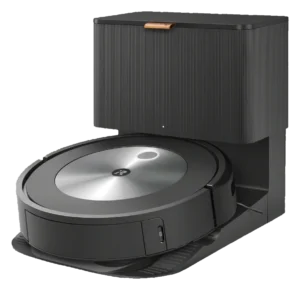
iRobot commercially released the Roomba j7+ in September 2021 at an MSRP of $849, pairing the Genius 3.0 Home Intelligence platform with a new RGB camera-based obstacle detection system called PrecisionVision.
Full assessment4 claims · 4 technical notes · 2 sources
Where it standsAutonomy LadderIIIIIIIVVLevel IIIConditional AutonomyHuman ReadinessReady NowNew to MarketWaitKnown IssuesRobovations Score04055708580StrongWhat happenedThe launch moved camera-trained object avoidance from lab demonstration to a shipping consumer product, the first in iRobot's lineup at scale.
WatchingWhether subsequent firmware updates expand the recognized object library beyond the initial training set.
Bottom lineThe j7+ delivered on core obstacle avoidance at launch, with documented limitations in edge conditions that firmware addressed over subsequent years.
ImpactOn autonomy
- PrecisionVision AI camera added real-time object detection during cleaning runs
- Genius 3.0 platform enabled cloud-assisted training data collection from opt-in users
- vSLAM navigation combined with obstacle data for room-level conditional autonomy
- Recognized household objects including cords and pet waste at launch
On readiness
- Retail availability through major chains reduced purchase friction at launch
- Self-empty Clean Base dock reduced hands-on maintenance versus prior Roomba models
- App-based setup and scheduling accessible without technical configuration
- iRobot established parts and bag supply chain from day one
Claim check4 maker claims checked against the record. Open one to read the finding.
Avoids pet waste and cords automatically
Documented findingObject avoidance confirmed for common household items in controlled conditions; owner reports noted missed detections on dark or partially obscured objects at launchGenius 3.0 learns and improves with use
Documented findingCloud-based training updates do improve recognition over time per iRobot firmware notes, but improvements require opt-in data sharing and OTA updatesSelf-empty dock handles up to 60 days of debris
Documented findingiRobot specified 60-day interval; owner reports indicate 30-day intervals are typical in homes with pets or thick carpetPrecisionVision works in all lighting conditions
Documented findingLaunch reviews and owner reports documented reduced detection accuracy in low-light environments; iRobot acknowledged limitations in support documentationEvidence2 sources · 1 linked
- 1iRobot Press Release9 Sep 2021
- 2CNET9 Sep 2021named, not linked
Technical notes4 sections
Platform Architecture
The j7+ launched on the Genius 3.0 Home Intelligence platform, combining vSLAM camera-based mapping with a dedicated RGB camera for PrecisionVision obstacle detection. The navigation camera and the obstacle-detection camera operate as separate systems: the vSLAM component builds floor maps, while PrecisionVision processes object identification in the forward field of view.
Object Detection at Launch
iRobot disclosed at launch that the initial PrecisionVision training set covered common household obstacles including power cords, pet waste, and socks. The system uses a neural network classifier running inference on-device, with optional cloud-connected training data collection from opted-in users contributing anonymized images.
Clean Base Dock
The bundled Clean Base Automatic Dirt Disposal dock vacuums the robot’s dustbin into a sealed bag after each run. iRobot specified bag capacity supporting approximately 60 runs before replacement. The dock requires a dedicated power outlet and approximately 18 inches of clearance on both sides per installation guidelines.
Connectivity
Wi-Fi 2.4 GHz and Bluetooth LE for setup. Alexa and Google Home voice control supported at launch via iRobot Home app. Scheduling, cleaning history, and obstacle photo review available through the app.