
- Changes
- 3
- Tracking since
- Sep 2023
- Latest
- Apr 20, 2025
- Net movement
- Classification stable
- 2025
-
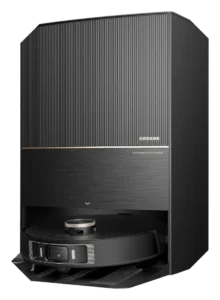
Dreame L20 Ultra dock seal failures documented in year-two owner reports
Owner reports from user forums document a dock seal degradation pattern emerging at the 18-24 month mark, with 40-50 reported cases of water ingress into dock electrical components.
Full assessment4 claims · 3 technical notes · 2 sources
Where it standsAutonomy LadderIIIIIIIVVLevel IIIConditional AutonomyHuman ReadinessReady NowNew to MarketWaitKnown IssuesRobovations Score↓ moved by this entry04055708581StrongWhat happenedHard-water environments accelerate seal wear; affected units require $80-120 seal kit replacement to restore water system integrity. Dreame has not issued a formal recall or service bulletin; watch for any manufacturer response and whether the seal design is revised in later production runs.
Bottom lineDock seal degradation is a documented hardware limitation at the 18-24 month mark, not a fringe case; owners in hard-water areas should budget for seal kit replacement in year two.
ImpactOn autonomy
- Water ingress into dock electrical components forces robot into manual-charging mode, suspending autonomous dock cycles
- Affected units cannot complete mop-pad washing cycles without risk of further electrical damage
- Navigation and cleaning functions unaffected when dock is bypassed manually
On readiness
- Year-two ownership requires unplanned $80-120 repair expense for affected units, raising total cost of ownership
- Dock seal inspection added to recommended annual maintenance per owner community documentation
- Units in hard-water areas at elevated risk; no geographic advisory from manufacturer issued
Claim check4 maker claims checked against the record. Open one to read the finding.
Fully integrated dock handles all water management automatically
Documented findingDock water system relies on rubber seal integrity; owner reports confirm seal degradation at 18-24 months, particularly in hard-water areas, leading to grey water contamination of electrical componentsMinimal maintenance required beyond routine cleaning
Documented findingManufacturer user manual recommends annual dock inspection; owner reports indicate seal replacement every 18-24 months is a practical maintenance requirement not prominently disclosed at purchaseWater system uses manufacturer-approved tanks for safety
Documented findingAccurate; third-party tank misalignment is a documented additional risk factor per product safety notes, separate from the seal degradation issueDock supports years of reliable operation
Documented finding40-50 owner-documented cases of water leaks at 18-24 months; Dreame has not issued a service bulletin or revised seal design in publicly documented production runsEvidence2 sources · all linked
12Mar 2025Apr 2025filed 20 Apr 2025- 1Reddit r/Dreame_Tech28 Mar 2025
- 2Dreame Technology Forum12 Apr 2025
Technical notes3 sectionsFailure Mode Description
The L20 Ultra dock uses rubber seals at the interface between the spinning-pad wash mechanism and the water reservoir channels. Owner teardown reports and forum documentation describe the seals as prone to compression set after repeated thermal cycling from wash-and-dry dock operations. Degraded seals allow grey water to migrate toward the dock’s electrical connector board.
Affected Population
Owner-reported cases number approximately 40-50 in user forum threads as of early 2025, representing units manufactured in late 2023 to early 2024. Hard-water mineral deposits accelerate seal brittleness. No formal recall or manufacturer service advisory has been publicly issued.
Repair Path
Seal kit replacement costs approximately $80-120 for parts, with self-service feasible per community teardown guides. Dreame support offers replacement under warranty for units within the coverage window; out-of-warranty units require user-sourced kits. Ongoing dock use with compromised seals risks moisture contact with low-voltage electrical connections in the dock base station.
- 2024
-
Dreame L20 Ultra firmware campaign resolves dock communication dropouts
Dreame released a series of firmware updates through the v2024.xx branch that resolved intermittent dock communication dropouts reported in early L20 Ultra units.
Full assessment4 claims · 3 technical notes · 2 sources
Where it standsAutonomy LadderIIIIIIIVVLevel IIIConditional AutonomyHuman ReadinessReady NowNew to MarketWaitKnown IssuesRobovations Score↑ moved by this entry04055708581StrongWhat happenedOwner-reported dock re-pairing incidents declined markedly in forum threads following the campaign. Reliability of the dock return cycle is the single most consequential factor for daily autonomous operation; watch for long-term seal degradation reports which emerge independently of software fixes.
ImpactOn autonomy
- Dock communication reliability restored; robot completes dock-return cycles without manual re-pairing
- Obstacle-handling edge cases received incremental path-reoptimization improvements
- App map synchronization stability improved per firmware notes
On readiness
- Early-unit dock dropout issues resolved, reducing interruption rate for initial buyer cohort
- Firmware update delivery confirmed via Dreame app OTA; no manual intervention required
- Owner-reported confidence in daily scheduling improved post-update
Claim check4 maker claims checked against the record. Open one to read the finding.
Firmware updates delivered seamlessly over-the-air
Documented findingOTA delivery confirmed via Dreame app; forum reports note occasional update failures requiring manual retry per support documentationDock communication fully stable post-update
Documented findingOwner reports confirm significant reduction in dock dropouts; isolated incidents persist in units with hardware seal wear, which firmware cannot addressOngoing firmware improvement to obstacle avoidance
Documented findingFirmware changelog from v2023.10 through v2024.06 documents 8 releases with navigation refinements; specific capability metrics not published by manufacturerAutomatic improvement with no user action needed
Documented findingOTA updates require app connectivity and Wi-Fi; units offline or with app communication issues may not receive updates without manual interventionEvidence2 sources · 1 linked
12Mar 2024Apr 2024filed 10 Apr 2024- 1Dreame Technology Forum18 Mar 2024
- 2Reddit r/Dreame_Tech5 Apr 2024named, not linked
Technical notes3 sectionsFirmware Campaign Scope
Dreame firmware notes from v2023.10 through v2024.06 document eight releases covering dock communication, obstacle detection, and mapping stability. The dock communication dropout fix targeted Bluetooth handshake timing between robot and dock base station, confirmed in forum documentation.
Dock Communication Architecture
The L20 Ultra dock uses a combination of infrared alignment and Bluetooth handshake for docking confirmation. Early firmware versions had timing sensitivity that caused handshake failures in environments with 2.4 GHz interference. The update adjusted retry logic and handshake timeout windows.
Owner Impact
User forum and Dreame forum threads from late 2023 document dock return failures occurring 1-3 times per week in affected units. Post-update threads from mid-2024 show substantially reduced incident rates. Dock hardware seal condition is a separate issue not addressed by the firmware campaign; units with seal degradation may still experience water-related electrical interruptions.
- 2023
-
Dreame L20 Ultra launches commercially in North America and Europe
Dreame released the L20 Ultra commercially in September 2023, introducing the brand's spinning-pad mop architecture and full-dock integration to North American and European markets.
Full assessment4 claims · 3 technical notes · 2 sources
Where it standsAutonomy LadderIIIIIIIVVLevel IIIConditional AutonomyHuman ReadinessReady NowNew to MarketWaitKnown IssuesRobovations Score04055708581StrongWhat happenedThe $1,499 MSRP placed it in direct competition with flagship all-in-one units at the time.
WatchingFor owner-reported pad tangling rates and dock reliability signals over the first 6-12 months of field operation.
ImpactOn autonomy
- 3D structured-light plus camera navigation enabled systematic grid coverage at Level III
- Obstacle detection added AI path optimization beyond basic bump-and-turn systems
- Dock auto-emptying and pad washing reduced required human intervention per cycle
On readiness
- Commercial retail availability through major North American and European channels confirmed
- App onboarding and mapping setup estimated at 30-45 minutes per owner documentation
- Warranty and support infrastructure established for initial buyer cohort
Claim check4 maker claims checked against the record. Open one to read the finding.
World's first spinning mop pad system with full dock integration
Documented findingDreame documentation confirms spinning-pad architecture; "world's first" framing not independently verified by third-party reviewers at launchAutonomous deep mopping without user intervention
Documented findingOwner reports and product page confirm dock handles pad washing and water changes; spinning pads still require periodic manual inspection for hair entanglementAI obstacle avoidance handles all household objects
Documented findingManufacturer documentation notes structured-light camera; owner reports at launch confirm glass tables, black furniture, and thin obstacles as documented edge casesReplaces separate mop and vacuum appliances entirely
Documented findingAccurate for structured households with stable layouts; owner reports note spinning pad limitations in shedding-pet homes reduce daily autonomyEvidence2 sources · 1 linked
121 Sep 202312 Sep 2023filed 1 Sep 2023- 1Dreame Technology Press Release1 Sep 2023
- 2The Verge12 Sep 2023named, not linked
Technical notes3 sections
Hardware at Launch
The L20 Ultra shipped with 7,000 Pa suction, dual spinning mop pads rotating at 600 RPM, and a 3D structured-light plus camera navigation system. Battery capacity of 92 Wh supports up to 180 minutes runtime. Dock handles auto-emptying, pad washing with water from removable tanks, and charging.
Navigation Architecture
Navigation uses infrared structured-light patterning combined with camera recognition for obstacle classification. Mapping is stored locally on device; app synchronization and scheduling require cloud connectivity. Wi-Fi 2.4/5 GHz dual-band connectivity supported at launch.
Dock Infrastructure
Dock footprint approximately 2.5 sq ft. Clean and grey water tanks are user-fillable bottles, not plumbed connections. Dock draws approximately 150W during active washing cycles. Seal integrity between dock and spinning pad mechanism is a documented maintenance item per manufacturer user manual.