
Goal-based
Which robot mower handles sloped yards? Drivetrain and traction tradeoffs.
Robot mowers designed for flat lawns often struggle on grades above 20 percent. Slope capability depends on drivetrain configuration and traction engineering.
We may earn commission from qualifying purchases. This does not influence the comparison.
The investigation
5 questions this comparison examines
How does drivetrain configuration affect slope handling?
Robot mowers use two-wheel or all-wheel drive to distribute power. AWD systems engage all four wheels; two-wheel designs concentrate traction on rear wheels only.
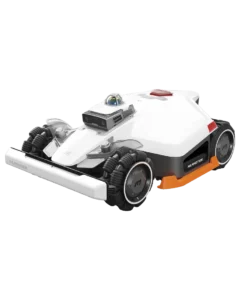
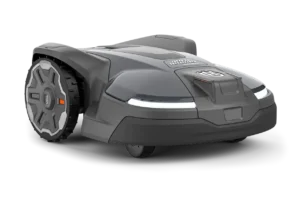
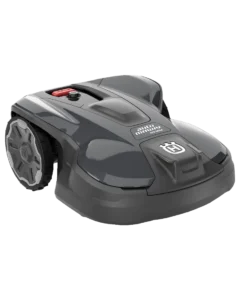
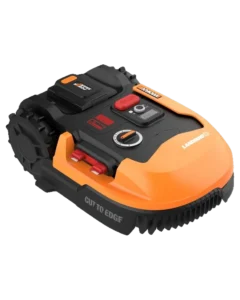
LUBA 3 AWD 5000450X NERA320 NERAWorx Landroid M 20VMammotion documentation reports 35-degree maximum slope for LUBA 3 AWD. Husqvarna specs list 25 degrees for 450X NERA and 20 degrees for 320 NERA.
AWD engages steering wheels in power delivery. Two-wheel designs rely solely on rear-wheel traction and weight transfer for hill climbing.
What wheel design differences support traction on grades?
Wheel diameter, tread pattern, and material compound determine grip. Larger wheels clear obstacles; aggressive tread offers better soil contact on soft terrain.
LUBA 3 AWD 5000450X NERA320 NERAWorx Landroid M 20VLUBA 3 wheel sizing from manufacturer specs. Automower 450X and 320 wheel diameters from Husqvarna technical documentation.
Knobby tread increases soil bite on wet or loose terrain. Smooth tread reduces drag on compacted grass.
What happens when slope exceeds manufacturer limits?
Most robot mowers disengage, reverse, and navigate elsewhere when grades exceed safe climbing range. Some shut down autonomously; others rely on perimeter mapping to avoid hazardous zones.
LUBA 3 AWD 5000450X NERA320 NERAWorx Landroid M 20VOwner reports indicate LUBA 3 rarely stalls on steep sections; Automower models show more frequent re-attempt sequences near limit.
How does weight and chassis geometry affect rollover safety on slopes?
Heavier robots resist tipping on side slopes. Low center of gravity and wide track width distribute load. Compact, light designs increase rollover risk on steep transverse grades.
LUBA 3 AWD 5000450X NERA320 NERAWorx Landroid M 20VLUBA 3 transverse slope rating from manufacturer. Automower models tested by owner networks reporting tip-over incidents on side grades above 20 degrees.
Rollover risk increases as center of gravity rises relative to track width. Lighter mowers require more aggressive slope-limiting algorithms.
Do steep-terrain mowers require different maintenance or operation patterns?
Slope-rated designs may demand more frequent wheel inspection and soil debris cleaning. Traction systems wear faster on uneven terrain; battery draw increases on grades.
LUBA 3 AWD 5000450X NERA320 NERAWorx Landroid M 20VLUBA 3 user manuals recommend soil-debris cleaning after slope mowing. Automower documentation does not flag slope-specific maintenance.
In closing
What the evidence shows
Patterns that emerged across the questions above.
AWD is the only path to 30+ degree grades.
Every two-wheel mower maxes at 25 degrees or below. Only LUBA 3 AWD scales beyond that range due to front-wheel power engagement. If your property exceeds 30 percent slope, alternatives are limited.
Wheel design matters more than weight for mid-range slopes.
Between 20 and 25 degrees, tread pattern and diameter drive performance as much as total mass. The 450X NERA's larger wheels and mid-grip compound outperform the lighter 320 NERA on similar grades despite lower weight.
Transverse (side-to-side) slope risk remains invisible in specs.
Grade limits address uphill climbing. Rollover safety on side slopes depends on track width and weight, which few manufacturers disclose. LUBA 3's wider stance suggests better sideways stability than compact competitors.
Common questions