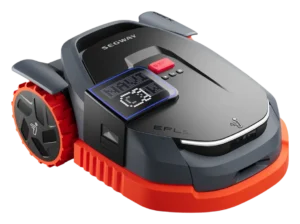
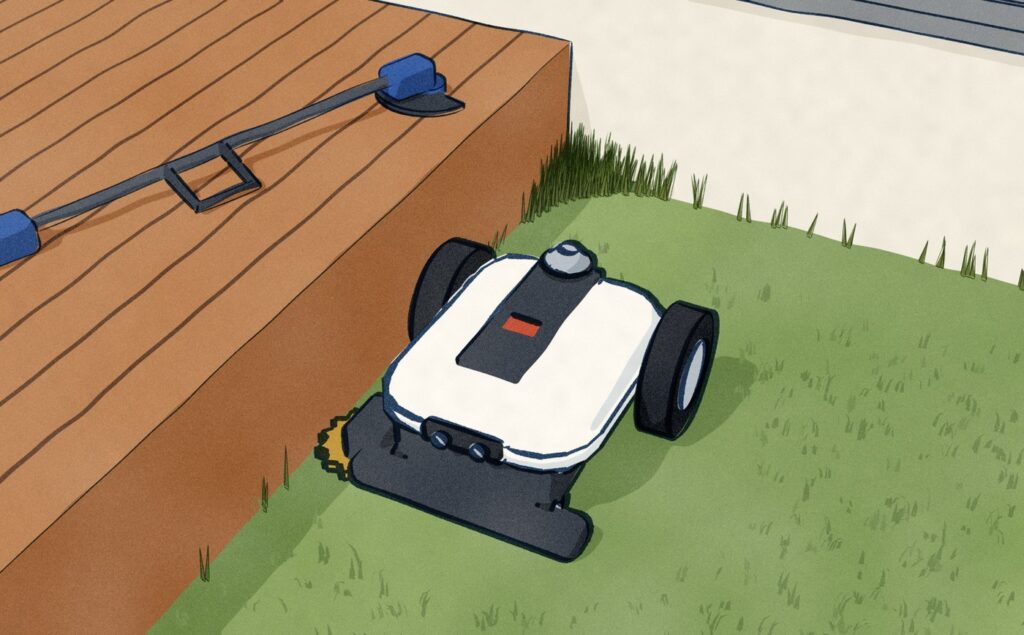
Wire-free RTK and LiDAR mowers automate field cutting reliably, yet perimeter finish is the gap owners discover after setup, making the uncut strip width a practical ownership cost.
Classification, not a ranking. Every mark below is documented evidence, not a purchase recommendation.
We may earn commission from qualifying purchases. This does not influence the comparison.
Claims under test
5 marketing claims, measured against documented evidence
Each claim below pairs the marketing language with what owner reports, demos, and engineering documentation actually show. The meter summarizes how far each claim sits from the evidence.
All four platforms document wire-free boundary operation in manufacturer specifications. The claim holds for field coverage; perimeter accuracy near fences and hard edges is a separate question not addressed in wire-elimination claims.
YUKA 3000 boundary method
RTK-GNSS + virtual boundary
Navimow X4 boundary method
RTK, 2-5cm accuracy (manufacturer)
Goat A3000 boundary method
Dual LiDAR autonomous mapping
Navimow X330 boundary method
RTK virtual geofence
Wire-burial required
None (all four)
Claim 02 / 05
Autonomous coverage without manual trimming
~Partial
Field-cutting autonomy supported; perimeter finish requires manual follow-up across category
What marketing promises
Fully autonomous mowing season after season, reducing manual lawn work to near zero
Mammotion YUKA 3000 product page; Segway Navimow X4 and X330 product pages; Ecovacs Goat A3000 LiDAR PRO product page, 2025-2026
What the evidence shows
Autonomous field coverage is documented for all four platforms. However, Segway's own documentation for both the X4 and X330 explicitly states that edge trimming requires manual operator direction or a separate pass. Owner reports across the category consistently describe a residual uncut strip along fences and raised beds.
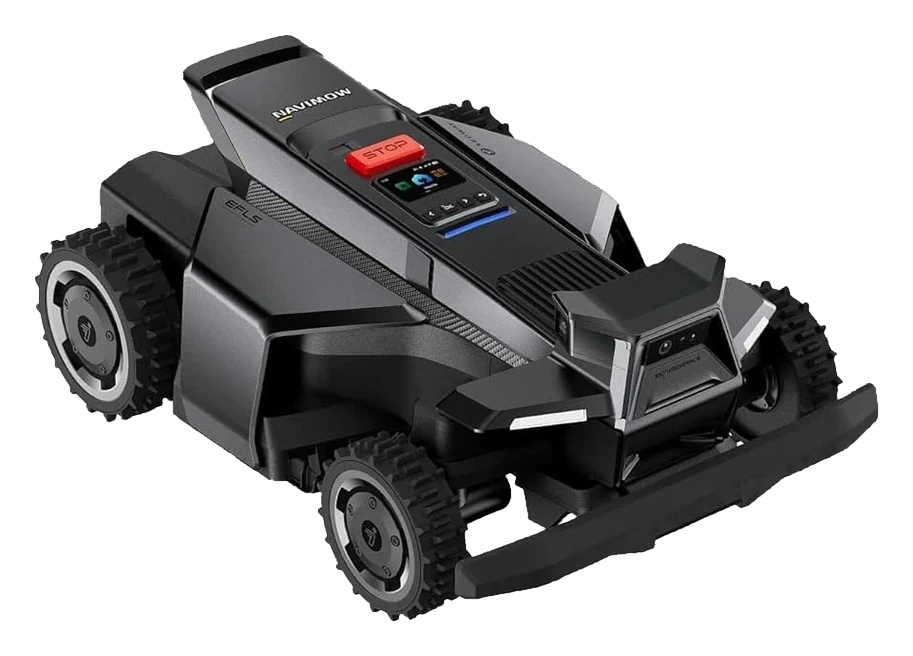
X4 edge trimming
Manual (manufacturer confirmed)
X330 edge trimming
Not addressed in specs
YUKA 3000 edge coverage
Not documented
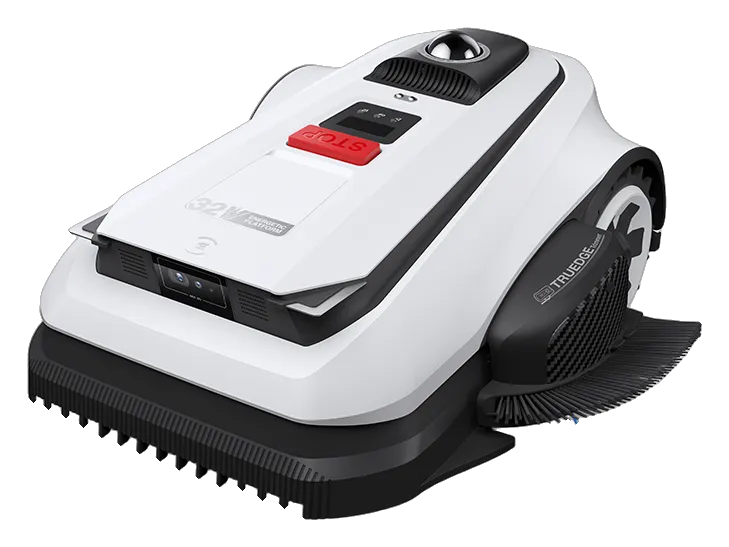
Goat A3000 TrueEdge pass
Manufacturer claim; field evidence limited
Supplemental trimmer needed
Owner-reported across category
Claim 03 / 05
Dedicated edge-follow or TrueEdge pass
~Partial
Feature claimed by manufacturer; independent field evidence absent at time of evaluation
What marketing promises
TrueEdge trimming delivers a refined edge pass that covers perimeter strips without manual intervention
Ecovacs Goat A3000 LiDAR PRO product page and marketing materials, 2025-2026
What the evidence shows
Ecovacs names TrueEdge as a distinguishing feature of the A3000 LiDAR PRO, describing a dedicated perimeter-pass capability. Documented field evidence from owner reports is limited given the late 2025 release date; the claim is a manufacturer assertion that has not yet been independently corroborated at scale.
TrueEdge claimed
Yes (Ecovacs manufacturer)
Independent corroboration
Not yet documented
Other three platforms
No equivalent feature claimed
Ecovacs release date
November 2025
Owner reports on TrueEdge
Pending
Claim 04 / 05
Setup simplicity: place dock and map
~Partial
LiDAR setup matches claim; RTK platforms require base-station investment not disclosed in headline copy
What marketing promises
Setup requires only charging station placement and app mapping, with no complex infrastructure
Ecovacs Goat A3000 LiDAR PRO and Mammotion YUKA 3000 product pages; Segway Navimow X330 spec sheet, 2025-2026
What the evidence shows
LiDAR-based setup (Ecovacs) requires only dock placement and autonomous map generation. RTK-based setups add a base-station installation step: the Navimow X4 documentation cites a $500-1000 infrastructure cost including possible contractor involvement. The YUKA 3000 requires RTK base-station placement and calibration before operation. The X330 is described as vendor-managed geofence definition.
Goat A3000 setup steps
Dock placement + app mapping
X330 setup complexity
Geofence definition, RTK base
YUKA 3000 RTK base station
Required (manufacturer)
X4 RTK infrastructure cost
$500-1000 (manufacturer cited)
LiDAR vs RTK setup gap
Documented across platforms
Claim 05 / 05
Consistent finish across obstacles and beds
✕Diverges
Open-field coverage supported; fence and bed perimeter finish not corroborated for any platform
What marketing promises
Autonomous navigation handles complex boundaries, obstacles, and garden bed edges consistently across full yard
Documented capabilities cover obstacle avoidance for yard furniture and medium-height debris. Consistent finish along fence lines, raised beds, and wall bases is not corroborated: the X4's own documentation lists edge trimming as requiring manual direction, and the YUKA 3000's product context notes that blade durability and sweeper reliability along edges remain underdocumented in field reports.
Open-field obstacle avoidance
Documented (all four)
Fence-line edge pass
Not documented (3 of 4)
Raised bed clearance
Not addressed in specs
X4 complex-boundary claim
Hybrid RTK + wire supported
Residual uncut strip
Owner-reported across category
Per-product rollup
How each platform’s claims hold up
Every claim, resolved per product against documented evidence.
Wire-free boundary, no perimeter installation✓RTK confirmed✓RTK confirmed✓LiDAR confirmed✓RTK confirmed
Autonomous coverage without manual trimming~Edge manual~Edge manual~TrueEdge claimed~Edge not addressed
Dedicated edge-follow or TrueEdge pass✕No equivalent✕No equivalent~Unverified✕No equivalent
Setup simplicity: place dock and map~Base station req.~$500-1000 infra✓Dock + app only~Geofence setup req.
Consistent finish across obstacles and beds✕Edge undocumented✕Manual direction~TrueEdge pending✕Not documented
Common questions
What readers ask about this comparison.
Q.
How wide is the uncut strip left along fences after a mowing session?
None of the four platforms publish a specific uncut-strip width in their specifications. Owner reports across the RTK and LiDAR category describe a residual strip of several inches along fence lines and wall bases, requiring a manual string trimmer pass. The Ecovacs Goat A3000 LiDAR PRO claims a TrueEdge pass, but field corroboration is limited given its late 2025 release.
Q.
Does any of these mowers eliminate the need for a string trimmer along beds and fences?
Ecovacs markets TrueEdge as a dedicated perimeter-pass feature for the Goat A3000 LiDAR PRO. For the other three platforms, manufacturer documentation explicitly notes that edge trimming requires manual operator direction (Navimow X4) or simply does not address perimeter strip coverage. No platform has documented eliminating the string trimmer entirely based on available field evidence.
Q.
Does RTK or LiDAR navigation handle edge coverage better?
Navigation technology does not determine edge finish directly. RTK provides centimeter-level field positioning (manufacturer-documented for the X4 at 2-5cm and the X330 via virtual geofence), but accurate positioning in open lawn does not translate automatically to a tight follow pass along a fence or raised bed. LiDAR maps obstacles and boundaries but the Goat A3000’s TrueEdge capability is the only platform-specific claim targeting perimeter finish, and it lacks independent field verification at this stage.
Q.
What is the total first-year ownership cost including infrastructure for these platforms?
The Navimow X4 documentation cites a first-year total of roughly $4,200-$5,400 including RTK base station installation ($500-1,000) and annual blade consumables ($300-$400). The YUKA 3000 MSRP is $2,099; RTK base station costs are not published by Mammotion. The Goat A3000 LiDAR PRO lists at $2,499 with no infrastructure beyond the dock. The Navimow X330 lists at $2,299 MSRP with blade costs of $60-$80 per set at 16-20 week intervals per Segway documentation.
Q.
Does the Segway Navimow X4 support a hybrid boundary mode for problem edge zones?
Yes. Segway documentation describes hybrid mode combining RTK virtual boundaries with optional physical boundary wire for areas where satellite signal is unreliable. This provides a fallback for signal gaps but does not address the perimeter finish gap: edge trimming along fences and beds remains manual per X4 product documentation.
Next up
RTK vs EPOS robot mower positioning: which is more accurate?
We use privacy-friendly first-party analytics to see which pages get read, plus one optional Google Analytics cookie. No ads, no cross-site tracking. Privacy policy