
Goal-based/Robot Lawn Mowers/4 robots compared/Reviewed Jun 23, 2026
Do robot mowers work in shaded, tree-canopy yards?
 View recordMammotionIVYUKA 3000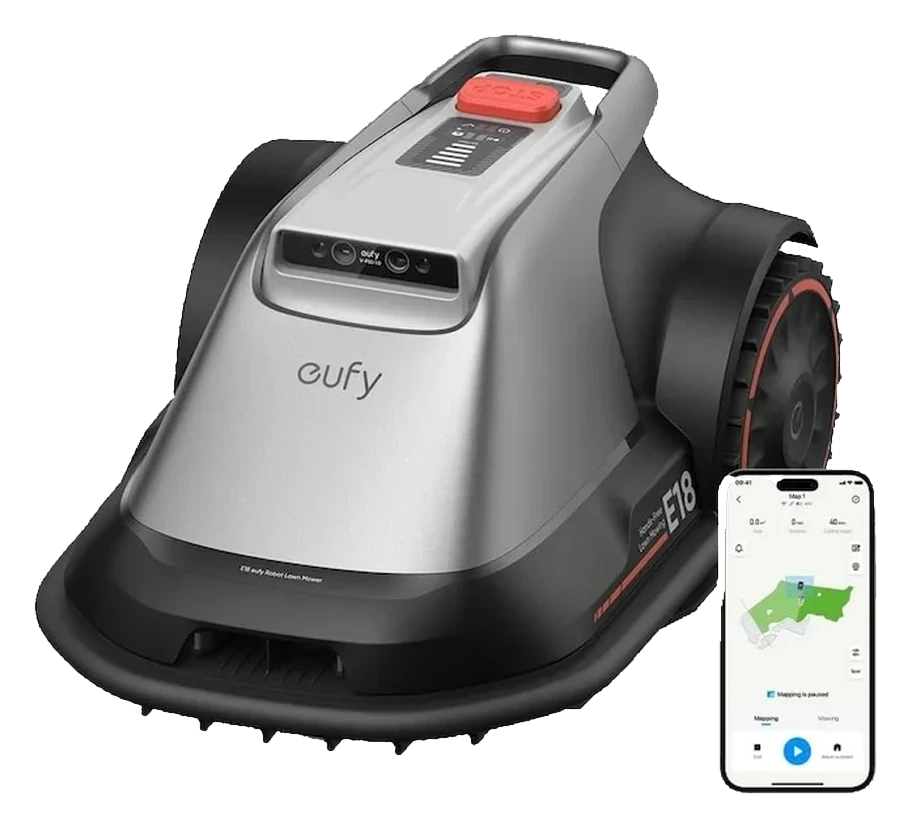
Full specifications17 measurements · 59 of 68 documented
The investigation
5 questions this comparison examines
Which positioning systems are independent of sky view?
Canopy blocks two things at once: satellite signals and ambient light. The four mowers here rely on different primary sensors, so sky occlusion is a first-order problem for some and irrelevant for others.
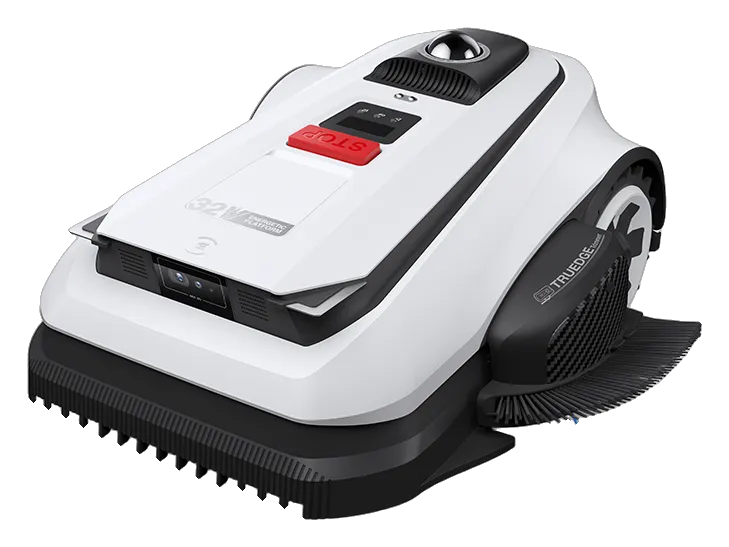
 Ecovacs Goat A3000 LiDAR PRO
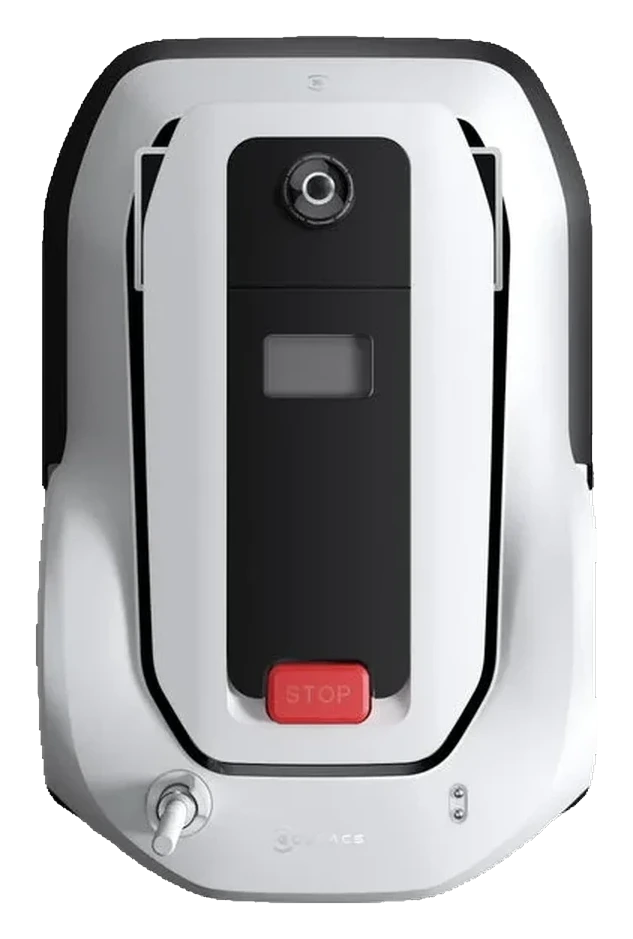
 Ecovacs Goat G1
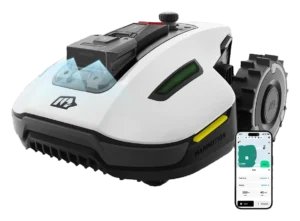 Mammotion YUKA 3000
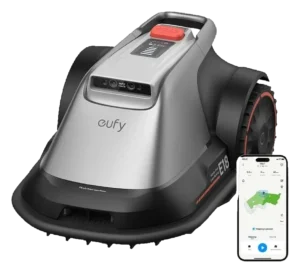 eufy Robot Lawn Mower E18
Ecovacs instruction manual and product page confirm dual LiDAR as the primary sensor for the A3000 LiDAR PRO; no satellite or vision component is listed for positioning.
Goat G1 product documentation identifies UWB ultra-wideband radio triangulation as the primary positioning method, operating independent of satellite signal and ambient light levels.
eufy product page (T28011A1) labels the system V-FSD vision-based navigation; no RTK antenna or satellite receiver is listed in the hardware specification.
How does RTK satellite lock behave under dense canopy?
RTK systems require clear line-of-sight to multiple satellites. Dense tree canopy degrades that signal geometry. The behavior of each affected mower when lock degrades is central to this comparison.
Ecovacs Goat A3000 LiDAR PROEcovacs Goat G1Mammotion YUKA 3000eufy Robot Lawn Mower E18YUKA 3000 product record notes RTK signal dropout fallback behavior is not documented; owner reports are described as sparse given the product's early market stage.
eufy E18 skip-for list explicitly names heavily shaded or tree-canopy yards as a documented limitation of the V-FSD vision navigation system.
Goat G1 product record skip-for conditions focus on metal structures and EMI sources, confirming UWB is not affected by overhead canopy blocking the sky.
Does LiDAR itself degrade under tree canopy?
LiDAR laser pulses are not satellite-dependent, but dense canopy creates a different problem: falling leaves, dappled shadows, and low-hanging branches that scatter or intercept the laser sweep.
Ecovacs Goat A3000 LiDAR PROEcovacs Goat G1Mammotion YUKA 3000eufy Robot Lawn Mower E18Goat A3000 LiDAR PRO product record skip-for section explicitly lists properties with dense mature trees and shadows as a scenario where LiDAR performance degrades.
Goat G1 skip conditions reference metal fencing, gutters, large appliances, and high-voltage lines as UWB degradation sources; no foliage or canopy condition is listed.
What setup infrastructure does each positioning approach require?
Avoiding satellite dependency shifts the setup burden to different hardware. Each positioning method carries its own placement requirements, environmental constraints, and recurring maintenance.
Ecovacs Goat A3000 LiDAR PROEcovacs Goat G1Mammotion YUKA 3000eufy Robot Lawn Mower E18eufy product documentation explicitly states approximately 5-minute setup with no RTK or wire installation; this is the only mower in this group with a manufacturer-published setup time figure.
YUKA 3000 product record identifies RTK base-station placement and calibration as a documented prerequisite; Mammotion does not publish a setup time estimate.
Goat G1 FAQ documentation states additional beacon units cost approximately $400 each for properties requiring multi-beacon coverage beyond one acre.
How does coverage area interact with partial-canopy yard layouts?
Shaded yards often have canopy concentrated in one zone, not uniformly distributed. Coverage capacity and zone-mapping flexibility determine whether a mixed-canopy lot is practical for each mower.
Ecovacs Goat A3000 LiDAR PROEcovacs Goat G1Mammotion YUKA 3000eufy Robot Lawn Mower E18Goat A3000 LiDAR PRO manufacturer spec confirms 3/4 acre per-charge coverage; app-based boundary refinement allows exclusion of dense-canopy zones after initial LiDAR mapping.
eufy E18 manufacturer specs fix maximum coverage at 0.3 acre, the smallest operating envelope in this group; smaller footprint reduces the probability of encountering mixed-canopy zones within one session.
Goat G1 documentation states that complex or concave yards may require two to three beacons; each additional beacon adds approximately $400 to system cost, potentially increasing total outlay above the A3000 PRO for large irregular properties.
In closing
What the evidence shows
Patterns that emerged across the questions above.
Sky-independent sensors separate architecturally
LiDAR and UWB both operate without satellite lock or ambient light, making the A3000 LiDAR PRO and Goat G1 the two mowers whose primary sensors are structurally unaffected by overhead canopy blocking the sky.
LiDAR carries its own canopy limitation
The A3000 LiDAR PRO's own product documentation flags dense mature trees and shadows as a performance-degrading condition; laser scatter from foliage is a distinct risk from satellite dependency, but it is still a documented constraint.
Price maps to positioning architecture
The four mowers span $1,999.99 to $2,499 MSRP; the two sky-independent systems (LiDAR and UWB) carry the top two price points, while the vision-only E18 is the lowest-priced option with the most documented canopy sensitivity.
Common questions