
A situation
Restaurant server robots: matching the runner to your floor plan
A tray runner has to fit between your tables and carry what a shift needs. The question is how much floor each one asks for and how much it hauls.
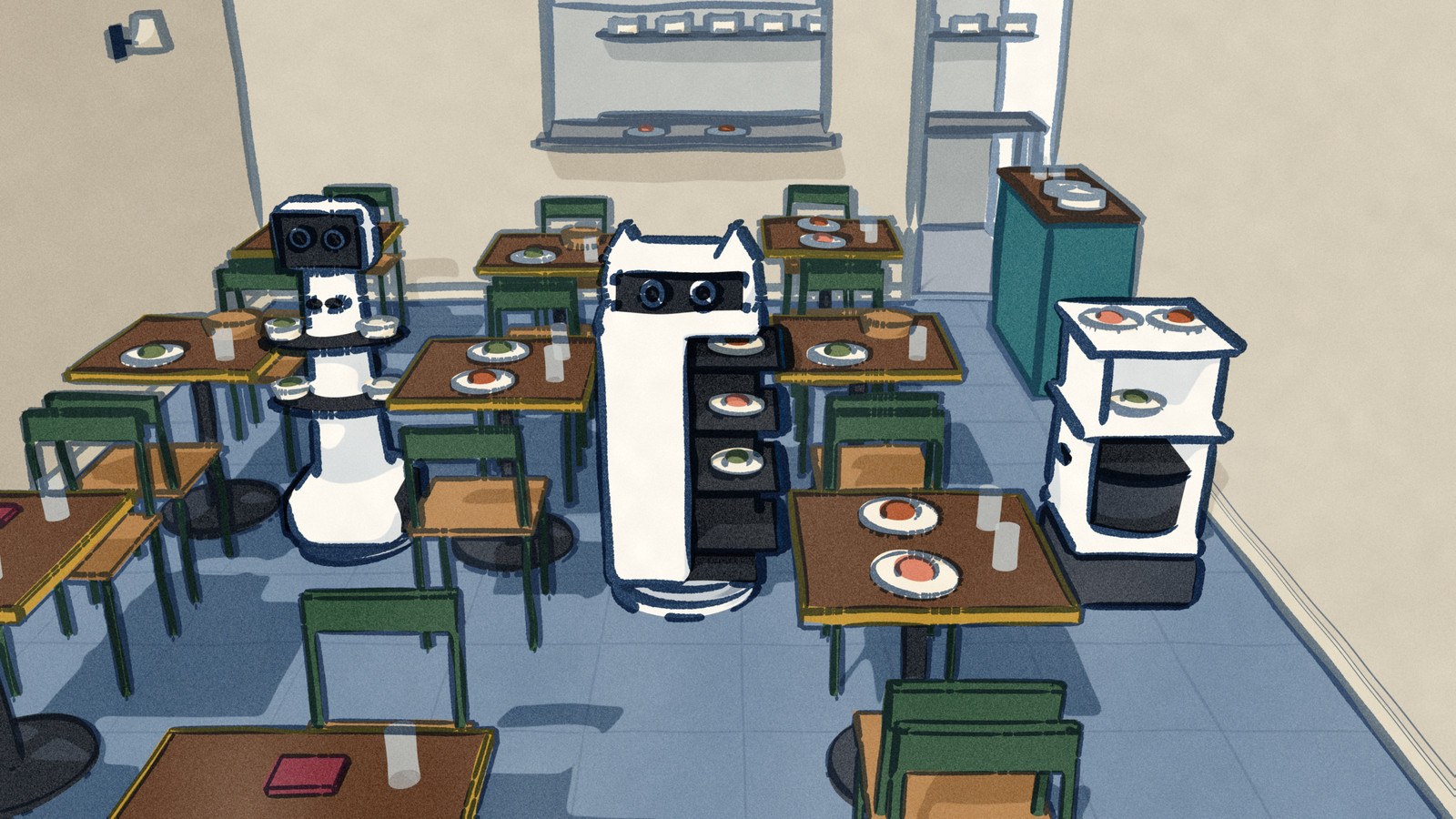
This page checks
- Body widthHow wide the robot is, and its depth
- Narrowest aisleThe passage width each maker lists
- LoadTotal payload and the trays it sits on
- RuntimeHours on one charge, maker figure
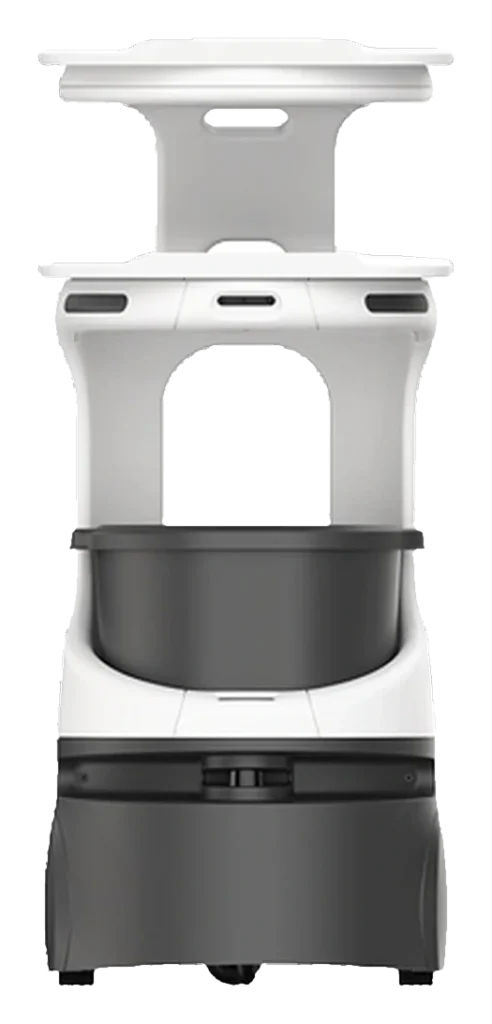
Bear Robotics
Where to buy
Not in the product menu on Bear's home page; its Servi page is still live
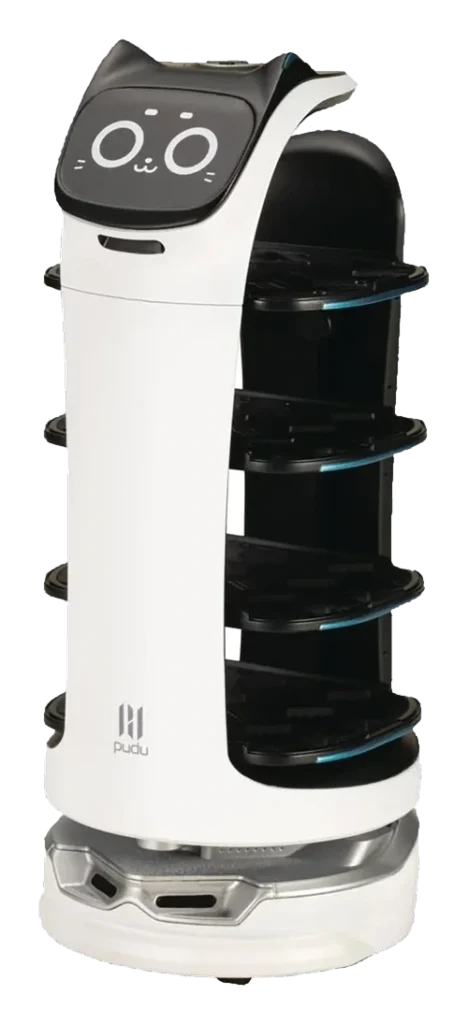
Pudu Robotics
Where to buy
Pro Launches with Upgraded Navigation Hardware and Revised Interactive Display
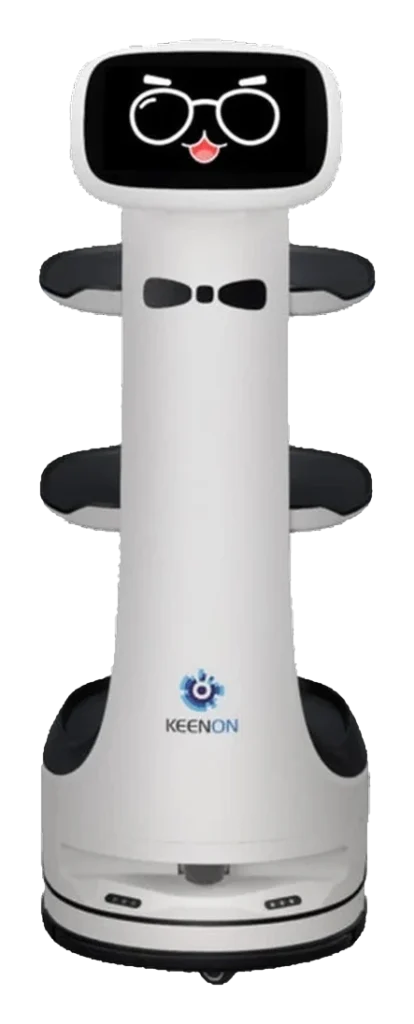
Keenon Robotics
Where to buy
Navigation software update improves obstacle handling in busy venues
Full specifications13 figures on record · 11 differ
Some links earn Robovations a commission. Nothing on this page is ranked by it.
 Servi
Servi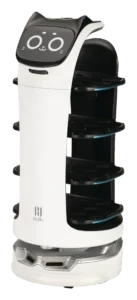 BellaBot
 DinerBot T10
Floor plan
What each runner asks of the room
BellaBot is the widest body at 22.24 in and lists a 27.56 in travel path. The T10 lists 23.23 in. No minimum aisle was found for Servi. Servi carries 66 lb; BellaBot and the T10 carry about 88 lb on four trays.
17.5in wide
Depth 16.9 in, height 41.2 in.
Bear Robotics Servi page22.24in wide
Depth 21.14 in, height 50.79 in.
Pudu BellaBot page19.13in wide
Depth 21.85 in, height 55.1 in (139.9 cm; the page also prints 54.69 in).
Keenon T10 pageNot found
Servi page, Bear FAQ and a distributor page give no minimum passage width.
Searched maker page, FAQ, distributor page27.56in travel width
Maker lists 27.56 in (70 cm). Minimum turning width 25.59 in (65 cm), newest app version needed.
Pudu product guide23.23in passage width
Maker page prints 23.23 in (59 cm).
Keenon T10 page66lb total
22 lb (10 kg) per tray. Two trays plus a bus tub.
Bear Robotics Servi page88lb total
About 22 lb (10 kg) per tray across four trays.
Pudu BellaBot page88lb total
Maker lists 88 lb (40 kg). A reseller spec sheet gives four trays at 22 lb (10 kg) each.
Keenon T10 page; reseller sheet for trays10–12hrs
Bear's FAQ says 8 to 12 hrs on average, 4 to 5 hrs to recharge.
Bear Robotics Servi page and FAQ13hrs, no load
Charging time 4.5 hrs.
Pudu BellaBot page9–12.5hrs
Charging 5.5 hrs. Maker says it varies with use and settings.
Keenon T10 pageSame on all three: each maker lists camera-based obstacle sensing (Servi: LiDAR and cameras; BellaBot: LiDAR and 3 depth cameras; T10: 4 stereo sensors and 1 RGB camera).
Sources
Where every figure comes from
- Servi · bearrobotics.ai/servi and bearrobotics.ai/faq (first-party); robotlab.com listing for the minimum-aisle search
- BellaBot · pudurobotics.com BellaBot page and academy.pudutech.com product guide (first-party)
- DinerBot T10 · keenon.com T10 page (first-party); automiqrobotics.com.au reseller sheet for trays
Every figure was read from the page named on 2 Oct 2026. "Not found" means the pages listed were searched and are silent; it does not mean the maker lacks the figure.
Questions
What readers ask
How wide is each robot, and how narrow an aisle can it pass?
Servi is 17.5 in wide, T10 19.13 in, BellaBot 22.24 in. BellaBot lists a 27.56 in travel path and the T10 23.23 in. No minimum aisle was found for Servi.
How long does setup take before service can begin?
Bear’s FAQ says installation is usually a couple of hours, with field engineers staying several serving periods. No setup time was found on the Pudu or Keenon pages checked.
Can any of these handle a multi-floor restaurant?
None of the maker pages checked describes elevator or multi-floor use. Pudu’s guide lists indoor, flat and smooth ground and a 5° maximum slope; Keenon lists a 5° slope for the T10.
Common questions