Skip to content
Saved

Technology shift/Robot Vacuums/4 robots compared/Reviewed Jul 2026

Bagged vs bagless self-emptying docks: which costs less?
Sealed bag auto-empty against Bagless cyclonic or reusable-bin auto-emptyTwo architectures for the same job. Each is documented to work in conditions the other is documented to struggle in.
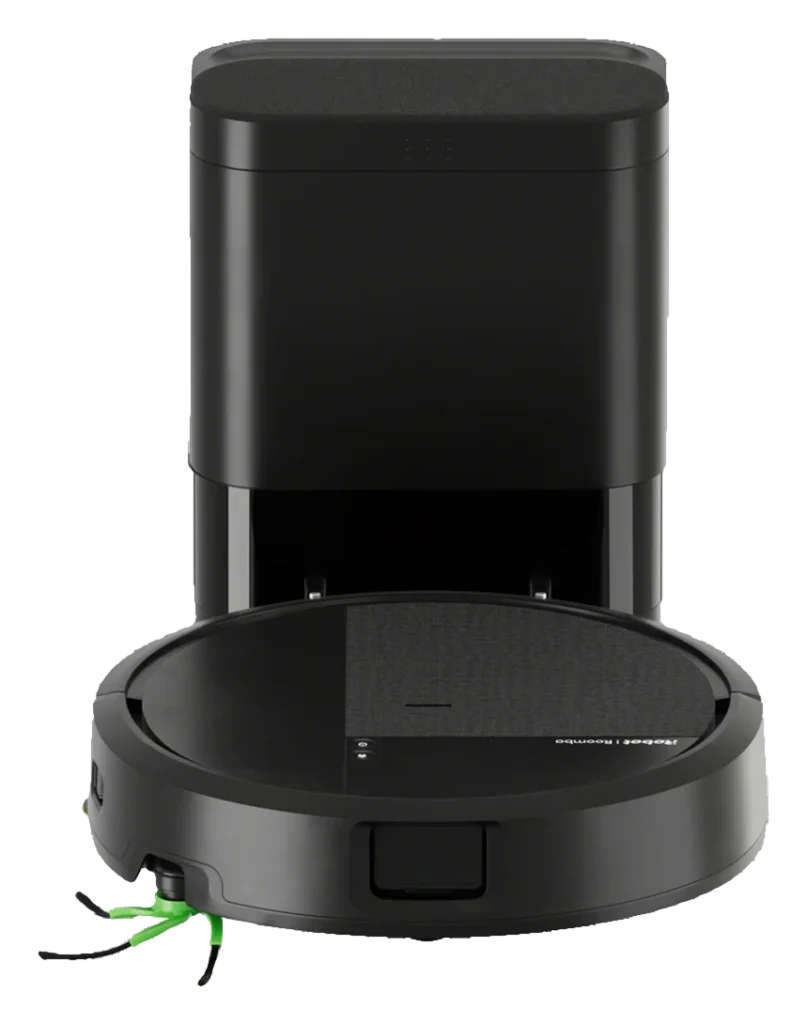
iRobot Roomba Max 715View recordiRobotIIIMax 715Navigation approachSealed bag auto-empty
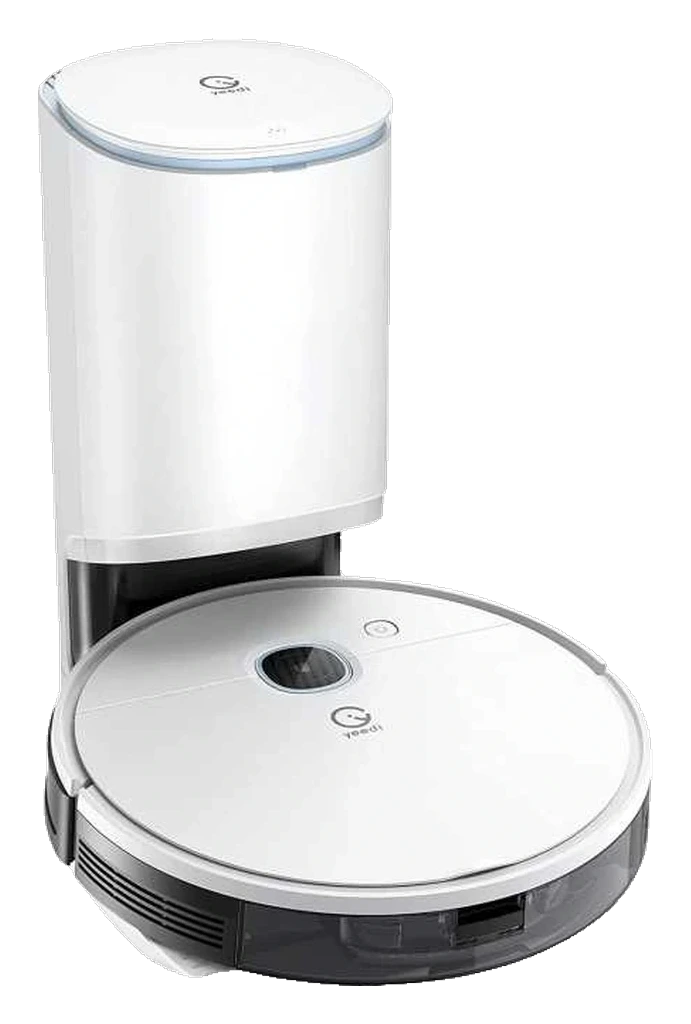
Yeedi Vac StationView recordYeediIIIVac StationNavigation approachSealed bag auto-empty
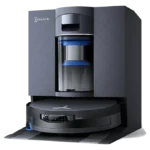
Ecovacs Deebot X12 OmniCycloneView recordEcovacsIIIX12 OmniCycloneNavigation approachBagless cyclonic or reusable-bin auto-empty$899
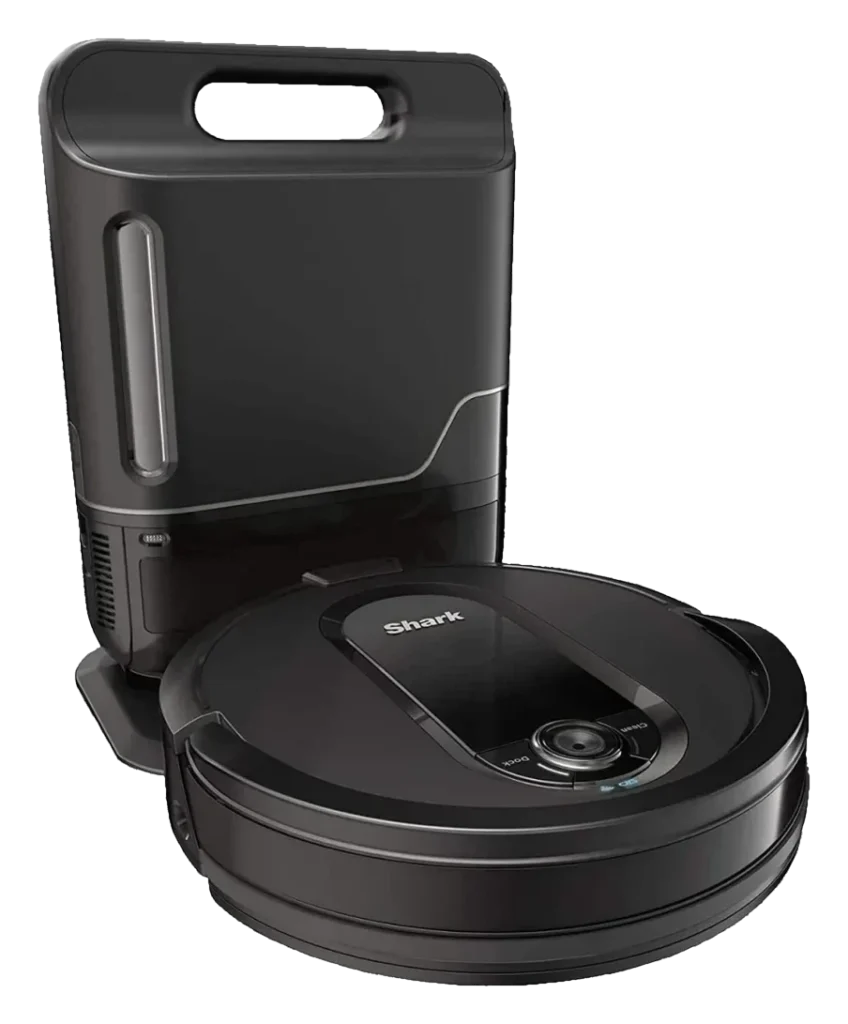
Shark IQ Robot Self-Empty XLView recordSharkIIIIQ Robot Self-Empty XLNavigation approachBagless cyclonic or reusable-bin auto-empty
Full specifications20 measurements · 62 of 80 documented
MSRP
Not documented
$499
$899
$549.99
Rated runtime
120 min
200 min
Not documented
90 min
Charge time
180 min
300 min
145 min
180 min
Battery capacity
72 Wh
45 Wh
Not documented
54 Wh
Battery type
Li-ion
Li-ion
Not documented
Li-ion
Suction power
30,000 Pa
3,000 Pa
22,000 Pa
Not documented
Noise level
68 dB
66 dB
61.1 dB
67 dB
Navigation
ClearView Pro LiDAR with PrecisionVision AI obstacle recognition; 3D mapping, up to five saved maps
3D visual SLAM camera mapping; bump and infrared obstacle sensing
LiDAR + AIVI 3D camera + AI obstacle avoidance
Camera-based vSLAM mapping (Shark IQ Navigation) with bumper sensors, gyroscope, and cliff sensors.
Connectivity
wifi, alexa, google_home
wifi, alexa
wifi, alexa, google_home
wifi
Dimensions (W×D×H)
13.4 × 13.4 × 3.6 in
13.8 × 13.8 × 3.9 in
13.9 × 13.82 × 3.86 in
12.9 × 12.9 × 3.5 in
Weight
7.9 lbs
6.83 lbs
12.13 lbs
5.7 lbs
Form factor
round
Not documented
squared
Not documented
Readiness
Promising Progress
Ready Now
Promising Progress
Ready Now
Released
Jul 2026
Jul 2021
Apr 2026
Jul 2019
Dock type
Auto-empty
Auto-empty, dust only
Auto-empty (bagless), mop washing, drying
Auto-empty
Threshold climb
0.6 in
Not documented
0.9 in
Not documented
Onboard dustbin
Not documented
450 mL
250 mL
Not documented
Dust bag capacity
Not documented
2.5 L
Not documented
1.9 L
Water tank capacity
Not documented
240 mL
110 mL
Not documented
Mop lift
Not documented
Not documented
15 mm
Not documented

The technological divide

Two architectures, two failure modes

The category has split into two architectural approaches. Each works well in some conditions and breaks down in others.

Approach A: Sealed disposable-bag docks

Sealed bag auto-empty

EVERY MONTH BILLEDMONTH 1MONTH 121

Some features stay locked behind a recurring paid subscription.

The robot deposits debris into a sealed disposable bag inside the dock. Once full, the bag is removed and replaced. Documented bag life ranges from about two weeks (Yeedi Vac Station) to roughly two months (iRobot Roomba Max 715).

  • Sealed bag limits dust contact
  • Long field track record
  • Recurring bag purchase required
  • Bag life varies by household
vs
Approach B: Bagless cyclonic or bin docks

Bagless cyclonic or reusable-bin auto-empty

NOTHING RECURRINGMONTH 1MONTH 12

Full features work with no recurring subscription fee.

Cyclonic airflow or a reusable rigid bin collects debris without a disposable bag. No bag purchases are required, but the container needs manual emptying more often: every 3-5 cycles for cyclonic docks, every 4-6 weeks for reusable-bin docks.

  • No recurring bag purchase
  • Eliminates bag waste stream
  • More frequent manual emptying
  • Emptying exposes container contents

Where each robot sits

Does the architecture pay off?

Horizontal: where each robot sits between the two architectures. Vertical: its documented result on the headline test.
Handles itPartialStruggles
Ecovacs Deebot X12 OmniCycloneNo bag
Shark IQ Robot Self-Empty XLNo bag
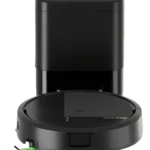
iRobot Roomba Max 715Bag required
Yeedi Vac StationBag required
ASealed bag auto-emptyBagless cyclonic or reusable-bin auto-emptyB

Vertical axis: documented result on No recurring bag purchase required

What each architecture can and can’t do

Capability tests

Each capability is documented from owner reports, manufacturer specifications, or third-party reviews. No in-person testing.

CapabilityiRobot Roomba Max 715Yeedi Vac StationEcovacs Deebot X12 OmniCycloneShark IQ Robot Self-Empty XL
No recurring bag purchase requiredDock consumable typeBag requiredBag requiredNo bagNo bag
Manual container emptying frequencyOwner-reported cadence~60 days2-5 weeks3-5 cycles4-6 weeks
Documented recurring bag costManufacturer or owner-reported figures$20-30~$25/mo$0$0
Dust exposure during emptyingDocumented in product recordSealed bagSealed bagDust cloudOpen bin
Filter maintenance cadenceSeparate from bag/bin systemMonthly rinseMonthlyMonthlyEvery 2-4 runs

What the architecture difference means

Different homes, different sensor stacks

Where each architecture fits, by condition.

Homes with pets or heavy daily debris

Households that fill a bag within two weeks push bagged-dock costs toward the documented high end: Yeedi Vac Station owner reports cite roughly $25 in monthly bag purchases. Bagless docks shift that same debris volume into more frequent manual dumping.

Owners who travel or skip weekly upkeep

Bagged docks documented at 60-day bag-change intervals (iRobot Roomba Max 715) tolerate longer stretches between owner attention than cyclonic docks, which need manual dumping every 3-5 cycles per the product's own assessment record. Owners traveling weekly meet that gap.

Budget buyers weighing total dock cost

At the budget tier, the Yeedi Vac Station lists at $399-$499 plus roughly $25 monthly in bag purchases. The Shark IQ Self-Empty XL's dock eliminates that bag cost entirely, though its own purchase price is not published in manufacturer listings.

Common questions

What readers ask about this comparison.

Q.
Do bagless self-emptying docks cost less than bagged docks overall?
Cost splits differently by architecture. Bagged docks carry a recurring bag expense documented at $20-30 every 60 days for the iRobot Roomba Max 715 and roughly $25 a month for the Yeedi Vac Station. Bagless docks on the Ecovacs Deebot X12 OmniCyclone and Shark IQ Self-Empty XL eliminate that purchase but require manual emptying every 3-5 cycles and 4-6 weeks respectively, per each product’s assessment record.
Q.
How often do bagless docks need manual emptying compared to bagged docks?
Manufacturer and owner-report data show the cyclonic Deebot X12 OmniCyclone needs manual dumping every 3-5 cycles, versus 8-10 cycles for sealed-bag competitors per its own product record. The reusable-bin Shark IQ Self-Empty XL is documented at every 4-6 weeks. Bagged docks on the Max 715 and Vac Station are changed every 60 days and 2-5 weeks.
Q.
Does emptying a bagless dock expose you to more dust than a bagged dock?
The Deebot X12 OmniCyclone’s own FAQ states that manual container clearing exposes the user to a dust cloud, a trade-off of cyclonic airflow instead of sealed bag compression. The Shark IQ Self-Empty XL’s reusable bin is not documented with the same dust-cloud description; its product record notes only routine outdoor bin emptying.
Q.
Are bagless self-emptying docks less reliable than bagged docks?
Reliability tracks product maturity more than bag architecture in the Robovations dataset. The Shark IQ Self-Empty XL, shipping since 2019, carries a documented reliability score of 82. The 2026-model Ecovacs Deebot X12 OmniCyclone, also bagless, carries a provisional reliability score of 42 pending longer owner history. The bagged comparison robots split the same way by age: the 2021 Yeedi Vac Station scores 84; the 2026 iRobot Roomba Max 715 scores 42.
Q.
Do filter costs apply to bagless docks the same way they apply to bagged docks?
Yes. Filter maintenance is documented separately from the bag or bin system on all four robots. The Max 715 and Vac Station both list monthly filter cleaning with periodic replacement, and the bagless X12 OmniCyclone and Shark IQ Self-Empty XL carry their own monthly and every-2-to-4-run filter schedules. Eliminating the bag does not eliminate filter upkeep.
Next up

Self-emptying without a mop: vacuum-only docks for allergy and pet homes

Read the comparison
Comparison ID: RV–CMP–7939 · Last reviewed Jul 28, 2026 · Based on owner reports, manufacturer documentation, and firmware release notes