
- Changes
- 2
- Tracking since
- Dec 2025
- Latest
- Jun 15, 2026
- Net movement
- Classification stable
- 2026
-
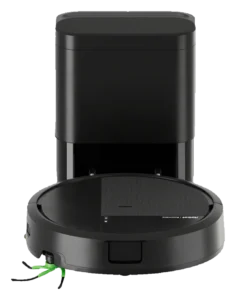
iRobot Roomba Max 715 launches commercially in the UK
iRobot released the Roomba Max 715 commercially in the UK as part of a June 2026 line refresh, positioning it as the vacuum-only flagship in the current Roomba lineup at a documented £549 entry point.
Full assessment5 claims · 4 technical notes · 2 sources
Where it standsAutonomy LadderIIIIIIIVVLevel IIIConditional AutonomyHuman ReadinessReady NowNew to MarketWaitKnown IssuesNot ratedRobovations Score040557085Not scoredWhat happenedThe release confirms dock self-empty and sealed multi-stage filtration as standard. US availability and final US pricing are unconfirmed; watch for iRobot retailer listings and a formal US launch announcement.
Bottom lineThe Max 715 is a confirmed commercial release in the UK with documented specs; the US market timeline is an open question that limits full readiness assessment.
ImpactOn autonomy
- vSLAM camera navigation confirmed; no new autonomy architecture beyond j-series baseline
- Multi-floor persistent mapping inherited from j-series; no documented generalization additions
- Obstacle avoidance via front camera continues Level III conditional-autonomy classification
On readiness
- UK commercial availability confirmed at documented price; US rollout timeline not yet announced
- Self-emptying dock included in launch configuration; 60-day debris capacity documented by manufacturer
- Sealed HEPA-grade filtration with washable pre-filter standard; consumable costs documentable
Claim check5 maker claims checked against the record. Open one to read the finding.
Flagship vacuum in the 2026 Roomba lineup
Documented findingVacuum-only; no mop. Combo tier costs more. "Flagship" applies only to the vacuum-only segment of the refreshed line.Self-emptying dock stores up to 60 days of debris
Documented findingManufacturer documentation confirms 60-day capacity; actual interval depends on home dust load and pet presence. Bag replacement cost runs roughly $20-30 per cycle.Sealed filtration for allergen containment
Documented findingMulti-stage sealed system with washable pre-filter documented. HEPA-grade claim consistent with j-series spec history; independent lab verification for the 715 specifically not yet published.Strong obstacle avoidance via camera
Documented findingCamera-based obstacle detection is a j-series standard; no new sensor hardware documented for the Max 715 beyond the established vSLAM baseline. Performance on novel obstacles not independently tested.Successor improves on the Max 705
Documented findingManufacturer notes sealed filtration upgrade and dock firmware improvements. Exact suction or navigation changelog not published at launch. Changes are incremental, not architectural.Evidence2 sources · all linked
- 1Tom's Guide15 Jun 2026
- 2The Verge15 Jun 2026
Technical notes4 sectionsNavigation Architecture
The Roomba Max 715 uses vSLAM (visual simultaneous localization and mapping) with a front-facing camera for obstacle detection and floor mapping. No LiDAR component is documented. Multi-floor map persistence is inherited from the j-series platform. This architecture places the unit at Level III (Conditional Autonomy) on the Robovations Autonomy Ladder.
Dock and Filtration
Self-emptying dock stores up to 60 days of debris in a disposable bag. Sealed multi-stage filtration system includes a washable pre-filter; primary filter is replaceable. Dock footprint documented at approximately 18 x 17 inches. Bag-free manual empty supported but not recommended by manufacturer for allergen-sensitive households.
Core Specifications
Suction rated at 8,500 Pa. Battery capacity 72 Wh; runtime up to 120 minutes. Charge time approximately 180 minutes. Weight 7.9 lbs. Diameter 13.4 inches; height 3.6 inches. 2.4 GHz Wi-Fi required; Alexa and Google Home integration standard. Noise level documented at approximately 68 dB.
Market Position
Priced at £549 in the UK at launch. Positioned as vacuum-only flagship below the Combo tier. Replaces the Max 705 in the lineup; exact differences limited to filtration and dock firmware per manufacturer disclosures at launch.
- 2025
-
Shenzhen Picea Robotics acquisition reshapes iRobot brand ownership
iRobot passed to new ownership under Shenzhen Picea Robotics after the Amazon acquisition fell through, restructuring the company's manufacturing relationships and supply chain.
Full assessment4 claims · 3 technical notes · 2 sources
Where it standsAutonomy LadderIIIIIIIVVLevel IIIConditional AutonomyHuman ReadinessReady NowNew to MarketWaitKnown IssuesNot ratedRobovations Score040557085Not scoredWhat happenedThe acquisition closes iRobot's independent operating chapter and introduces new questions about long-term software support and US market regulatory treatment for Roomba products.
WatchingFor changes to the iRobot Home app support cadence and any US government guidance on connected home devices from Chinese-owned entities.
Bottom lineThe acquisition is a structural business change, not a product capability event; near-term Roomba functionality is unchanged but long-term software support and regulatory posture are open questions for buyers with privacy or continuity concerns.
ImpactOn autonomy
- No navigation architecture change documented under new ownership; vSLAM platform continues
- Software update cadence and AI roadmap under Picea Robotics not yet publicly disclosed
- Long-term firmware support timeline for existing j-series platform is unconfirmed
On readiness
- Ownership transition introduces supply-chain and support continuity uncertainty for buyers
- US regulatory environment for Chinese-owned connected home devices adds an unresolved risk factor
- Current Roomba app functionality and cloud mapping services unchanged at time of transition
Claim check4 maker claims checked against the record. Open one to read the finding.
iRobot remains a trusted US robotics brand
Documented findingOwnership transferred to Shenzhen Picea Robotics; iRobot operates as a brand under Chinese ownership. Manufacturing and corporate structure have changed.Roomba software and cloud services continue as before
Documented findingNo documented service interruption at time of transition. Long-term commitments to the iRobot Home app and map-storage infrastructure under the new owner are not publicly formalized.New ownership brings manufacturing advantages
Documented findingPicea Robotics has manufacturing presence in Shenzhen. Direct cost or quality-control impact on the Max 715 production run is not yet documented in third-party reporting.Product roadmap is unchanged
Documented findingThe June 2026 line refresh, including the Max 715, proceeded under Picea Robotics ownership, suggesting continuity. Roadmap beyond 2026 is not publicly disclosed.Evidence2 sources · all linked
12Jan 2025Dec 2025filed 14 Dec 2025- 1The Verge15 Jan 2025
- 2Tom's Guide10 Feb 2025
Technical notes3 sections
Acquisition Context
Amazon’s proposed acquisition of iRobot was blocked by EU regulators in early 2024 on competition grounds. Following that collapse and a period of financial difficulty, iRobot was acquired by Shenzhen Picea Robotics, a Chinese robotics manufacturer. The acquisition closed in 2025. iRobot continues to operate under its own brand name and Bedford, Massachusetts headquarters designation in public communications.
Impact on Roomba Max 715 Specifically
The Max 715 is a product developed and launched under Picea Robotics ownership. Its vSLAM navigation, app integration, and dock architecture draw on the existing j-series platform. No new sensor hardware or autonomy architecture is attributed to the ownership change. The Roomba Max 715 uses 2.4 GHz Wi-Fi for cloud mapping and scheduling; data-handling practices under Picea Robotics ownership are governed by iRobot’s published privacy policy, which has not been independently audited for post-acquisition changes as of June 2026.
Regulatory Watch
US federal attention to connected home devices from Chinese-owned manufacturers is an active policy area. No specific enforcement action against iRobot or Picea Robotics products has been documented. Buyers in sensitive or regulated environments should monitor US government guidance on this category.