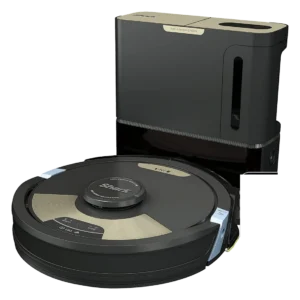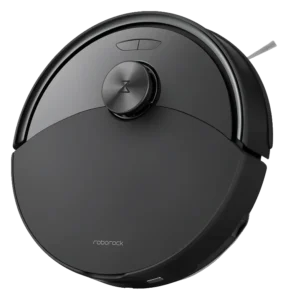
Roborock Q10 S5 · Shark AI Ultra 2-in-1
All robot vacuums. Every measure below is plotted against the full class, so a difference can be read against how much the class itself varies.
- Roborock Q10 S5
- Shark AI Ultra 2-in-1
What each one does on its own.
The Autonomy Ladder is the same five rungs for every robot on the site. A rung describes the conditions a robot handles without you, not how good it is.
Where they actually differ.
The Robovations Score is nine inputs across three pillars, each weighted as shown and each scored so that more is better. A robot can lead on one and trail on another, which is the point of showing them apart. Cost of ownership and data handling are reported on each robot's own page and are never averaged into the score.
Capability
- Roborock Q10 S550
- Shark AI Ultra 2-in-175
- Roborock Q10 S550
- Shark AI Ultra 2-in-178
- Roborock Q10 S525
- Shark AI Ultra 2-in-172
- Roborock Q10 S550
- Shark AI Ultra 2-in-175
Dependability
- Roborock Q10 S557
- Shark AI Ultra 2-in-197
- Roborock Q10 S565
- Shark AI Ultra 2-in-1100
- Roborock Q10 S50
- Shark AI Ultra 2-in-185
Ownership burden
- Roborock Q10 S540
- Shark AI Ultra 2-in-172
- Roborock Q10 S565
- Shark AI Ultra 2-in-1100
How far apart is a long way?
A number only means something next to the spread it sits in. Each track below is the real range across every classified robot in the class, with the median marked.
- Roborock Q10 S5$399.99
- Shark AI Ultra 2-in-1$699
- Roborock Q10 S5180 min
- Shark AI Ultra 2-in-1110 min
- Roborock Q10 S510.5 lbs
- Shark AI Ultra 2-in-114.5 lbs
- Roborock Q10 S53.9 in
- Shark AI Ultra 2-in-13.9 in
Not compared, because fewer than two of these robots carry a published figure: Suction, Charge time, Noise.
What the numbers leave out.
The trade-off
What each design gives up to be good at what it is good at.
No auto-empty, anywhere: Roborock states this chassis cannot self-empty even docked on a Q10 S5+ base, so the automation gap is permanent, not upgradable.
Skipping the auto-empty dock still delivers the full 180-minute runtime Roborock documents for this model on its 5,200 mAh pack.
Navigation with no measured sense of direction: Tom’s Guide’s 75% coverage figure means real gaps even on straightforward layouts.
2-in-1 consolidation vs. specialized depth: Single unit reduces hardware footprint and setup complexity, but neither vacuum nor mop capability reaches specialist-class performance. You gain convenience; you sacrifice maximum effectiveness in both domains.
AI obstacle avoidance vs. false negatives: Visual detection plus LiDAR handles known object types (cables, blocks, pet waste) reliably, but reflective surfaces and novel small obstacles occasionally bypass detection, requiring human backup oversight.
Who each one is wrong for
Stated by the record itself. A robot being wrong for a household is a fact about fit, not a fault.
- Owners wanting any form of auto-emptying
- Roborock states explicitly the Q10 S5 cannot self-empty even when placed on a Q10 S5+ dock; there is no upgrade path.
- Cluttered floors with cords or pet toys
- Tom's Guide reports frequent tangles with cords and strandings on furniture legs, describing navigation with no sense of direction.
- Owners who cannot supervise early runs
- Constant supervision is what Tom's Guide's review found necessary; this isn't a robot to start and walk away from initially.
- Heavy pet-shedding households needing frequent emptying
- The onboard bin holds 330 ml; heavy shedding can fill that daily with no dock automation to offset manual emptying.
- Multi-level homes requiring frequent inter-floor operation
- Robot cannot climb stairs; cliff detection prevents falls but requires manual carrying between levels or permanent no-go zones per floor. Layouts with multiple levels of equal cleaning priority are poor fits.
- Homes with high dynamic clutter and novel obstacles
- Toys, cables, and unfamiliar objects require regular clearing or operator fallback. AI detection handles known categories (clothing, small blocks, pet waste) but occasionally misses very small items or reflective surfaces on first encounter.
- Owners unwilling to handle the mop side by hand
- Mopping means fitting a pad and filling the robot's water tank, then washing the pad and emptying the tank afterwards. The base does not refill or wash anything. Vacuum-only operation works, but the mop half of the 2-in-1 goes unused.
- Thick-carpet or shag-rug environments
- High-pile severely reduces suction effectiveness and creates wet spots when mop mode is used. Designed for sealed hard floors and low-loop carpet; performance on deep pile is demonstrably compromised per owner reports.
- Buyers who want no manufacturer account at all
- Setup, scheduling, no-go zones and the saved map all require a Shark account and a network connection. The robot will still clean from its on-board controls without them, but the map and every app-side feature are unavailable.
What stays your job
The upkeep ownership hands back to you, whatever the autonomy level says.
- After every use: Remove and wash the VibraRise mop cloth and empty unused water from the tank after mopping; Roborock’s manual calls for air-drying both to prevent odors.
- Weekly: Empty the onboard dustbin by hand; there is no auto-empty dock, and Roborock states the robot cannot use the Q10 S5+ dock later.
- Monthly: Clean the main brush and rinse the washable filter; Roborock’s printed schedule is every 2 weeks for both, with 24 hours of drying before the filter goes back in.
- Monthly: Unscrew and clean the side brush, per the manual’s stated cadence.
- Every 3-6 months: Replace the side brush and the VibraRise mop cloth; the manual rates both at 3-6 months.
- Annually: Replace the main brush and washable filter; the manual rates both at 6-12 months.
- As needed: Wipe the cliff, carpet, and obstacle-avoidance sensors and charging contacts, clean the omnidirectional and main wheels, and tidy cords from the floor before runs.
- As needed: Empty the self-empty base into the trash. It is bagless and Shark rates it to approximately 60 days of capacity, so there is no bag to buy.
- After each mop session: Remove the mop pad, rinse or machine wash it and let it dry. The pads are reusable microfiber and are replaced only once worn out.
- After each mop session: Empty the robot’s water tank rather than leaving water standing in it.
- Monthly: Rinse the primary and HEPA filters under running water and dry them fully before refitting, no replacement cost.
- Monthly: Clear the brush roll and side brush of hair and fiber wrapping, no cost.
- Quarterly: Wipe the dock and robot charging contacts, and clear the base’s debris path of anything lodged in it.
How much each of these is standing on.
Classifications rest on different depths of evidence. A pre-release assessment and a verified one are not the same kind of claim.
| Robot | Evidence status | Sources reviewed | Last assessed |
|---|---|---|---|
| Roborock Q10 S5 | Pending | 1 | Jul 2026 |
| Shark AI Ultra 2-in-1 | Verified | 13 | Aug 2026 |
Add a robot
Comparing across classes is allowed — the page will switch to per-class positioning and tell you it has.