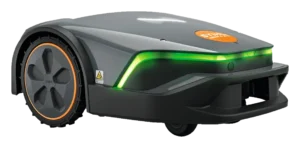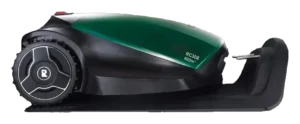
Robomow RC308 Pro X · Stihl iMow 6 EVO
All robot lawn mowers. Every measure below is plotted against the full class, so a difference can be read against how much the class itself varies.
- Robomow RC308 Pro X
- Stihl iMow 6 EVO
What each one does on its own.
The Autonomy Ladder is the same five rungs for every robot on the site. A rung describes the conditions a robot handles without you, not how good it is.
Where they actually differ.
The Robovations Score is nine inputs across three pillars, each weighted as shown and each scored so that more is better. A robot can lead on one and trail on another, which is the point of showing them apart. Cost of ownership and data handling are reported on each robot's own page and are never averaged into the score.
Capability
- Robomow RC308 Pro X68
- Stihl iMow 6 EVO76
- Robomow RC308 Pro X50
- Stihl iMow 6 EVO70
- Robomow RC308 Pro X50
- Stihl iMow 6 EVO45
- Robomow RC308 Pro X64
- Stihl iMow 6 EVO72
Dependability
- Robomow RC308 Pro X88
- Stihl iMow 6 EVO62
- Robomow RC308 Pro X74
- Stihl iMow 6 EVO0
- Robomow RC308 Pro X25
- Stihl iMow 6 EVO72
Ownership burden
- Robomow RC308 Pro X46
- Stihl iMow 6 EVO62
- Robomow RC308 Pro X51
- Stihl iMow 6 EVO80
How far apart is a long way?
A number only means something next to the spread it sits in. Each track below is the real range across every classified robot in the class, with the median marked.
- Robomow RC308 Pro X70 min
- Stihl iMow 6 EVO150 min
- Robomow RC308 Pro X25.1 lbs
- Stihl iMow 6 EVO33.5 lbs
- Robomow RC308 Pro X8.3 in
- Stihl iMow 6 EVO11.4 in
Not compared, because fewer than two of these robots carry a published figure: Price, Suction, Charge time, Noise.
What the numbers leave out.
The trade-off
What each design gives up to be good at what it is good at.
Random-path coverage works, but there is no guarantee of uniform pass distribution: owner reports note occasional missed strips near the boundary in a given session, with full coverage achieved over multiple runs.
Perimeter wire is the system’s foundation and its single point of maintenance risk: a wire break from an aerator or root heave requires tracing and splicing before the mower can operate.
Three EVO generations in, STIHL still buries the boundary wire; anyone hoping the EVO name meant a move to wire-free navigation will not find it here.
The extra size and a slope rating up to 55 percent with the kit cost more than the 5 EVO, and dealer-set pricing makes the actual number hard to pin down before a quote.
German testers found a clean mulching cut, but also a documented failure mode: the machine can be stranded on the smallest edges of steep ground.
Who each one is wrong for
Stated by the record itself. A robot being wrong for a household is a fact about fit, not a fault.
- Yards requiring wire-free virtual boundary setup
- No GPS or camera-based virtual boundary option exists. Owners who cannot or will not install perimeter wire have no workaround for this model.
- Large yards above 800 m² needing complete, predictable coverage
- Random-path mowing on areas at the model's coverage limit risks uneven pass distribution. Larger or coverage-critical yards need the RS or higher-capacity line.
- Heavily landscaped yards with dense internal obstacles
- Interior islands and complex garden beds require additional guide wires. The more internal wiring involved, the greater the planning and maintenance burden.
- Owners expecting zero-setup deployment
- Perimeter wire installation is mandatory before first use. Professional installation is available but adds cost; no plug-and-play configuration exists for this model.
- Anyone trying to avoid wire installation
- Three EVO generations in, the boundary is still a buried wire with the install labor and repair risk that implies; no wire-free option exists in this line.
- Lawns under a quarter acre
- A rated ceiling of about 0.74 acres is well beyond what a small lawn needs; the 4 or 5 EVO covers that area at a lower price point.
- Steep edges and corners at the lawn boundary
- German testers document the machine getting stranded specifically at small edges, where its weight becomes an obstacle it cannot clear on its own without a manual reset.
- Buyers wanting a transparent, published price
- Pricing is dealer-set rather than list, which makes the real cost hard to compare against other autonomous mowers before requesting a dealer quote in person.
What stays your job
The upkeep ownership hands back to you, whatever the autonomy level says.
- Weekly: Clear grass clippings and debris from blade disc, undercarriage, and sensor surfaces.
- Monthly: Inspect perimeter wire at visible surface sections for damage or displacement; check dock contact pins for corrosion.
- Every 3-6 months: Replace mulching blade disc; manufacturer guidance recommends at least once per mowing season.
- Seasonally: Store mower indoors over winter with battery partially charged; clean dock and charging contacts before returning to service in spring.
- As needed: Trace and splice any perimeter wire break using a wire-break detector before resuming operation.
- As needed: Reprogram mowing zones or schedule after yard layout changes or guide-wire additions for internal obstacles.
- Weekly: Inspect the blades, L-pins, charging contacts, hood and wheels; Stihl publishes no calendar interval and ties inspection frequency to conditions, so treat a weekly look as the floor.
- Monthly: Budget a blade change on roughly this cadence; Stihl documents blade life of “several weeks”, forbids sharpening, and requires replacing all blades as a set with fresh L-pin inspection.
- As needed: Clean the mower on its side with a wooden rod or soft brush and a gentle water jet, never a pressure washer; wet-weather mowing shortens the interval, and dirt between blade disk and deck raises power draw.
- As needed: Replace the mowing-deck components (blade disk with L-pins, blades, levers and nut) once the wear marks rub through or the L-pins are half worn.
- As needed: Repair a cut perimeter or guide wire with STIHL’s gel-filled wire connectors; the manual names de-thatching, aerating and string trimming as the operations that cut wire.
- Seasonally: For winter, set hibernation mode, clean, fully charge, and store the mower indoors; cover the docking station electronics with the all-weather container, or dismantle the station and grease the loose wire ends.
How much each of these is standing on.
Classifications rest on different depths of evidence. A pre-release assessment and a verified one are not the same kind of claim.
| Robot | Evidence status | Sources reviewed | Last assessed |
|---|---|---|---|
| Robomow RC308 Pro X | Pending | 1 | Aug 2026 |
| Stihl iMow 6 EVO | Provisional | 3 | Aug 2026 |
Add a robot
Comparing across classes is allowed — the page will switch to per-class positioning and tell you it has.