Skip to content
Saved
Comparison · 2 robots

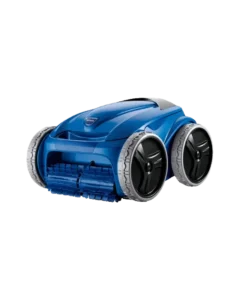
Polaris 9450 Sport · Polaris Freedom

All robot pool cleaners. Every measure below is plotted against the full class, so a difference can be read against how much the class itself varies.

  1. Polaris 9450 Sport
  2. Polaris Freedom
Polaris

Polaris 9450 Sport

Autonomy
II Assisted Autonomy
Score
Not scored
Readiness
Ready Now
Price
$999confirmed
Polaris

Polaris Freedom

Autonomy
II Assisted Autonomy
Score
71/100 Strong
Readiness
Ready Now
Price
$1,149confirmed

Up to three

01 Classification

What each one does on its own.

The Autonomy Ladder is the same five rungs for every robot on the site. A rung describes the conditions a robot handles without you, not how good it is.

V
Generalized
Any task, any setting
IV
Environmental
Handles new obstacles without help
III
Conditional
Finishes familiar jobs on its own
II
Assisted
Runs preset routines, needs rescue
Polaris 9450 SportPolaris Freedom
I
Manual
One action, on command
02 Assessment

Where they actually differ.

The Robovations Score is nine inputs across three pillars, each weighted as shown and each scored so that more is better. A robot can lead on one and trail on another, which is the point of showing them apart. Cost of ownership and data handling are reported on each robot's own page and are never averaged into the score.

Capability

Task completion16% of score
Does it finish the job it is sold to do, unattended
  • Polaris Freedom87
18median 72 across 354 scored robots100

Not scored: Polaris 9450 Sport

Coverage and navigation10% of score
Does it work the whole area, and hold that between runs
  • Polaris Freedom70
15median 70 across 344 scored robots100

Not scored: Polaris 9450 Sport

Edge-case recovery10% of score
Does it recover from the failures its category presents
  • Polaris Freedom65
18median 50 across 261 scored robots100

Not scored: Polaris 9450 Sport

Operating envelope4% of score
How far conditions can vary before performance drops
  • Polaris Freedom65
25median 70 across 320 scored robots100

Not scored: Polaris 9450 Sport

Dependability

Field failure rate16% of score
Documented hardware failures per owner-year
  • Polaris Freedom73
6median 70 across 344 scored robots100

Not scored: Polaris 9450 Sport

Software stability14% of score
Whether updates fix more than they break
  • Polaris Freedom65
15median 65 across 275 scored robots100

Not scored: Polaris 9450 Sport

Support longevity10% of score
Committed parts, service and updates, with dates
  • Polaris Freedom85
0median 63 across 354 scored robots100

Not scored: Polaris 9450 Sport

Ownership burden

Routine maintenance12% of score
Hands-on time it asks for in normal operation
  • Polaris Freedom72
22median 68 across 355 scored robots100

Not scored: Polaris 9450 Sport

Consumables8% of score
Parts that must be bought to keep it working
  • Polaris Freedom38
30median 69 across 354 scored robots100

Not scored: Polaris 9450 Sport

03 Measured against the class

How far apart is a long way?

A number only means something next to the spread it sits in. Each track below is the real range across every classified robot in the class, with the median marked.

Price62 with a published figure
  • Polaris 9450 Sport$999
  • Polaris Freedom$1,149
$249median $1,194$4,250
Weight60 with a published figure
  • Polaris 9450 Sport16 lbs
  • Polaris Freedom22 lbs
7.9 lbsmedian 21 lbs37 lbs
Height54 with a published figure
  • Polaris 9450 Sport12 in
  • Polaris Freedom17 in
3.5 inmedian 10.5 in19 in

Not compared, because fewer than two of these robots carry a published figure: Suction, Runtime, Charge time, Noise.

04 Ownership

What the numbers leave out.

The trade-off

What each design gives up to be good at what it is good at.

Polaris 9450 Sport

The 7-day timer is the only scheduling interface: no remote start, no app override, no on-demand cycle without a manual power reset.

Systematic gyroscopic navigation covers the pool methodically, but the 60-foot cable imposes a hard 50-foot pool-length limit; larger pools require a longer-cable model.

Polaris Freedom

Cordless convenience trades against session duration: you eliminate cable friction and dock setup, but each charge limits operation to 2.5 hours, unsuitable for pools accumulating heavy debris between maintenance windows.

App connected, but not scheduled: iAquaLink handles mode selection, battery status and cycle-complete alerts, and Polaris lists no scheduling on this platform, so every cycle still starts with someone putting the cleaner in the water.

Who each one is wrong for

Stated by the record itself. A robot being wrong for a household is a fact about fit, not a fault.

Polaris 9450 Sport
Above-ground pool owners
Manufacturer specifies in-ground pools only. Drive track configuration and cable management are designed for in-ground shapes. Above-ground pool walls and entry points are not supported by the drive system.
Pools longer than 50 feet
The 60-foot swivel cable constrains operational radius. Pools exceeding 50 feet in length may not receive full systematic coverage in a single 90-minute cycle, leaving uncleaned zones.
Owners requiring remote or on-demand spot cleaning
The 9450 has no handheld remote and no app trigger. Cleaning runs only per the 7-day timer or a manual power cycle. The step-up 9550 Sport adds a handheld remote for on-demand control.
Owners wanting Wi-Fi scheduling or app-based monitoring
No iAquaLink, no Wi-Fi module, no companion app of any kind. The programmable timer is the sole scheduling method. A networked pool-cleaner alternative is required if app connectivity is a priority.
Pools without a 120V GFCI outlet near the pool edge
The control unit requires a 120V GFCI outlet. Pools without this outlet require electrical work before installation. Cordless robotic pool cleaners are the alternative for sites without accessible GFCI power.
Polaris Freedom
Pools with sustained heavy debris load or peak seasonal influx
2.5-hour runtime cannot sustain multi-hour debris-collection sessions. Large leaf-fall events exceed per-charge capacity without manual pre-cleanup.
Above-ground or zero-depth entry pools requiring wall climb at launch
Wall-climb capability assumes in-ground geometry and waterline access. Deployment limitations differ substantially for above-ground installations.
Owners needing multi-day autonomous operation without intervention
Battery-dependent design requires post-session recharge. Unlike cable-tethered robots, no continuous operation without manual dock return and charge cycle.
Pools larger than 30,000 gallons without staged deployment strategy
Single 2.5-hour session cannot deliver floor-walls-waterline coverage on larger bodies. Multi-cycle strategy necessary; each adds labor and electricity cost.

What stays your job

The upkeep ownership hands back to you, whatever the autonomy level says.

Polaris 9450 Sport
  • After every use: Remove unit via Easy Lift System, rinse 5L top-load canister under garden hose, reinsert canister before storage.
  • After every use: Lay cable out flat or coil loosely to prevent set-in tangles before next cycle.
  • Monthly: Inspect drive tracks for debris embedding or visible wear; rinse track channels clean.
  • Every 3-6 months: Inspect swivel cable along full 60-foot length for kinks, cracks, or connector wear.
  • Every 3-6 months: Inspect scrubbing brush for wear and replace if waterline scrubbing effectiveness has declined.
  • Seasonally: Drain and dry unit before off-season storage; do not store with water in the internal chambers.
  • As needed: Reprogram the 7-day timer after power outages or daylight-saving-time changes.
Polaris Freedom
  • Daily: Remove gross floating debris before each session.
  • Weekly: Rinse filter cartridge and waterline brush if pool has light debris load.
  • Monthly: Full filter cartridge replacement (~$30-40) if pool has moderate algae or silt.
  • Every 3-6 months: Inspect battery terminals for corrosion; clean dock contacts with soft cloth.
  • Seasonally: Battery winterization (remove from dock, store in cool dry location October-April in freeze zones).
  • Annually: Battery capacity test; replacement battery approximately $150-200 if runtime dips below 80% of rated.
05 Evidence

How much each of these is standing on.

Classifications rest on different depths of evidence. A pre-release assessment and a verified one are not the same kind of claim.

Evidence behind each classification
Robot Evidence status Sources reviewed Last assessed
Polaris 9450 Sport Pending 1 Aug 2026
Polaris Freedom Provisional 2 Aug 2026

Robovations classifies robots; it does not rank them. Nothing on this page is a recommendation, and no manufacturer influences a classification or its placement here.