Skip to content
Saved
Comparison · 2 robots

McCulloch ROB R1000 · Robomow RK4000

All robot lawn mowers. Every measure below is plotted against the full class, so a difference can be read against how much the class itself varies.
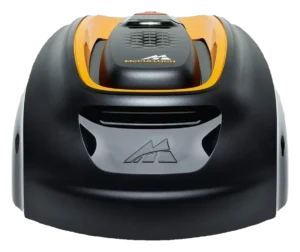
  1. McCulloch ROB R1000
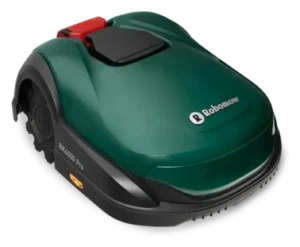
  2. Robomow RK4000
McCulloch

McCulloch ROB R1000

Autonomy
IIAssisted Autonomy
Score
63/100 Capable
Readiness
Not assessed
Price
$1,200list

Up to three

01 Classification

What each one does on its own.

The Autonomy Ladder is the same five rungs for every robot on the site. A rung describes the conditions a robot handles without you, not how good it is.

V
Generalized
Any task, any setting
IV
Environmental
Handles new obstacles without help
III
Conditional
Finishes familiar jobs on its own
II
Assisted
Runs preset routines, needs rescue
McCulloch ROB R1000Robomow RK4000
I
Manual
One action, on command
02 Assessment

Where they actually differ.

The Robovations Score is nine inputs across three pillars, each weighted as shown and each scored so that more is better. A robot can lead on one and trail on another, which is the point of showing them apart. Cost of ownership and data handling are reported on each robot's own page and are never averaged into the score.

Capability

Task completion16% of score
Does it finish the job it is sold to do, unattended
  • McCulloch ROB R100077
  • Robomow RK400078
18median 72 across 381 scored robots100
Coverage and navigation10% of score
Does it work the whole area, and hold that between runs
  • McCulloch ROB R100050
  • Robomow RK400055
15median 70 across 371 scored robots100
Edge-case recovery10% of score
Does it recover from the failures its category presents
  • McCulloch ROB R100030
  • Robomow RK400069
18median 50 across 287 scored robots100
Operating envelope4% of score
How far conditions can vary before performance drops
  • McCulloch ROB R100069
  • Robomow RK400070
25median 68 across 345 scored robots100

Dependability

Field failure rate16% of score
Documented hardware failures per owner-year
  • McCulloch ROB R100073
  • Robomow RK400081
6median 70 across 371 scored robots100
Software stability14% of score
Whether updates fix more than they break
  • McCulloch ROB R100033
  • Robomow RK400074
15median 65 across 300 scored robots100
Support longevity10% of score
Committed parts, service and updates, with dates
  • McCulloch ROB R100040
  • Robomow RK400073
0median 63 across 377 scored robots100

Ownership burden

Routine maintenance12% of score
Hands-on time it asks for in normal operation
  • McCulloch ROB R100064
  • Robomow RK400040
22median 65 across 382 scored robots100
Consumables8% of score
Parts that must be bought to keep it working
  • McCulloch ROB R1000100
  • Robomow RK400066
8median 69 across 381 scored robots100
03 Measured against the class

How far apart is a long way?

A number only means something next to the spread it sits in. Each track below is the real range across every classified robot in the class, with the median marked.

Price75 with a published figure
  • McCulloch ROB R1000$1,200
  • Robomow RK4000$1,999
$549median $1,999$5,999
Runtime88 with a published figure
  • McCulloch ROB R100065 min
  • Robomow RK4000120 min
30 minmedian 110 min240 min
Charge time88 with a published figure
  • McCulloch ROB R100050 min
  • Robomow RK4000110 min
30 minmedian 90 min300 min
Noise88 with a published figure
  • McCulloch ROB R100059 dB
  • Robomow RK400065 dB
50 dBmedian 60 dB82 dB
Weight96 with a published figure
  • McCulloch ROB R100015.4 lbs
  • Robomow RK400027.3 lbs
13 lbsmedian 29.8 lbs134 lbs
Height97 with a published figure
  • McCulloch ROB R100010.2 in
  • Robomow RK40008.7 in
7.5 inmedian 11 in16.5 in

Not compared, because fewer than two of these robots carry a published figure: Suction.

04 Ownership

What the numbers leave out.

The trade-off

What each design gives up to be good at what it is good at.

McCulloch ROB R1000

Coverage is reliable but unplanned: the mower cuts a randomized pattern inside the wire, which evens out over repeated sessions but cannot be sent to a missed patch or made to stripe. Property layout changes require manual wire repositioning.

Robomow RK4000

Boundary-wire guidance eliminates line-of-sight operator control, but requires significant one-time and seasonal infrastructure maintenance that systematic-mapping systems avoid.

Random coverage patterns reduce planning complexity, but result in less uniform grass height and longer mowing cycles than systematic mapping approaches.

Who each one is wrong for

Stated by the record itself. A robot being wrong for a household is a fact about fit, not a fault.

McCulloch ROB R1000
Wireless or RTK-dependent property setups
This model is fully wire-dependent; owners wanting wireless boundaries or RTK satellite navigation cannot use it.
Lawns larger than about 0.25 acre
McCulloch rates the ROB 1000 for a working area of 1,000 m² plus or minus 20 percent, which is about 0.25 acre. Past that the mower cannot hold the whole lawn on a maintenance cadence, however many charge cycles it runs in a day.
Steep or hilly terrain above 25% slope
Slopes steeper than the rated 25 percent gradient. Traction loss on wet or uneven ground begins below that ceiling.
Owners requiring fully autonomous operation with zero intervention
The ROB 1000 is not a set-and-forget system. Perimeter wire damage, blade wear, and seasonal reconfiguration all demand owner attention.
Robomow RK4000
Complex yards requiring precise perimeter definition
Properties with irregular boundaries, multiple islands, or intricate garden beds require frequent wire adjustments and manual intervention unsuitable for autonomous operation.
Operators unwilling to manage seasonal wire maintenance
Wire inspection, replacement, and winterization add overhead unsuitable for users preferring fully hands-off operation beyond blade swaps.
Small lots well inside the rated area
The RK4000 is rated for lawns up to 4,000 sq m, sold in the US as up to one acre. On a few hundred square meters the mower, its base station and its wire run are more hardware and more installation than the ground calls for.
Terrain steeper than the rated slope
Robomow's published maximum mowing slope for the RK4000 is 45 percent, which is 24 degrees. Banks steeper than that are outside the rating.
Owners prioritizing stripe patterns or aesthetic consistency
Perimeter-first with randomized fill does not produce striped patterns or uniform cutting height; systematic mapping mowers better suit aesthetic lawn maintenance.

What stays your job

The upkeep ownership hands back to you, whatever the autonomy level says.

McCulloch ROB R1000
  • Weekly: Inspect wheel wells and cutting deck for compacted clippings; inspect for wire debris.
  • Monthly: Clean undercarriage and check blade condition for dulling.
  • Seasonally: Blade replacement ($30–40 per set); perimeter-wire inspection and repair as needed.
  • Annually: Charging-base contact cleaning; battery check before winter storage.
Robomow RK4000
  • After every use: Clear the cutting deck of compacted grass; inspect for wrapped grass or debris.
  • Weekly: Check base station charging contacts for debris or corrosion; verify the station remains level and obstruction-free.
  • Monthly: Inspect boundary wire for visible damage, gaps, or loose pegs.
  • By inspection: Check blade condition and replace when edges are rounded, chipped, or bent. Robomow publishes no fixed interval or price for RK4000 blades.
  • Annually: Perform a full boundary-wire inspection and continuity check.
  • Seasonally: Recheck base station position, clear accumulated leaves from the charging area, and confirm cutting height as the lawn enters dormancy.
05 Evidence

How much each of these is standing on.

Classifications rest on different depths of evidence. A pre-release assessment and a verified one are not the same kind of claim.

Evidence behind each classification
Robot Evidence status Sources reviewed Last assessed
McCulloch ROB R1000 Discontinued 4 Sep 2026
Robomow RK4000 Provisional 4 Sep 2026

Robovations classifies robots; it does not rank them. Nothing on this page is a recommendation, and no manufacturer influences a classification or its placement here.