Skip to content
Saved
Comparison · 2 robots

Leju Kuavo 5 · Sanctuary AI Phoenix Gen 7

All humanoid robots. Every measure below is plotted against the full class, so a difference can be read against how much the class itself varies.
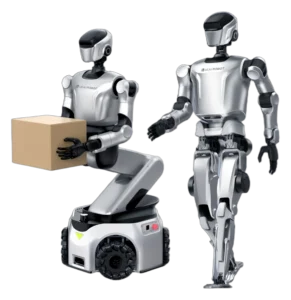
  1. Leju Kuavo 5
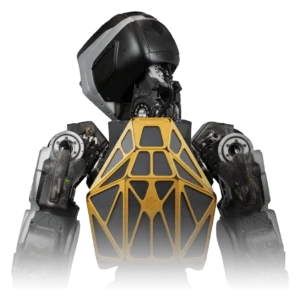
  2. Sanctuary AI Phoenix Gen 7
Leju Robot

Leju Kuavo 5

Autonomy
IIAssisted Autonomy
Score
57/100 Plausible
Readiness
Not assessed
Price
Not tracked

Sanctuary AI

Sanctuary AI Phoenix Gen 7

Autonomy
IIAssisted Autonomy
Score
73/100 Promising
Readiness
Not assessed
Price
Not tracked

Up to three

01 Classification

What each one does on its own.

The Autonomy Ladder is the same five rungs for every robot on the site. A rung describes the conditions a robot handles without you, not how good it is.

V
Generalized
Any task, any setting
IV
Environmental
Handles new obstacles without help
III
Conditional
Finishes familiar jobs on its own
II
Assisted
Runs preset routines, needs rescue
Leju Kuavo 5Sanctuary AI Phoenix Gen 7
I
Manual
One action, on command
02 Assessment

Where they actually differ.

The Robovations Score is nine inputs across three pillars, each weighted as shown and each scored so that more is better. A robot can lead on one and trail on another, which is the point of showing them apart. Cost of ownership and data handling are reported on each robot's own page and are never averaged into the score.

None of these robots carries a scored assessment yet, so there is nothing to plot here. The classification and evidence below still apply.

03 Measured against the class

How far apart is a long way?

A number only means something next to the spread it sits in. Each track below is the real range across every classified robot in the class, with the median marked.

These robots share no measured specification with enough published figures to plot. That is a gap in the record, not a finding about the robots.

04 Ownership

What the numbers leave out.

The trade-off

What each design gives up to be good at what it is good at.

Leju Kuavo 5

Swappable legs, wheels and hands make one platform fit many jobs; none of those jobs has a published result yet.

Sanctuary AI Phoenix Gen 7

Dexterous hands enable fine object manipulation, but the operator-dependent model keeps Phoenix Gen 7 a remote tool rather than an autonomous agent.

Who each one is wrong for

Stated by the record itself. A robot being wrong for a household is a fact about fit, not a fault.

Leju Kuavo 5
Buyers who need a published price before committing
Leju has not publicly revealed pricing for Kuavo 5, and no quote or channel appears in the sources reviewed.
Households wanting a home robot now
Home services appear only as an application area on Leju's page; no home deployment, price or consumer channel exists.
Operators requiring documented unsupervised task completion
No success rates or autonomy results are published for Kuavo 5's factory demonstrations.
Procurement teams needing a firm delivery date
No delivery or availability date is published, and humanoid.guide lists Kuavo 5 as a prototype not yet for sale.
Sanctuary AI Phoenix Gen 7
Consumer home automation or residential users
No consumer release, home-safety certification, or residential app-based control published, and Sanctuary's stated direction does not include one. Not positioned for household use or untrained operators.
Organizations requiring autonomous operation
Current platform relies on operator fallback and scripted sequences. Does not meet Level III self-directed task completion standards for unscripted environments.
Buyers seeking documented maintenance and repair costs
No field service plans, consumable pricing, joint-replacement intervals, or vendor support documentation available. Maintenance burden unquantified.

What stays your job

The upkeep ownership hands back to you, whatever the autonomy level says.

Leju Kuavo 5
  • As needed: Leju publishes no owner maintenance schedule for Kuavo 5, which has no published price or sale channel.
Sanctuary AI Phoenix Gen 7
  • Daily: Charging via dock or direct connector; estimated duration not published.
  • Weekly: Joint lubrication inspection for hand and arm actuators; grease type not disclosed.
  • Monthly: Sensor calibration for onboard cameras and IMU drift compensation.
  • Every 3-6 months: Cable and connector inspection, contact cleaning on tele-op receivers.
  • As needed: Software firmware updates for bug fixes and operator interface improvements; downtime unknown.
  • Annually: Joint stiffness assessment and potential actuator replacement if performance degrades; cost and availability unquantified.
05 Evidence

How much each of these is standing on.

Classifications rest on different depths of evidence. A pre-release assessment and a verified one are not the same kind of claim.

Evidence behind each classification
Robot Evidence status Sources reviewed Last assessed
Leju Kuavo 5 Pre-Release 3 Sep 2026
Sanctuary AI Phoenix Gen 7 Pre-Release 4 Sep 2026

Robovations classifies robots; it does not rank them. Nothing on this page is a recommendation, and no manufacturer influences a classification or its placement here.