Skip to content
Saved
Comparison · 2 robots

Kärcher RCX 4 · Stiga A 1500

All robot lawn mowers. Every measure below is plotted against the full class, so a difference can be read against how much the class itself varies.

  1. Kärcher RCX 4
  2. Stiga A 1500
Kärcher

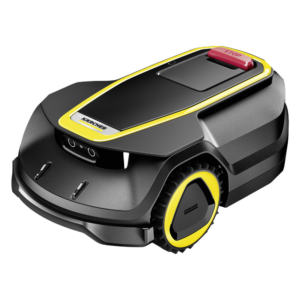
Kärcher RCX 4

Autonomy
III Conditional Autonomy
Score
57/100 Capable
Readiness
Promising Progress
Price
Not tracked
Stiga

Stiga A 1500

Autonomy
III Conditional Autonomy
Score
66/100 Capable
Readiness
Ready Now
Price
Not tracked

Up to three

01 Classification

What each one does on its own.

The Autonomy Ladder is the same five rungs for every robot on the site. A rung describes the conditions a robot handles without you, not how good it is.

V
Generalized
Any task, any setting
IV
Environmental
Handles new obstacles without help
III
Conditional
Finishes familiar jobs on its own
Kärcher RCX 4Stiga A 1500
II
Assisted
Runs preset routines, needs rescue
I
Manual
One action, on command
02 Assessment

Where they actually differ.

The Robovations Score is nine inputs across three pillars, each weighted as shown and each scored so that more is better. A robot can lead on one and trail on another, which is the point of showing them apart. Cost of ownership and data handling are reported on each robot's own page and are never averaged into the score.

Capability

Task completion16% of score
Does it finish the job it is sold to do, unattended
  • Kärcher RCX 465
  • Stiga A 150072
Coverage and navigation10% of score
Does it work the whole area, and hold that between runs
  • Kärcher RCX 465
  • Stiga A 150070
Edge-case recovery10% of score
Does it recover from the failures its category presents
  • Kärcher RCX 455
  • Stiga A 150048
Operating envelope4% of score
How far conditions can vary before performance drops
  • Kärcher RCX 468
  • Stiga A 150050

Dependability

Field failure rate16% of score
Documented hardware failures per owner-year
  • Kärcher RCX 452
  • Stiga A 150064
Software stability14% of score
Whether updates fix more than they break
  • Kärcher RCX 446
  • Stiga A 150082
Support longevity10% of score
Committed parts, service and updates, with dates
  • Kärcher RCX 455
  • Stiga A 150063

Ownership burden

Routine maintenance12% of score
Hands-on time it asks for in normal operation
  • Kärcher RCX 468
  • Stiga A 150046
Consumables8% of score
Parts that must be bought to keep it working
  • Kärcher RCX 452
  • Stiga A 150086
03 Measured against the class

How far apart is a long way?

A number only means something next to the spread it sits in. Each track below is the real range across every classified robot in the class, with the median marked.

Runtime74 with a published figure
  • Kärcher RCX 490 min
  • Stiga A 1500150 min
30 minmedian 110 min240 min
Charge time73 with a published figure
  • Kärcher RCX 475 min
  • Stiga A 1500120 min
30 minmedian 90 min300 min
Weight84 with a published figure
  • Kärcher RCX 427.3 lbs
  • Stiga A 150017.1 lbs
11.9 lbsmedian 29.8 lbs134 lbs
Height85 with a published figure
  • Kärcher RCX 410.8 in
  • Stiga A 15009.6 in
7.5 inmedian 10.8 in16.5 in

Not compared, because fewer than two of these robots carry a published figure: Price, Suction, Noise.

04 Ownership

What the numbers leave out.

The trade-off

What each design gives up to be good at what it is good at.

Kärcher RCX 4

PIN-gated, account-locked operation is a real anti-theft measure, but it also means the mower cannot simply be handed to a new owner without the prior account holder’s approval.

The rain sensor protects the machine by returning it to dock, at the cost of an interrupted, not merely paused, mowing cycle.

Stiga A 1500

Satellite positioning removes the perimeter wire but moves the constraint to sky view: the included reference station needs an open mounting position, and heavy canopy or a narrow side yard can leave the mower without a usable fix where a buried wire would not have cared.

Cloud dependency for boundary storage and scheduling means service outages disable operation; the robot cannot mow without app connectivity to retrieve saved boundaries.

Who each one is wrong for

Stated by the record itself. A robot being wrong for a household is a fact about fit, not a fault.

Kärcher RCX 4
US buyers needing a confirmed USD price and local retail channel
Pricing was found only in EUR at European retailers; no confirmed US MSRP or availability was located.
Owners who mow on a fixed schedule regardless of weather
The rain sensor automatically interrupts an in-progress cycle and returns the mower to dock rather than continuing through rain.
Buyers wanting a documented blade-stop-on-lift timing spec
Lift and anti-tilt sensors are documented, but no independent test of blade-stop timing was found.
Stiga A 1500
Properties with no clear-sky mounting point for the reference station
The kit includes a Stiga RTK reference station that has to be mounted with an open view of the sky, and the mower needs its own satellite fix while it works. Dense canopy, deep building shadow, or a lot with no suitable mounting position makes the install harder and leaves patches the machine cannot hold position in.
Owners uncomfortable with smartphone app setup and ongoing connectivity
The Stiga A 1500 pairs with the app over Bluetooth and uses a 4G connection for cloud services, scheduling and alerts. Boundary definition happens in the app. Mechanical-timer or wire-only alternatives suit users who avoid app dependency.
Properties with dense tree cover or building shadows blocking GNSS signals
RTK navigation requires clear sky view. Heavily shaded properties or areas surrounded by tall structures lose satellite signal, causing positioning drift and coverage loss.
Yards with complex multi-zone layouts and no appetite for setup work
Virtual boundaries are drawn manually in the app, and complex geometry needs a careful perimeter walk for each of the up to 10 zones. Stiga documents lift and tilt sensors that cut the blades, plus a rain sensor, app lock and theft alert, but permanent obstacles still have to be mapped as no-go areas rather than discovered.

What stays your job

The upkeep ownership hands back to you, whatever the autonomy level says.

Kärcher RCX 4
  • Blades: Floating cutting deck for terrain adaptation; blade replacement interval and cost are not published by the manufacturer.
  • Boundary setup: No wire to bury; up to 10 zones and no-go areas are set in the app.
  • Charging station: Dock-cleaning cadence is not documented.
  • PIN/account: Every operation requires a PIN code, and reassigning the unit to a new owner requires the prior owner’s approval.
Stiga A 1500
  • Weekly: Clear grass clippings from blade deck and motor area; verify app boundary map alignment with physical yard layout.
  • Every 4-6 weeks: Replace blades as cutting quality declines rather than sharpening them; Stiga-approved replacement blades available.
  • Monthly: Wipe dock charging contacts with a dry cloth to prevent corrosion; confirm the RTK reference station is still powered and securely mounted.
  • Seasonally: Recalibrate the app boundary map if the yard layout changes or if position drift is observed; walk the perimeter to update the virtual boundary in the app.
  • Annually: Inspect the reference station mount, cabling and power supply before the season starts; check drive wheels and the blade disc for wear.
05 Evidence

How much each of these is standing on.

Classifications rest on different depths of evidence. A pre-release assessment and a verified one are not the same kind of claim.

Evidence behind each classification
Robot Evidence status Sources reviewed Last assessed
Kärcher RCX 4 Verified 5 Aug 2026
Stiga A 1500 Verified 8 Aug 2026

Robovations classifies robots; it does not rank them. Nothing on this page is a recommendation, and no manufacturer influences a classification or its placement here.