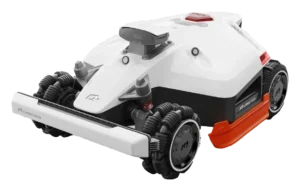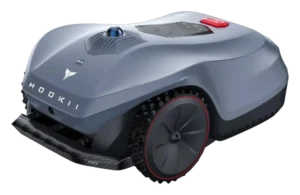
HOOKII Neomow X · Mammotion LUBA 2 AWD
All robot lawn mowers. Every measure below is plotted against the full class, so a difference can be read against how much the class itself varies.
- HOOKII Neomow X
- Mammotion LUBA 2 AWD
What each one does on its own.
The Autonomy Ladder is the same five rungs for every robot on the site. A rung describes the conditions a robot handles without you, not how good it is.
Where they actually differ.
The Robovations Score is nine inputs across three pillars, each weighted as shown and each scored so that more is better. A robot can lead on one and trail on another, which is the point of showing them apart. Cost of ownership and data handling are reported on each robot's own page and are never averaged into the score.
Capability
- HOOKII Neomow X68
- Mammotion LUBA 2 AWD80
- HOOKII Neomow X68
- Mammotion LUBA 2 AWD90
- HOOKII Neomow X50
- Mammotion LUBA 2 AWD100
- HOOKII Neomow X45
- Mammotion LUBA 2 AWD78
Dependability
- HOOKII Neomow X48
- Mammotion LUBA 2 AWD77
- HOOKII Neomow X40
- Mammotion LUBA 2 AWD100
- HOOKII Neomow X32
- Mammotion LUBA 2 AWD94
Ownership burden
- HOOKII Neomow X68
- Mammotion LUBA 2 AWD48
- HOOKII Neomow X55
- Mammotion LUBA 2 AWD71
How far apart is a long way?
A number only means something next to the spread it sits in. Each track below is the real range across every classified robot in the class, with the median marked.
- HOOKII Neomow X$2,599
- Mammotion LUBA 2 AWD$2,099
- HOOKII Neomow X120 min
- Mammotion LUBA 2 AWD180 min
- HOOKII Neomow X180 min
- Mammotion LUBA 2 AWD150 min
- HOOKII Neomow X60 dB
- Mammotion LUBA 2 AWD60 dB
- HOOKII Neomow X37.7 lbs
- Mammotion LUBA 2 AWD38.9 lbs
- HOOKII Neomow X13.3 in
- Mammotion LUBA 2 AWD10.7 in
Not compared, because fewer than two of these robots carry a published figure: Suction.
What the numbers leave out.
The trade-off
What each design gives up to be good at what it is good at.
3D LiDAR SLAM fused with vision removes the wire-burying step entirely, but HOOKII has not published the one number (max slope) that tells a hilly-yard owner whether this mower will hold traction.
Lift/tilt monitoring and an emergency stop are documented; the timing behind them is not, so a buyer gets the feature name without the number that would let it be checked.
Autonomous coverage versus setup complexity. RTK technology delivers hands-off operation, but requires professional base-station installation and property-specific calibration, raising total cost and extending initial deployment.
Cutting width versus consumables. Two discs widen each pass and cut cleanly through thicker growth, and they also consume blades six at a time rather than two or three.
Rain sensing versus schedule certainty. The mower suspends and docks when it detects a wet lawn, which protects turf and cut quality, but a wet week pushes the schedule rather than holding it.
Who each one is wrong for
Stated by the record itself. A robot being wrong for a household is a fact about fit, not a fault.
- Steep or irregular slopes needing a documented incline rating
- HOOKII does not publish a maximum slope percentage for the Neomow X, so owners cannot verify the mower is within its rated envelope on hilly terrain.
- Buyers wanting a documented blade-stop timing spec
- Lift/tilt safety monitoring and an emergency stop are documented, but no independent test of blade-stop timing was found.
- Buyers who need a multi-year independent reliability record
- Only two independent editorial reviews were located; no owner forum, trade repair source, or regulatory record was found.
- Small suburban yards under 1,000 square meters
- Entry-level wire-guided Level III mowers provide equivalent coverage at half the setup cost. RTK advantages require minimum 1,500-2,000 square meter lawns to amortize installation.
- Properties with complex edge obstacles
- Yards with multiple garden beds, outdoor furniture, or pet structures requiring frequent boundary adjustments. Fixed RTK boundaries are less adaptable than manual guidance.
- Budget-conscious buyers
- The LUBA 2 AWD sits at the upper end of consumer robotic mower pricing, and the RTK reference station is part of that price rather than an add-on. Wire-guided Level III machines cut the entry cost substantially.
- Rental or frequent-move situations
- RTK calibration is property-specific and non-transferable. Owners relocating within three years cannot recoup setup investment.
- Winter-climate regions with limited growing seasons
- Year-round RTK advantages diminish in climates with six-month dormancy. Wire-guided competitors better suited to 12-16 week mowing windows.
- Users avoiding smartphone apps and cloud connectivity
- LUBA 2 scheduling requires app login and cloud-synced zone data. Owners preferring purely local control should choose mechanical or cellular-only alternatives.
What stays your job
The upkeep ownership hands back to you, whatever the autonomy level says.
- After every use: Rinse the blade assembly and surrounding areas with clean water once the mower is powered off; HOOKII documents this after each mowing task to keep the disc from jamming.
- Monthly: Replace all five blades and their screws as a set; HOOKII recommends fresh blades every 3 to 6 weeks, sooner with visible wear, and sells a 10-blade set (two changes) for $29.
- Monthly: Inspect the charging station and rear mower contacts and clean them to bright metal; HOOKII suggests checking every two weeks during peak season.
- Every 3-6 months: Fully recharge the battery at least once every six months whenever the mower sits in extended storage.
- Seasonally: Winterize per HOOKII’s guide: fully charge, power off, clean, disconnect the charging station, and store flat between -20 and 45 C.
- As needed: Deep-clean the blade guard underside with a low-pressure hose at the 30mm blade height per the blade module guide; never a pressure washer or solvents.
- As needed: Wipe the exterior with a soft brush or damp cloth; alcohol, gasoline, and acetone damage the housing.
- Weekly: Blade inspection for debris wrap and grass buildup, 15 minutes.
- Every 2 weeks: Wipe the reference station antenna and check its view of the sky is still clear, 10 minutes.
- Monthly: Dock contacts cleaning and undercarriage mud removal, 20 minutes. The mower and dock are rated IPX6, so a gentle hose rinse is within spec; a pressure washer is not.
- Every 1-2 months in the growing season: Rotate or replace the cutting blades. Two discs carry three blades each, so blades are consumed six at a time; Mammotion sells them in multipacks.
- Seasonally (Spring): Firmware check and a fresh mapping pass over any landscaping that has changed, 30-45 minutes.
- Annually: Battery performance testing and dock firmware update, 1 hour.
- As needed: Wheel replacement. The Omni wheels are solid moldings that bolt off; there is no tire to repair or inflate.
How much each of these is standing on.
Classifications rest on different depths of evidence. A pre-release assessment and a verified one are not the same kind of claim.
| Robot | Evidence status | Sources reviewed | Last assessed |
|---|---|---|---|
| HOOKII Neomow X | Verified | 9 | Sep 2026 |
| Mammotion LUBA 2 AWD | Verified | 13 | Aug 2026 |
Add a robot
Comparing across classes is allowed — the page will switch to per-class positioning and tell you it has.