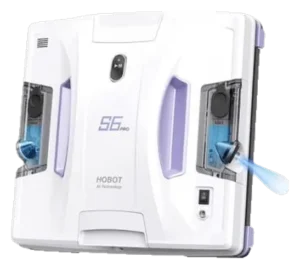
HOBOT-S6 Pro · Kärcher RCW 4
All robot window cleaners. Every measure below is plotted against the full class, so a difference can be read against how much the class itself varies.
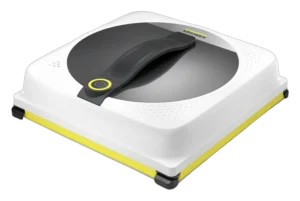
- HOBOT-S6 Pro
- Kärcher RCW 4


Kärcher RCW 4
- Autonomy
- IIAssisted Autonomy
- Score
- Not scored
- Readiness
- New to Market
- Price
- Not tracked
Up to three
What each one does on its own.
The Autonomy Ladder is the same five rungs for every robot on the site. A rung describes the conditions a robot handles without you, not how good it is.
Where they actually differ.
The Robovations Score is nine inputs across three pillars, each weighted as shown and each scored so that more is better. A robot can lead on one and trail on another, which is the point of showing them apart. Cost of ownership and data handling are reported on each robot's own page and are never averaged into the score.
Capability
- HOBOT-S6 Pro75
Not scored: Kärcher RCW 4
- HOBOT-S6 Pro75
Not scored: Kärcher RCW 4
- HOBOT-S6 Pro50
Not scored: Kärcher RCW 4
- HOBOT-S6 Pro75
Not scored: Kärcher RCW 4
Dependability
- HOBOT-S6 Pro73
Not scored: Kärcher RCW 4
- HOBOT-S6 Pro71
Not scored: Kärcher RCW 4
- HOBOT-S6 Pro67
Not scored: Kärcher RCW 4
Ownership burden
- HOBOT-S6 Pro32
Not scored: Kärcher RCW 4
- HOBOT-S6 Pro77
Not scored: Kärcher RCW 4
How far apart is a long way?
A number only means something next to the spread it sits in. Each track below is the real range across every classified robot in the class, with the median marked.
- HOBOT-S6 Pro3.6 lbs
- Kärcher RCW 43.3 lbs
- HOBOT-S6 Pro3.9 in
- Kärcher RCW 42.8 in
Not compared, because fewer than two of these robots carry a published figure: Price, Suction, Runtime, Charge time, Noise.
What the numbers leave out.
The trade-off
What each design gives up to be good at what it is good at.
Manual launch and repositioning. The robot does not autonomously navigate between windows or edges; a user must place it, start it, and move it to the next pane, it is not a set-and-forget window cleaner.
Cord management. The 5 meter power cord caps the working radius from a socket, and its secured DC connector is built to stay joined rather than be extended. Placement has to account for that cord and, separately, for the safety rope, without either fouling the other.
Four automatic modes and a 150 mL tank change how long a single pass takes, not whether the unit still has to be carried, plugged in, and started on every pane.
The tank now covers about 100 square meters per fill, but that headroom does not change the underlying mains dependency: every session still starts by finding an outlet within reach of the 5-meter cord.
Thin evidence base: a launch-week record with no independent reviews or owner reports to check Kärcher’s own cleaning-speed and coverage figures against.
Who each one is wrong for
Stated by the record itself. A robot being wrong for a household is a fact about fit, not a fault.
- Fully autonomous outdoor window cleaning
- HOBOT-S6 Pro requires manual launch and manual repositioning between panes. It does not autonomously navigate or select windows to clean.
- Homeowners with small tight window frames or muntins
- Dual mops and head width are optimized for larger panes. Narrow muntins and divided-light windows may require manual cleaning or repositioning to avoid frame contact.
- Users needing coverage far from a socket
- The power cord is 5 meters, about 16 feet, on a secured DC connector designed not to pull apart in use. That is the working radius from a socket, and there is no cordless variant of this model.
- Windows with no nearby power outlet
- The RCW 4 has no cordless or battery-only mode; a window beyond the 5-meter power cord's reach from an outlet cannot run a cleaning cycle.
- High-rise panes beyond the cord's documented reach
- Kärcher documents no separate safety-tether or anchor system for this model, so a true high-rise installation falls outside the reach the 5-meter power cord provides.
- Leaded, heavily textured, or decorative glass
- Continuous suction contact from the cleaning pad assumes smooth flat glass; Kärcher's documented mechanism is not built for leaded or heavily textured panes.
- Panes smaller than the documented minimum size
- Kärcher specifies a 40 x 40 cm minimum working pane size; smaller windows fall outside the unit's documented operating range and are not a supported use case.
- Buyers wanting proven reliability before purchasing
- No independent reviews, owner reports, or field failure record exist yet for a product that only debuted at IFA 2026; that evidence gap is real.
What stays your job
The upkeep ownership hands back to you, whatever the autonomy level says.
- After every use: Rinse dual mop pads; inspect suction gasket for mineral deposits or debris.
- Weekly: Soak mop pads in vinegar solution if hard-water spotting is visible; clean edge sensors.
- Monthly: Replace or deep-clean suction gasket; check cord for insulation damage or kinks.
- Every 3–6 months: Replace mop pads (~$25–$35 per pair); verify safety rope for frays.
- Annually: Inspect vacuum motor performance; if suction noticeably reduced, contact HOBOT support for service options.
- After every use: Wipe down the cleaning pad and clear any trapped debris before storage.
- As needed: Refill the 150 mL detergent tank, checked against its fill-level indicator.
- Monthly: Inspect the 5-meter power cord and plug for fraying or damage.
- Monthly: Check the six pump-driven nozzles for mineral buildup or clogging.
- Every 3-6 months: Replace the cleaning pad once wiping leaves streaks or residue.
- As needed: Wipe the suction seal and glass-contact edge to maintain an even hold.
How much each of these is standing on.
Classifications rest on different depths of evidence. A pre-release assessment and a verified one are not the same kind of claim.
| Robot | Evidence status | Sources reviewed | Last assessed |
|---|---|---|---|
| HOBOT-S6 Pro | Pending | 1 | Aug 2026 |
| Kärcher RCW 4 | Pending | 1 | Sep 2026 |
Add a robot
Comparing across classes is allowed — the page will switch to per-class positioning and tell you it has.