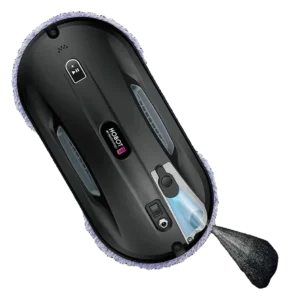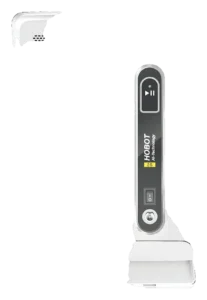
HOBOT 2S · HOBOT 388 Ultrasonic
All robot window cleaners. Every measure below is plotted against the full class, so a difference can be read against how much the class itself varies.
- HOBOT 2S
- HOBOT 388 Ultrasonic
What each one does on its own.
The Autonomy Ladder is the same five rungs for every robot on the site. A rung describes the conditions a robot handles without you, not how good it is.
Where they actually differ.
The Robovations Score is nine inputs across three pillars, each weighted as shown and each scored so that more is better. A robot can lead on one and trail on another, which is the point of showing them apart. Cost of ownership and data handling are reported on each robot's own page and are never averaged into the score.
Capability
- HOBOT 2S60
- HOBOT 388 Ultrasonic75
- HOBOT 2S45
- HOBOT 388 Ultrasonic70
- HOBOT 2S30
- HOBOT 388 Ultrasonic50
- HOBOT 2S55
- HOBOT 388 Ultrasonic65
Dependability
- HOBOT 2S56
- HOBOT 388 Ultrasonic85
- HOBOT 2S65
- HOBOT 388 Ultrasonic33
- HOBOT 2S48
- HOBOT 388 Ultrasonic73
Ownership burden
- HOBOT 2S28
- HOBOT 388 Ultrasonic34
- HOBOT 2S66
- HOBOT 388 Ultrasonic91
How far apart is a long way?
A number only means something next to the spread it sits in. Each track below is the real range across every classified robot in the class, with the median marked.
- HOBOT 2S$349
- HOBOT 388 Ultrasonic$299
- HOBOT 2S2.9 lbs
- HOBOT 388 Ultrasonic2 lbs
- HOBOT 2S3.4 in
- HOBOT 388 Ultrasonic3.7 in
Not compared, because fewer than two of these robots carry a published figure: Suction, Runtime, Charge time, Noise.
What the numbers leave out.
The trade-off
What each design gives up to be good at what it is good at.
You gain stable autonomous cleaning of a pane once positioned, but you lose multi-window autonomy. Manual placement is the structural constraint.
Dual ultrasonic spray nozzles wet the pane evenly, but they draw from one tank, so a large job means taking the unit off the glass to refill.
You are freed from the ladder, but the machine is never untethered: a 4.5 m safety rope anchored to a fixed object indoors and a permanently attached 5 m mains cord are both part of every session.
Applying water as a mist rather than a soak keeps run-off off the sill, but a saturated pad on consecutive heavily-soiled panes still requires a mid-session swap that interrupts the automated workflow.
Coverage within a single pane is systematic and unattended; the unit cannot advance to the next pane without the owner relocating it and re-anchoring the rope.
Who each one is wrong for
Stated by the record itself. A robot being wrong for a household is a fact about fit, not a fault.
- Hands-off scheduling automation seekers
- The app and the bundled remote control a session in progress, but every pane still needs the unit lifted, placed and started by hand. Owner involvement is per window, not per house.
- Multi-story buildings with distributed windows
- Frequent repositioning between stories becomes repetitive labor, and each new position means re-anchoring the rope indoors and finding a socket within 5 m.
- Owners with irregular or architectural detailing
- The Edge-Leakage Sensor works by detecting the air leak when the pad breaks its seal at an edge, so it reads frameless glass as well as framed. Deep recesses and heavy architectural detailing still limit where the unit can be placed and raise how often it needs repositioning by hand.
- Properties with limited nearby water supply
- The unit carries a single water tank module refilled by hand, which on a large job means taking it off the glass and walking back to a tap. HOBOT publishes no per-fill coverage figure.
- Users expecting hands-free multi-window automation
- Every pane requires manual placement, pad attachment, and safety rope anchoring. The unit automates the scrubbing path within a pane but does not eliminate per-window setup effort.
- Homes with textured, frosted, or divided-pane glass
- Surface irregularities break the suction seal. Owner reports confirm the unit detaches or loses path on patterned or divided glass, which is a safety risk in addition to a cleaning failure.
- Buyers seeking a fully autonomous set-and-forget appliance
- Window cleaners in this category require active supervision per session. The 388 automates path coverage within a pane, not the overall cleaning workflow across a home.
- Owners with small standard windows cleaned rarely
- Manual squeegee effort on small panes is often faster than the 388 setup cycle. The time-savings case is strongest on large or difficult-to-reach glass.
What stays your job
The upkeep ownership hands back to you, whatever the autonomy level says.
- Before every use: Run the safety rope through your hands along its full length and check both end fittings; replace it if any strands are cut, frayed or abraded. Confirm the indoor anchor is a fixed object that will not move under load.
- Before every use: Inspect the permanently attached power cord for nicks, crushing or exposed conductors along its length.
- After every use: Remove and wring the microfiber pads, then dry them fully before storage.
- Weekly (if heavy use): Inspect vacuum motor intake for dust clogs with a soft brush.
- Every 2-4 weeks: Check the rubber sealing ring for hair or debris; clean with a damp cloth.
- Monthly: Run a vinegar solution through the ultrasonic spray nozzles to clear mineral buildup.
- By condition: Replace microfiber pads when matted or thinning (approximately $20-30 per pair). The water tank is a single module, replaced with one screw.
- After every use: Remove microfiber pad, rinse with water, and hang to dry before storage.
- After every use: Wipe suction ring with a clean damp cloth to remove glass cleaner residue that degrades the seal over time.
- Monthly: Inspect safety rope for fraying; replace if any strand damage is visible before next use.
- Every 3-6 months: Clean suction motor intake port with a dry brush to remove dust accumulation that reduces grip force.
- Every 3-6 months: Check pad contact surface on the cleaning head for mineral buildup; rinse with diluted white vinegar if present.
- Annually: Inspect power cable and connector for sheath cracking; manufacturer recommends replacement if outer jacket is compromised.
How much each of these is standing on.
Classifications rest on different depths of evidence. A pre-release assessment and a verified one are not the same kind of claim.
| Robot | Evidence status | Sources reviewed | Last assessed |
|---|---|---|---|
| HOBOT 2S | Provisional | 4 | Sep 2026 |
| HOBOT 388 Ultrasonic | Provisional | 7 | Aug 2026 |
Add a robot
Comparing across classes is allowed — the page will switch to per-class positioning and tell you it has.