Skip to content
Saved
Comparison · 2 robots

Hobot 298 · Mamibot iGLASSBOT W120-T

All robot window cleaners. Every measure below is plotted against the full class, so a difference can be read against how much the class itself varies.

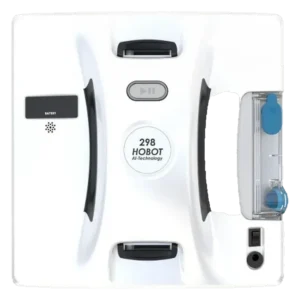
  1. Hobot 298
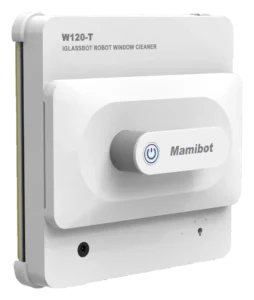
  2. Mamibot iGLASSBOT W120-T
HOBOT

Hobot 298

Autonomy
IIAssisted Autonomy
Score
65/100 Capable
Readiness
Ready Now
Price
$249list

Up to three

01 Classification

What each one does on its own.

The Autonomy Ladder is the same five rungs for every robot on the site. A rung describes the conditions a robot handles without you, not how good it is.

V
Generalized
Any task, any setting
IV
Environmental
Handles new obstacles without help
III
Conditional
Finishes familiar jobs on its own
II
Assisted
Runs preset routines, needs rescue
Hobot 298Mamibot iGLASSBOT W120-T
I
Manual
One action, on command
02 Assessment

Where they actually differ.

The Robovations Score is nine inputs across three pillars, each weighted as shown and each scored so that more is better. A robot can lead on one and trail on another, which is the point of showing them apart. Cost of ownership and data handling are reported on each robot's own page and are never averaged into the score.

Capability

Task completion16% of score
Does it finish the job it is sold to do, unattended
  • Hobot 29858
  • Mamibot iGLASSBOT W120-T75
18median 72 across 433 scored robots100
Coverage and navigation10% of score
Does it work the whole area, and hold that between runs
  • Hobot 29852
  • Mamibot iGLASSBOT W120-T70
0median 70 across 421 scored robots100
Edge-case recovery10% of score
Does it recover from the failures its category presents
  • Hobot 29856
  • Mamibot iGLASSBOT W120-T55
18median 52 across 320 scored robots100
Operating envelope4% of score
How far conditions can vary before performance drops
  • Hobot 29857
  • Mamibot iGLASSBOT W120-T38
28median 68 across 397 scored robots100

Dependability

Field failure rate16% of score
Documented hardware failures per owner-year
  • Hobot 29885
  • Mamibot iGLASSBOT W120-T70
6median 70 across 359 scored robots100
Software stability14% of score
Whether updates fix more than they break
  • Hobot 29871
  • Mamibot iGLASSBOT W120-T33
15median 65 across 342 scored robots100
Support longevity10% of score
Committed parts, service and updates, with dates
  • Hobot 29882
  • Mamibot iGLASSBOT W120-T30
0median 62 across 429 scored robots100

Ownership burden

Routine maintenance12% of score
Hands-on time it asks for in normal operation
  • Hobot 29832
  • Mamibot iGLASSBOT W120-T25
22median 67 across 434 scored robots100
Consumables8% of score
Parts that must be bought to keep it working
  • Hobot 29866
  • Mamibot iGLASSBOT W120-T69
8median 69 across 434 scored robots100
03 Measured against the class

How far apart is a long way?

A number only means something next to the spread it sits in. Each track below is the real range across every classified robot in the class, with the median marked.

Price21 with a published figure
  • Hobot 298$249
  • Mamibot iGLASSBOT W120-T$179
$150median $349$850
Adhesion (mode not stated)19 with a published figure
  • Hobot 2982,800 Pa
  • Mamibot iGLASSBOT W120-T2,800 Pa
2,800 Pamedian 3,800 Pa10,000 Pa
Noise20 with a published figure
  • Hobot 29865 dB
  • Mamibot iGLASSBOT W120-T65 dB
63 dBmedian 68 dB75 dB
Weight22 with a published figure
  • Hobot 2982.6 lbs
  • Mamibot iGLASSBOT W120-T3 lbs
1.3 lbsmedian 3.1 lbs4.8 lbs
Height24 with a published figure
  • Hobot 2983.5 in
  • Mamibot iGLASSBOT W120-T3.9 in
2.2 inmedian 3.2 in9.4 in

Not compared, because fewer than two of these robots carry a published figure: Runtime, Charge time.

04 Ownership

What the numbers leave out.

The trade-off

What each design gives up to be good at what it is good at.

Hobot 298

Mains power removes recharge cycles, and an embedded UPS holds the robot in place for 20 minutes through an outage, but the 4 meter cord ties the machine to a socket within a few paces of the pane.

Mamibot iGLASSBOT W120-T

Auto-path on uniform framed glass is reliable; suction on textured panes and the manual’s outright prohibition on frameless glass are the binding constraints, not cleaning quality.

Sub-$200 dual-pad scrubbing is accessible, but rope anchoring, hand-wetted pads and per-panel remounting keep the owner in the loop every session.

Who each one is wrong for

Stated by the record itself. A robot being wrong for a household is a fact about fit, not a fault.

Hobot 298
High-rise or multi-story installations requiring extended reach
The power cord is 4 meters and the supplied safety rope is 4.5 meters, so both the socket and the rope's indoor anchor point have to sit close to the pane being worked. Windows further from an interior socket than that are outside what this model reaches.
Homes without adjacent power outlets or outdoor outlets within cable run
Extension cord use is discouraged by manufacturer for safety. Interior outlet management becomes critical; wet-environment electrical safety is owner's responsibility.
Specialty or curved glass surfaces
Square pad geometry and fixed nozzle positioning leave corners uncleaned. Tempered or heavily tinted windows challenge optical edge detection; manual repositioning is frequent.
Mamibot iGLASSBOT W120-T
Frameless glass, and textured, frosted or curved surfaces
Mamibot's manual prohibits use on frameless glass outright, which is the flat case owners most often assume is fine. Suction loss on textured and frosted surfaces is separately documented across owner reports.
Users expecting fully autonomous multi-panel cleaning runs
The unit is remounted and the rope re-anchored between separate panels. There is no dock, no multi-panel routing and no resume.
Homes with upper-floor windows far from power outlets
The unit is mains-powered and ships with an adapter and extension cable. Windows beyond that run are impractical, and the tether sets the working height as much as the glass does.
Owners needing cordless battery-only operation
The W120-T runs from mains power. The 600 mAh cell on board is a backup that holds the unit on the glass if power is cut, not a runtime battery, so use is restricted to windows near an outlet.

What stays your job

The upkeep ownership hands back to you, whatever the autonomy level says.

Hobot 298
  • Weekly: Rinse pad and inspect nozzle for mineral deposits; test suction by listening for motor speed consistency.
  • Monthly: Clean intake ports and motor filter with soft brush; soak nozzle in distilled vinegar if spray pattern weakens.
  • Every 3-4 months: Replace cleaning pads (~$20-25 per pair); inspect power cable for insulation damage.
  • Annually: Replace motor intake filter (~$15); deep-clean nozzle assembly by soaking in 50/50 vinegar-water solution.
  • As needed: Replace vacuum motor assembly if suction falls below specification (~$80, typical at 5-6 year mark with regular use).
Mamibot iGLASSBOT W120-T
  • Before every use: Confirm the backup battery is fully charged, and tie the safety rope to a secure indoor fixture.
  • After every use: Rinse and wring the microfiber pads; allow to air-dry before storage.
  • Weekly: Inspect the safety rope along its length for fraying, and check the fixture it is tied to.
  • Monthly: Wipe the suction cup and intake filter with a damp cloth to maintain seal integrity. Do not spray or pour water onto the device.
  • Every 30-50 sessions: Replace the microfiber cleaning pads (sold separately).
  • As needed: Inspect the power cable and connector for wear near strain-relief points.
05 Evidence

How much each of these is standing on.

Classifications rest on different depths of evidence. A pre-release assessment and a verified one are not the same kind of claim.

Evidence behind each classification
Robot Evidence status Sources reviewed Last assessed
Hobot 298 Provisional 4 Aug 2026
Mamibot iGLASSBOT W120-T Pending 5 Aug 2026

Robovations classifies robots; it does not rank them. Nothing on this page is a recommendation, and no manufacturer influences a classification or its placement here.