Skip to content
Saved
Comparison · 2 robots

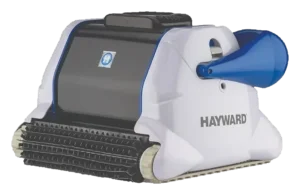
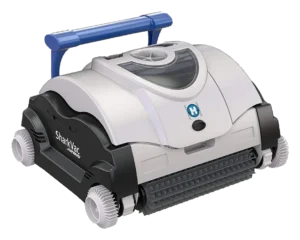
Hayward SharkVac · Hayward TigerShark QC

All robot pool cleaners. Every measure below is plotted against the full class, so a difference can be read against how much the class itself varies.

  1. Hayward SharkVac
  2. Hayward TigerShark QC

Up to three

01 Classification

What each one does on its own.

The Autonomy Ladder is the same five rungs for every robot on the site. A rung describes the conditions a robot handles without you, not how good it is.

V
Generalized
Any task, any setting
IV
Environmental
Handles new obstacles without help
III
Conditional
Finishes familiar jobs on its own
II
Assisted
Runs preset routines, needs rescue
Hayward SharkVacHayward TigerShark QC
I
Manual
One action, on command
02 Assessment

Where they actually differ.

The Robovations Score is nine inputs across three pillars, each weighted as shown and each scored so that more is better. A robot can lead on one and trail on another, which is the point of showing them apart. Cost of ownership and data handling are reported on each robot's own page and are never averaged into the score.

Capability

Task completion16% of score
Does it finish the job it is sold to do, unattended
  • Hayward SharkVac28
  • Hayward TigerShark QC70
18median 72 across 433 scored robots100
Coverage and navigation10% of score
Does it work the whole area, and hold that between runs
  • Hayward SharkVac30
  • Hayward TigerShark QC50
0median 70 across 421 scored robots100
Edge-case recovery10% of score
Does it recover from the failures its category presents
  • Hayward SharkVac25
  • Hayward TigerShark QC25
18median 52 across 320 scored robots100
Operating envelope4% of score
How far conditions can vary before performance drops
  • Hayward SharkVac70
  • Hayward TigerShark QC60
28median 68 across 397 scored robots100

Dependability

Field failure rate16% of score
Documented hardware failures per owner-year
  • Hayward SharkVac94
  • Hayward TigerShark QC91
6median 70 across 359 scored robots100
Software stability14% of score
Whether updates fix more than they break
  • Hayward SharkVac71
  • Hayward TigerShark QC37
15median 65 across 342 scored robots100
Support longevity10% of score
Committed parts, service and updates, with dates
  • Hayward SharkVac100
  • Hayward TigerShark QC97
0median 62 across 429 scored robots100

Ownership burden

Routine maintenance12% of score
Hands-on time it asks for in normal operation
  • Hayward SharkVac68
  • Hayward TigerShark QC56
22median 67 across 434 scored robots100
Consumables8% of score
Parts that must be bought to keep it working
  • Hayward SharkVac91
  • Hayward TigerShark QC86
8median 69 across 434 scored robots100
03 Measured against the class

How far apart is a long way?

A number only means something next to the spread it sits in. Each track below is the real range across every classified robot in the class, with the median marked.

Price69 with a published figure
  • Hayward SharkVac$1,199
  • Hayward TigerShark QC$1,489
$299median $1,249$4,250
Weight66 with a published figure
  • Hayward SharkVac21.5 lbs
  • Hayward TigerShark QC21.5 lbs
7.9 lbsmedian 20.9 lbs46.3 lbs
Height61 with a published figure
  • Hayward SharkVac29.9 in
  • Hayward TigerShark QC13.5 in
3.8 inmedian 10.6 in29.9 in

Not compared, because fewer than two of these robots carry a published figure: Suction, Runtime, Charge time, Noise.

04 Ownership

What the numbers leave out.

The trade-off

What each design gives up to be good at what it is good at.

Hayward SharkVac

A design that has gone a decade largely unchanged at $1,199 MSRP comes with no app, no scheduling and no wall climbing. You are buying floor cleaning only.

Hayward TigerShark QC

You get full-basin cleaning with no programming overhead, but every session starts and ends by hand: the unit is carried to the water, started, lifted out, and the cartridge rinsed.

Two fixed cycles and nothing between them: four hours for a full clean, or 90 minutes on Quick Clean. No scheduling, no pause and no app, so the choice is made at the deck each time.

Who each one is wrong for

Stated by the record itself. A robot being wrong for a household is a fact about fit, not a fault.

Hayward SharkVac
Above-ground pools
The SharkVac is sold as an in-ground cleaner. Surface material is not the constraint: Hayward lists the supported surfaces as gunite, vinyl, fiberglass, pebble and tile. The installation type is what rules it out here.
Owners prioritizing wall and waterline coverage
Floor-only operation; no brush or wall-climbing mechanism. Waterline and wall algae require manual brushing or separate cleaner.
Homeowners with limited electrical outlet access
The 50 ft cord has to reach a GFCI-protected outlet serving the pool area. Extension cords are not a sanctioned way to add reach on a mains-fed cleaner, and there is no cordless version of this model.
Hayward TigerShark QC
Above-ground pools
Hayward sells and rates the TigerShark QC for in-ground pools only, and the model name carries Inground at every retailer. Above-ground use is outside what the machine is sold for.
Pools with persistent fine algae or silt loads
The cartridge loads quickly with fine debris under heavy conditions, so rinsing moves from after each run to during it. Algae blooms and clay-heavy surroundings keep the owner in the loop.
In-ground pools larger than 20 x 40 ft
Hayward's rated coverage is 20 x 40 ft. Larger basins are outside the rating; that is a size limit rather than a coverage-pattern problem.
Owners wanting scheduled or remote-controlled operation
The QC runs the cycle you start, then stops. No scheduling, pause, resume or app control; manual placement and start are required each session.
Pools without a GFCI-protected outlet within reach of the 55 ft cord
The transformer runs from a grounded, ground-fault-protected receptacle and the cord is 55 ft. Closing a gap with an extension lead is not an acceptable option on a pool cleaner; an outlet in reach has to be installed by an electrician.

What stays your job

The upkeep ownership hands back to you, whatever the autonomy level says.

Hayward SharkVac
  • After every use: Lift out the two top-access filter elements and rinse them with a garden hose. Clear the intake of visible debris.
  • Weekly: Inspect the cable for kinks or damaged insulation. Wind it loosely on an anchor peg or spool.
  • Annually: Inspect the cable connections for corrosion and test the GFCI outlet feeding the power supply.
  • As needed: Replace the filter elements when the mesh is worn or torn. Hayward publishes no replacement interval; the OEM pair (RCX70101PAK2) runs about $89. Replace the cord assembly (RCX97413, about $125) if the insulation is damaged, rather than on a schedule.
Hayward TigerShark QC
  • After each run: Unplug the transformer, lift the unit out, open it and rinse the reusable cartridge with a garden hose.
  • Monthly: Check the brushes and drive tracks for wear and clear hair or fiber from the rollers.
  • Every 3-6 months: Inspect the full length of the 55 ft cord for nicks and cracked insulation, and the transformer connector for corrosion. A damaged cord takes the machine out of service.
  • Annually: Before storage, rinse the unit and the cartridge, let both dry fully, and keep the machine and the transformer indoors over winter.
  • As needed: Replace the cartridge if the media tears or stops seating; replace brushes when they no longer make contact with the surface.
05 Evidence

How much each of these is standing on.

Classifications rest on different depths of evidence. A pre-release assessment and a verified one are not the same kind of claim.

Evidence behind each classification
Robot Evidence status Sources reviewed Last assessed
Hayward SharkVac Pending 4 Aug 2026
Hayward TigerShark QC Provisional 10 Aug 2026

Robovations classifies robots; it does not rank them. Nothing on this page is a recommendation, and no manufacturer influences a classification or its placement here.