Skip to content
Saved
Comparison · 2 robots

Greenworks AiMowbot C20Z · Mammotion Yuka Mini

All robot lawn mowers. Every measure below is plotted against the full class, so a difference can be read against how much the class itself varies.
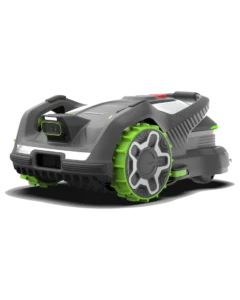
  1. Greenworks AiMowbot C20Z
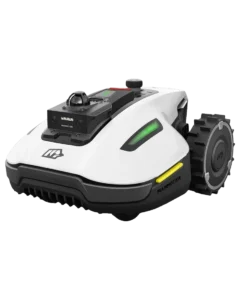
  2. Mammotion Yuka Mini
Greenworks

Greenworks AiMowbot C20Z

Autonomy
III Conditional Autonomy
Score
Not scored
Readiness
Ready Now
Price
$1,299.99confirmed
Mammotion

Mammotion Yuka Mini

Autonomy
III Conditional Autonomy
Score
70/100 Strong
Readiness
Ready Now
Price
$1,299list

Up to three

01 Classification

What each one does on its own.

The Autonomy Ladder is the same five rungs for every robot on the site. A rung describes the conditions a robot handles without you, not how good it is.

V
Generalized
Any task, any setting
IV
Environmental
Handles new obstacles without help
III
Conditional
Finishes familiar jobs on its own
Greenworks AiMowbot C20ZMammotion Yuka Mini
II
Assisted
Runs preset routines, needs rescue
I
Manual
One action, on command
02 Assessment

Where they actually differ.

The Robovations Score is nine inputs across three pillars, each weighted as shown and each scored so that more is better. A robot can lead on one and trail on another, which is the point of showing them apart. Cost of ownership and data handling are reported on each robot's own page and are never averaged into the score.

Capability

Task completion16% of score
Does it finish the job it is sold to do, unattended
  • Mammotion Yuka Mini75
18median 72 across 354 scored robots100

Not scored: Greenworks AiMowbot C20Z

Coverage and navigation10% of score
Does it work the whole area, and hold that between runs
  • Mammotion Yuka Mini75
15median 70 across 344 scored robots100

Not scored: Greenworks AiMowbot C20Z

Edge-case recovery10% of score
Does it recover from the failures its category presents
  • Mammotion Yuka Mini70
18median 50 across 261 scored robots100

Not scored: Greenworks AiMowbot C20Z

Operating envelope4% of score
How far conditions can vary before performance drops
  • Mammotion Yuka Mini70
25median 70 across 320 scored robots100

Not scored: Greenworks AiMowbot C20Z

Dependability

Field failure rate16% of score
Documented hardware failures per owner-year
  • Mammotion Yuka Mini64
6median 70 across 344 scored robots100

Not scored: Greenworks AiMowbot C20Z

Software stability14% of score
Whether updates fix more than they break
  • Mammotion Yuka Mini65
15median 65 across 275 scored robots100

Not scored: Greenworks AiMowbot C20Z

Support longevity10% of score
Committed parts, service and updates, with dates
  • Mammotion Yuka Mini63
0median 63 across 354 scored robots100

Not scored: Greenworks AiMowbot C20Z

Ownership burden

Routine maintenance12% of score
Hands-on time it asks for in normal operation
  • Mammotion Yuka Mini64
22median 68 across 355 scored robots100

Not scored: Greenworks AiMowbot C20Z

Consumables8% of score
Parts that must be bought to keep it working
  • Mammotion Yuka Mini94
30median 69 across 354 scored robots100

Not scored: Greenworks AiMowbot C20Z

03 Measured against the class

How far apart is a long way?

A number only means something next to the spread it sits in. Each track below is the real range across every classified robot in the class, with the median marked.

Price71 with a published figure
  • Greenworks AiMowbot C20Z$1,299.99
  • Mammotion Yuka Mini$1,299
$24.99median $1,999$5,999

Not compared, because fewer than two of these robots carry a published figure: Suction, Runtime, Charge time, Noise, Weight, Height.

04 Ownership

What the numbers leave out.

The trade-off

What each design gives up to be good at what it is good at.

Greenworks AiMowbot C20Z

RTK accuracy removes perimeter-wire labor but concentrates installation friction: base-station mounting and sky-view siting are critical setup steps, not optional.

4WD and vision replace gas-engine maintenance, but blade replacements and RTK station cleaning remain seasonal obligations, just at lighter intensity than the Optimow’s wire-and-blade churn.

Mammotion Yuka Mini

Two batteries under one name. The 600 carries a 2.4 Ah pack and mows up to 55 minutes; the 800 carries a 6.1 Ah pack and mows up to 150. Both dock, recharge and resume unattended, so the smaller pack lengthens the session rather than adding an intervention.

Who each one is wrong for

Stated by the record itself. A robot being wrong for a household is a fact about fit, not a fault.

Greenworks AiMowbot C20Z
Terrain above the rated gradient, or ground that will not hold traction.
Greenworks rates the C20Z to 24 degrees (45 percent grade) on four-wheel drive. Ground steeper than that sits outside the rating. Thick undergrowth or standing water causes traction and navigation faults independent of slope.
Owners requiring buried perimeter-wire setup.
RTK paired with vision is the only boundary method; there is no wire alternative and no way to skip the app-based setup. Remote scheduling and monitoring need an internet or 4G connection, though mowing itself does not stop when that connection does.
Properties larger than 0.5 acres or requiring multi-zone scheduling.
Single-charge cycle covers roughly 0.4-0.5 acres depending on grass height. Larger lawns need docile pause-and-recharge cycle breaks. No multi-zone or perimeter-subdivision feature documented.
Mammotion Yuka Mini
Yards beyond the model's rated area
The 600 is rated for 600 m2, about 6,460 sq ft, and the 800 for 800 m2, about 8,610 sq ft. Past the rating the constraint is total coverage rather than session length, and a larger platform answers it better than more sessions.
Yards under heavy tree canopy
Positioning comes from NetRTK satellite correction, so sky view is what matters. Dense canopy or a walled courtyard that blocks the sky can degrade positioning; ambient brightness and time of day do not.
Owners who need a verified pass-to-pass accuracy figure
Mammotion states centimeter-level positioning through free NetRTK. Robovations has not verified pass alignment on this platform, and Mammotion publishes no pass-to-pass tolerance. Owners whose expectations rest on a measured figure have none to work from.

What stays your job

The upkeep ownership hands back to you, whatever the autonomy level says.

Greenworks AiMowbot C20Z
  • Seasonally: Blade replacement (~$20-25 per pair; 2-3 times during mowing season depending on grass density).
  • Seasonally: RTK base-station and dock sensor cleaning to remove pollen and debris.
  • Annually: Charging contacts inspection and dock frame check for corrosion or misalignment.
  • As needed: Clearing grass clogs from deck and blade housing after heavy mulching or wet-grass cycles.
  • As needed: Firmware updates via Greenworks app; automatic download, manual install recommended.
Mammotion Yuka Mini
  • Weekly: Camera lens and sensor cleaning to keep obstacle and edge detection accurate in pollen-heavy regions.
  • Blade changes: Inspect the pivoting blades whenever you clean the deck and replace them once edges are dull or chipped. They are flip-and-replace consumables sold in multi-packs, and Mammotion ships six spares with the mower. Replace rather than sharpen: grinding thins the steel and unbalances the disc on a machine that runs unattended.
  • Dock contact cleaning: Weekly inspection and cleaning to maintain consistent charging connection.
  • Monthly: Undercarriage inspection for grass clipping buildup; blow out with compressed air.
  • Seasonally: Indoor storage in freezing climates, with the pack left charged rather than run down. Battery health check before spring operation; sensor calibration before first mow if the mower was dormant over winter.
05 Evidence

How much each of these is standing on.

Classifications rest on different depths of evidence. A pre-release assessment and a verified one are not the same kind of claim.

Evidence behind each classification
Robot Evidence status Sources reviewed Last assessed
Greenworks AiMowbot C20Z Provisional 2 Aug 2026
Mammotion Yuka Mini Provisional 3 Aug 2026

Robovations classifies robots; it does not rank them. Nothing on this page is a recommendation, and no manufacturer influences a classification or its placement here.